HARMLESS

Galactic Encyclopaedia

The first galaxy holds 256 worlds. Their positions, economies, governments, technology and inhabitants all come from the procedural generator of a 1984 space trading game, reimplemented here byte for byte — the same algorithm this project's galaxy is flown in. Every world below is described.

Pick a world from the chart, or scroll for the full index.

All 256 worlds

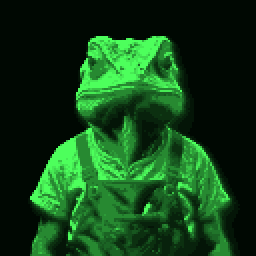
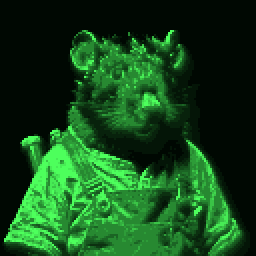
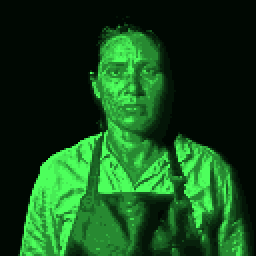
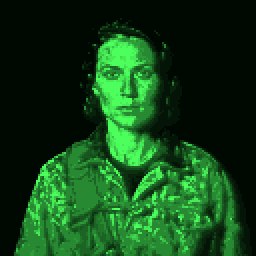
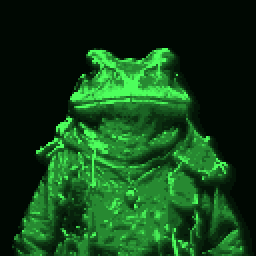
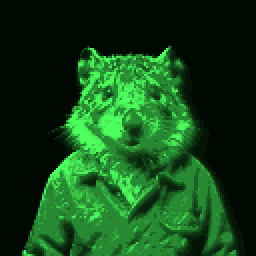
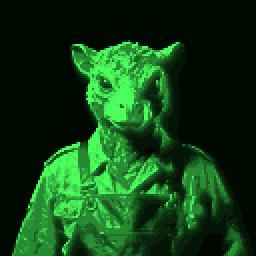
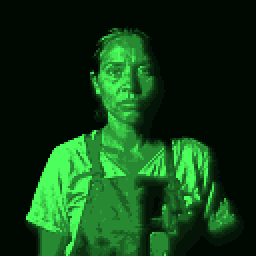
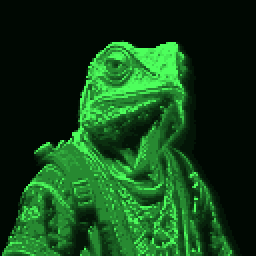
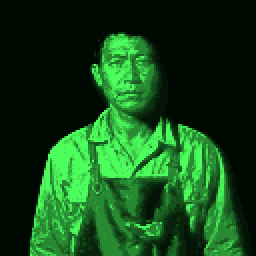
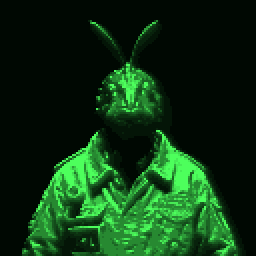
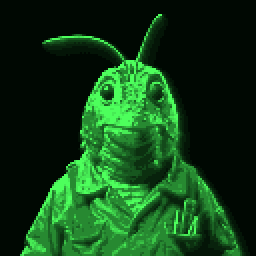
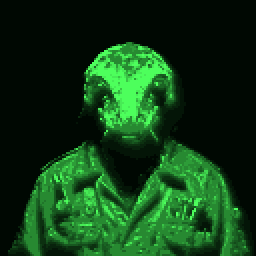
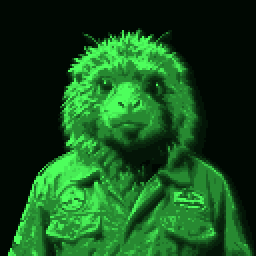
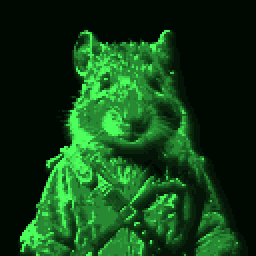
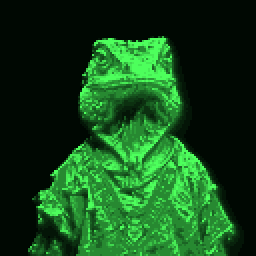
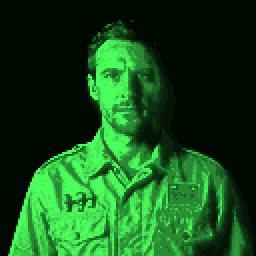
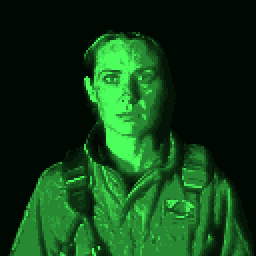
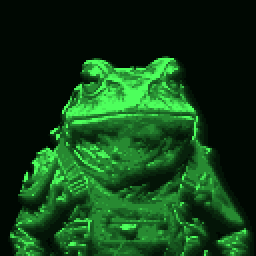
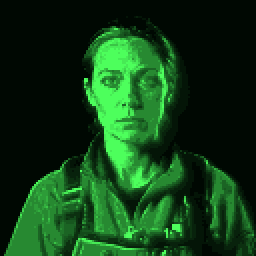
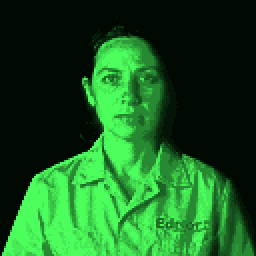
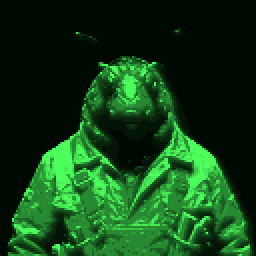
Tibedied

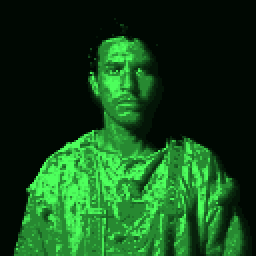
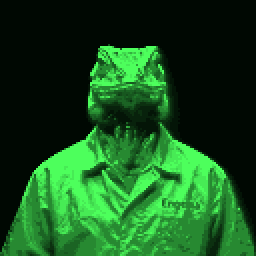
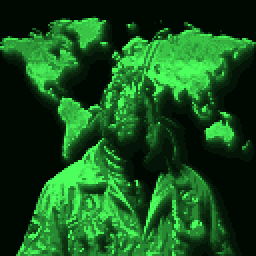
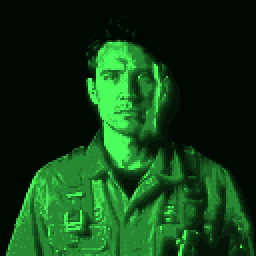
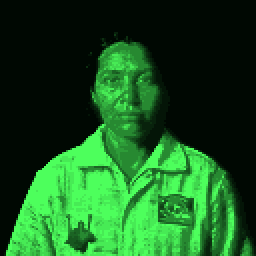
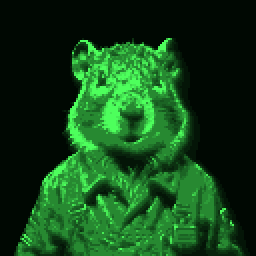
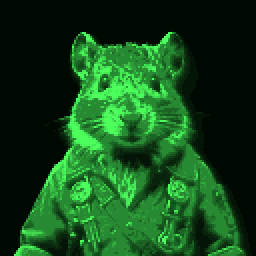
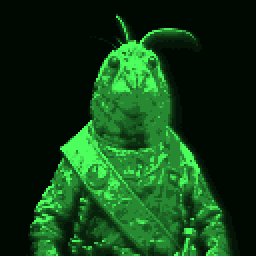
An inhabitant of Tibedied
Economy
Poor Industrial
Government
Feudal
Tech level
9
Population
3.6 billion
Inhabitants
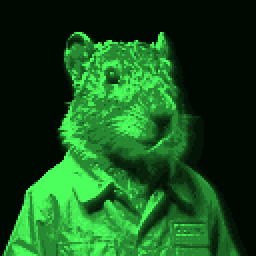
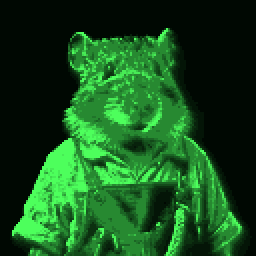
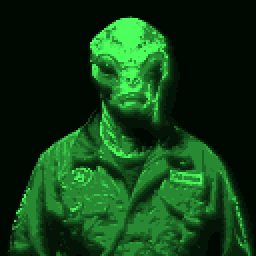
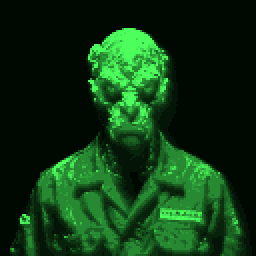
Harmless Slimy Lobsters
Productivity
11520 M CR
Radius
4610 km

This planet is most notable for Tibediedian Vees brandy but ravaged by unpredictable solar activity.

Solar flares scour Tibedied's upper atmosphere on a schedule no almanac has ever fixed, and the fief-holds have learned to build low, thick-walled, and close together rather than trust the sky. Its industry is old and undercapitalised, more workshop than factory, turning out goods that serve the estates rather than any wider market. What fame the world holds comes from the vineyard terraces of the sheltered lowlands, where the grapes that go into Tibediedian Vees brandy are harvested in the brief calm windows between storms. The distilleries themselves are windowless stone cellars, built that way long before anyone understood why it mattered.

The native lobster-kind are placid, slow to anger, and organized under a lattice of hereditary holdings that has outlasted every attempt at reform. Labor is bound to the land and to the lord who holds it, and the comfortable living most families enjoy owes more to the brandy trade than to the industry that employs them. Generations of sheltering from the flares have made them a patient, indoor people, unhurried in speech and firm in custom.”}
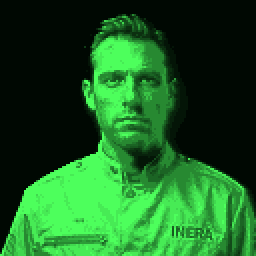
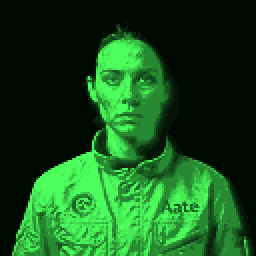
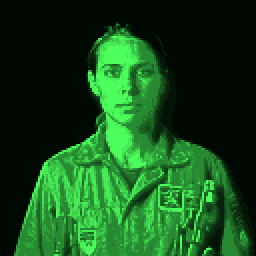
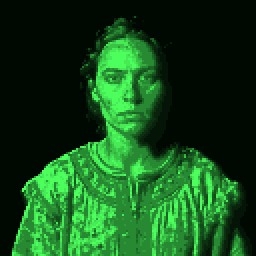
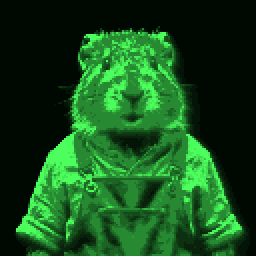
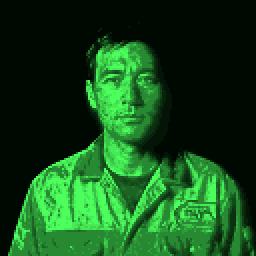
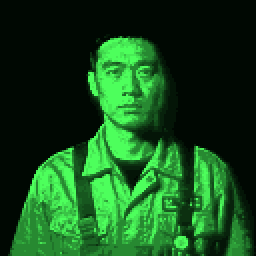
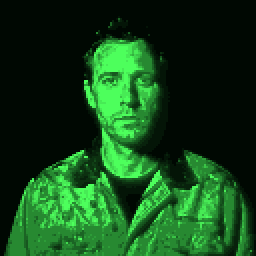
Qube

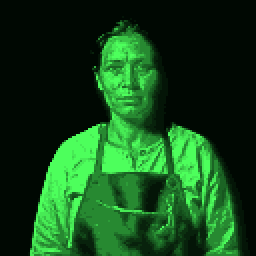
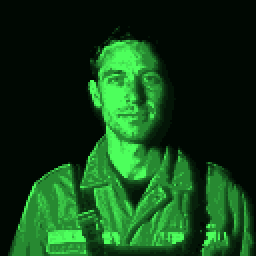
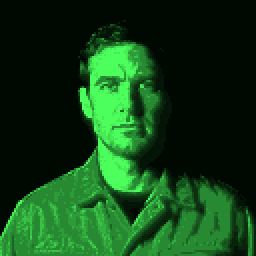
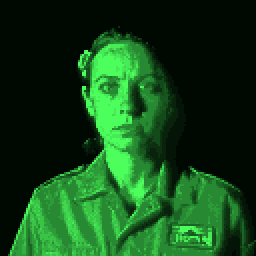
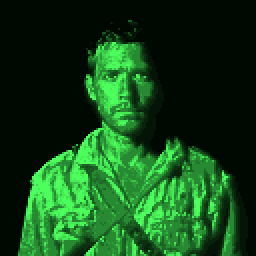
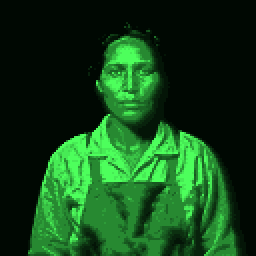
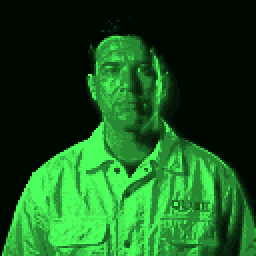
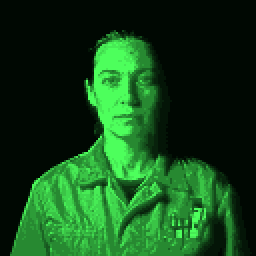
An inhabitant of Qube
Economy
Rich Agricultural
Government
Corporate State
Tech level
7
Population
3.7 billion
Inhabitants
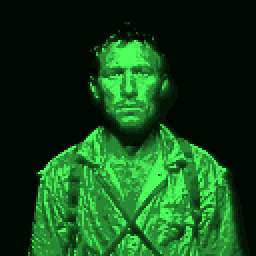
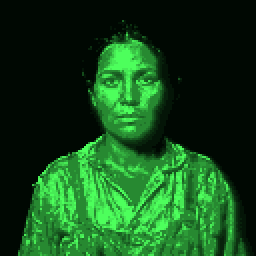
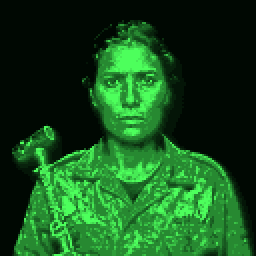
Human Colonials
Productivity
16280 M CR
Radius
5528 km

Qube is reasonably well known for its great dense forests but scourged by deadly civil war.

Qube's landmass is dominated by great dense forests, broken only by the cleared belts where the grain and orchard estates run in careful geometric plots. The corporate charter that governs the world has organized much of the arable land into holdings tied directly to processing depots and rail spurs, and the timber margins have become the front lines of a civil war that has burned through several harvests. Settlements sit close to the forest edge, palisaded and watchful, and the smoke of contested tracts is often visible above the canopy. Despite the fighting, the agricultural output continues largely uninterrupted in the estates furthest from the fighting.

The population lives under the authority of the chartered companies that own the land they work, their loyalties often split between rival boards as much as between causes. Farmers, foresters and militia recruited from the same villages find themselves on opposing sides of the same access roads, and a wary, practical endurance has replaced any expectation that the fighting will end soon.

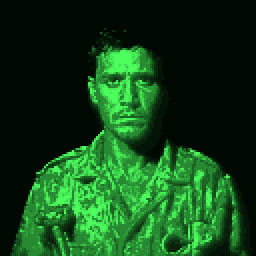
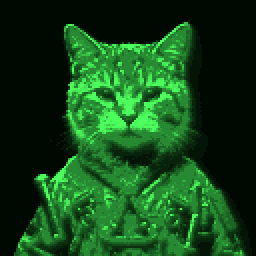
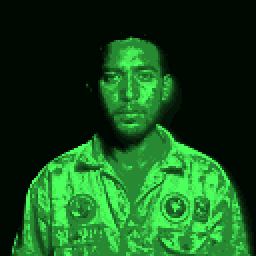
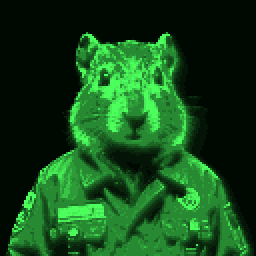
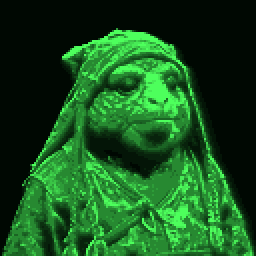
Leleer

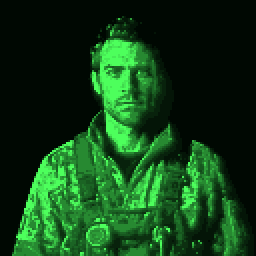
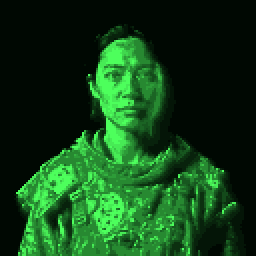
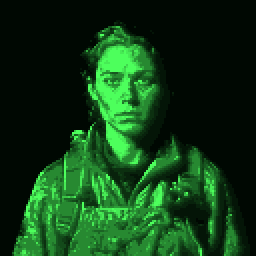
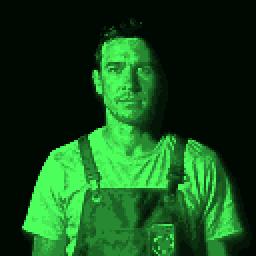
An inhabitant of Leleer
Economy
Mainly Industrial
Government
Dictatorship
Tech level
8
Population
3.5 billion
Inhabitants
Human Colonials
Productivity
13720 M CR
Radius
3149 km

The world Leleer is very noted for its pink Leleerian Gesoaren tulip plantations but plagued by a vicious disease.

Leleer is a small world whose modest land area is given over almost entirely to industrial works and, along its warmer belts, the pink tulip plantations for which it is noted throughout the region. The Gesoaren fields are worked in long terraces below the smoke of processing plants, an arrangement that has done little for the health of the soil or the workers tending it. A disease of uncertain origin has spread through the settlements in recent years, resisting the world's developed medical infrastructure and leaving entire districts under quarantine.

The population, dense for so small a world, lives under a dictatorship that directs labour toward the plantations and factories with equal firmness, tolerating little disruption to output. Comfortable wealth is spread unevenly, favouring those attached to the tulip trade or its refineries, while the sick and the quarantined make do with less. Colonials here are known for a grim practicality, having learned to keep working through outbreaks that would halt production elsewhere.

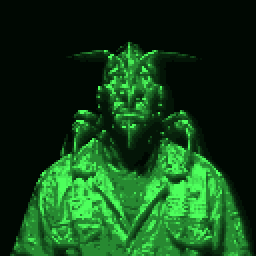
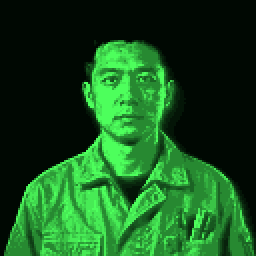
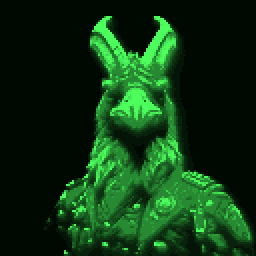
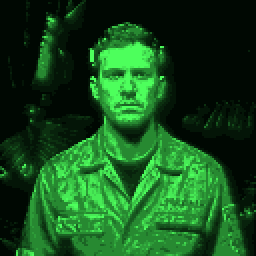
Biarge

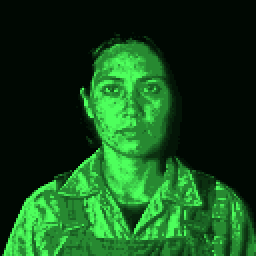
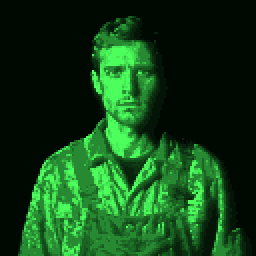
An inhabitant of Biarge
Economy
Rich Industrial
Government
Multi-Government
Tech level
12
Population
4.7 billion
Inhabitants
Fierce Black Bony Humanoids
Productivity
22560 M CR
Radius
4435 km

This world is very fabled for the Biargian edible poet.

Biarge presents a skyline of competing corporate and civic enclaves, each answering to a different administration, stitched together across a landmass given over almost entirely to manufacturing and refinement. Smoke-scrubbed towers and pressurized foundries dominate the horizon, feeding an export economy built on high-grade goods rather than raw ore. The world's oddest renown lies in the cultivation of the Biargian edible poet, a delicacy bred and marketed with the same industrial precision applied to everything else here. Wealth is evident in the polish of its transit ways and the density of its housing blocks, though the divided governance keeps every district fiercely proprietary about its own patch of prosperity.

The population, fierce black bony humanoids, split their loyalties among the many overlapping authorities that govern Biarge, and this fractured rule has bred a people who negotiate as readily as they work. Labour is prized and status follows productivity, so households compete openly for contracts, patents, and the right to claim the finest strains of the famous poet as their own.

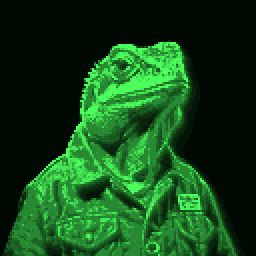
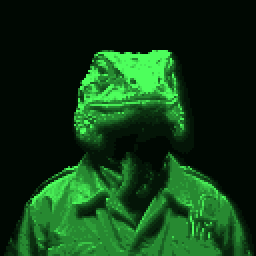
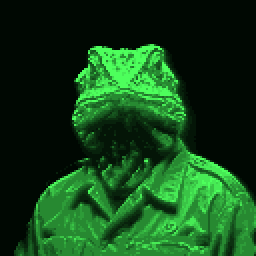
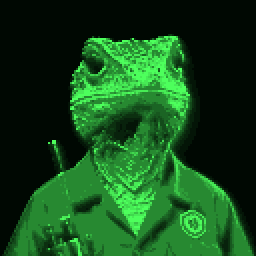
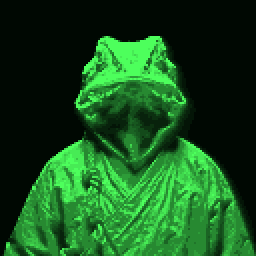
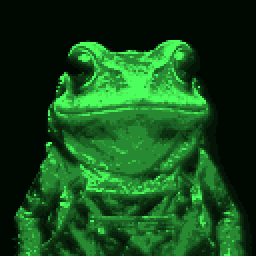
Xequerin

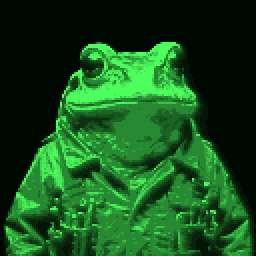
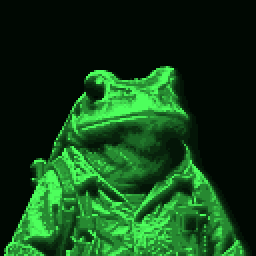
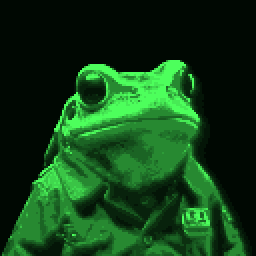
An inhabitant of Xequerin
Economy
Mainly Industrial
Government
Communist
Tech level
7
Population
3.2 billion
Inhabitants
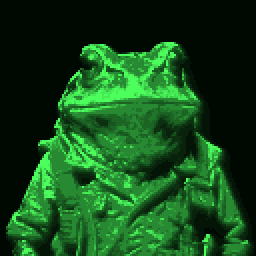
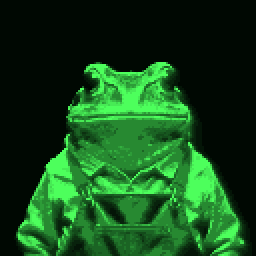
Large Frogs
Productivity
14336 M CR
Radius
3508 km

The world Xequerin is fabled for its weird volcanoes and the Xequerinian mountain lobstoid.

Xequerin's small crust is broken by volcanic vents that behave unlike those charted elsewhere, venting in slow rhythmic pulses rather than in continuous flow, and the ash from them feeds thin but productive foundries strung along the rift lines. Settlement clusters near these fissures, where geothermal heat drives the state's smelters and refineries. In the cooler upland reaches, the mountain lobstoid burrows through mineral-rich scree, an animal as strange to outsiders as the volcanoes it shares its slopes with.

The Large Frogs of Xequerin organize their labor communally, rotating between the foundry collectives and the lobstoid harvest camps according to season and directive. Their manner is unhurried but disciplined, shaped by a state that prizes steady output over individual gain, and by a comfortable, if modest, standard of living earned collectively rather than traded for.

Tiraor

An inhabitant of Tiraor
Economy
Rich Industrial
Government
Communist
Tech level
10
Population
4.1 billion
Inhabitants
Human Colonials
Productivity
26240 M CR
Radius
4780 km

Tiraor is a revolting little planet.

Tiraor's surface is given over almost entirely to heavy manufacture, with refineries and foundries packed so close that their runoff has fouled the rivers and blackened the lower atmosphere for generations. The state has never prioritized cleanup over output, and successive production quotas have left slag heaps, chemical ponds and smog banks as permanent features of the landscape. Its reputation as a foul, corroded world is earned rather than exaggerated, yet the factories continue to run at full capacity and the planet remains one of the wealthier producers in its region.

Labor is organized through party-run collectives that assign housing, food and work with little regard for individual preference, producing a population accustomed to discipline and shared hardship. Generations spent in the mills and chemical plants have bred a stoic, practical outlook, and most residents take a grim pride in output figures rather than in the condition of the world that generates them.

Rabedira

An inhabitant of Rabedira
Economy
Average Industrial
Government
Multi-Government
Tech level
9
Population
3.6 billion
Inhabitants
Human Colonials
Productivity
15552 M CR
Radius
3909 km

The planet Rabedira is well known for its inhabitants' ancient loathing of sit coms but ravaged by dreadful civil war.

Rabedira's continents are stitched together by rail lines and refinery stacks that mark it as an average industrial world, its skies hazed by the output of foundries scattered across competing territories. The planet's many governments have fought each other to ruin more than once, and swathes of the equatorial belt still show the blackened frames of settlements burned in the last civil war. Amid the wreckage its people cling with peculiar fierceness to a shared cultural loathing of sit coms, a rare point of agreement among factions that otherwise trust nothing from beyond their own borders.

The population lives divided among rival administrations, each running its own courts, currency controls and industrial quotas, yet the comfortable wealth spread through the working districts keeps outright want at bay. Generations of factional conflict have made the colonials guarded and practical, quick to rebuild after every ceasefire and quicker still to distrust any single authority claiming to speak for the whole world.

Lave

An inhabitant of Lave
Economy
Rich Agricultural
Government
Dictatorship
Tech level
5
Population
2.5 billion
Inhabitants
Human Colonials
Productivity
7000 M CR
Radius
4116 km

Lave is most famous for its vast rain forests and the Lavian tree grub.

Lave's surface is dominated by dense rain forest, broken only by scattered clearings where the colonial farms cut their fields from the canopy. The Lavian tree grub, harvested from the deep forest and prized off-world as a delicacy, remains the world's best-known export and the one thing most travellers have heard of before they hear anything else about it. Farming here is done largely by hand and beast, the tools and methods of the settlers little advanced from the days of first landing.

The colonials live thinly spread through the forest edge, working small holdings and grub-camps under a dictatorship that leaves the daily business of farming to itself so long as tribute and order are kept. Life is modest and unhurried by necessity rather than choice, shaped by primitive tools, poor roads, and a government more interested in control than improvement.

Zaatxe

An inhabitant of Zaatxe
Economy
Rich Industrial
Government
Corporate State
Tech level
12
Population
5.2 billion
Inhabitants
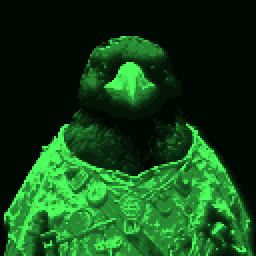
Fierce Fat Birds
Productivity
45760 M CR
Radius
4076 km

This planet is mildly noted for the Zaatxian deadly Isdimaoid but ravaged by lethal lethal yaks.

Zaatxe's continents are given over almost entirely to refineries, foundries and the close-packed housing blocks that serve them, the whole surface organised under charter by the corporate boards that own it outright. The world is wealthy by any measure, its wealth built on heavy manufacture rather than trade, and its cities run in shifts around the clock to keep the furnaces fed. It is mildly noted among naturalists for the Zaatxian Isdimaoid, a venomous native species now confined to the shrinking wild margins, but the planet's more pressing distinction is the plague of lethal yaks that has overrun outlying farmland and idle industrial ground alike, resisting every corporate effort at eradication.

The Fierce Fat Birds who populate Zaatxe are organised less as citizens than as shareholders and shift-workers, their lives structured tightly around company hierarchy and production quotas. Generations spent in the service of the boards have left them blunt, proprietary about their work, and openly contemptuous of the yaks that harass their perimeter fences and eat into every quarter's output.

Diusreza

An inhabitant of Diusreza
Economy
Poor Industrial
Government
Feudal
Tech level
7
Population
2.8 billion
Inhabitants
Horned Lobsters
Productivity
8960 M CR
Radius
6360 km

This planet is mildly fabled for its inhabitants' eccentric love for tourists but beset by deadly edible moths.

Diusreza is a large world of modest industry, its factories scattered thin across broad continents under the control of feudal holdings rather than any central authority. The planet's moths are notorious: prized as a delicacy across every household table, yet capable of killing the unwary who mishandle or undercook them. Despite this hazard, or perhaps because of it, the local holdings have built a curious reputation for welcoming outsiders with open enthusiasm, treating every visit as occasion for feasting and spectacle.

The Horned Lobsters who hold Diusreza's fiefs divide their labour between the poor foundries that keep the world modestly industrial and the moth harvests that sustain both diet and legend. Feudal lords compete for status not through wealth, which remains thin across the population, but through the lavishness of their hospitality toward strangers, a trait that has become something of a local obsession. Ordinary folk get by on modest means, wary of the moths they cannot stop eating and proud of a fame built on danger they treat as festivity.

Teaatis

An inhabitant of Teaatis
Economy
Average Agricultural
Government
Feudal
Tech level
3
Population
1.6 billion
Inhabitants
Human Colonials
Productivity
2560 M CR
Radius
5892 km

Teaatis is mildly well known for Teaatisian vicious brew.

Teaatis is a large world of scattered holdings, its distances too great and its roads too few to bind the land into anything more than a patchwork of manors and fields. Grain and root crops dominate the low country, tended by hand and ox under a primitive order that has changed little across generations. The world's chief renown lies in its vicious brew, a fermented spirit distilled in barns and cellars and traded between estates more readily than any crop. Settlements are few and far between, each little more than a manor house, its outbuildings, and the tenant plots that surround it.

The population lives bound to the land and to the lords who hold it, working fields and stills in roughly equal measure. Poverty is common and travel between holdings rare, so loyalty and grievance alike tend to stay local, passed down within a manor rather than across the world. What reputation Teaatis has beyond its own soil rests almost entirely on the brew its people distill and are known to drink strong and often.

Riinus

An inhabitant of Riinus
Economy
Average Industrial
Government
Communist
Tech level
10
Population
4.2 billion
Inhabitants
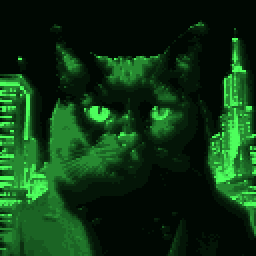
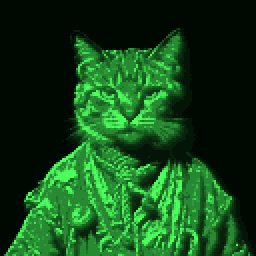
Black Fat Felines
Productivity
24192 M CR
Radius
6493 km

This world is mildly famous for its vast rain forests and the Riinusian tree grub.

Riinus turns beneath a canopy of rain forest that circles most of its equatorial belt, broken only by the terraced industrial districts carved into its highland margins. The canopy yields the Riinusian tree grub, harvested by cooperative gangs and processed in state-run canneries that ship the delicacy off-world under strict quota. Factory towns sit at the forest edge on raised concrete platforms, connected by rail lines that cut straight through the green rather than around it, and the constant runoff from the wet season keeps the lowland mills running on hydro power year-round.

The Black Fat Felines who work the grub harvests and assembly lines answer to district production committees rather than private owners, and pride in meeting or exceeding the forest quota runs deep in their culture. Wealth here is broadly shared but closely accounted, and even senior cadre are expected to have spent time knee-deep in canopy mud before moving to the ministries that plan the next season's harvest.

Esbiza

An inhabitant of Esbiza
Economy
Rich Industrial
Government
Multi-Government
Tech level
9
Population
3.5 billion
Inhabitants
Human Colonials
Productivity
16800 M CR
Radius
5364 km

The planet Esbiza is most famous for its vast rain forests.

Esbiza's continents are dominated by rain forest canopy that runs unbroken from the equatorial belt into the temperate zones, broken only where industrial concessions have cut clearings for refineries and processing plants. The world's wealth comes from what is drawn out of that canopy and the ground beneath it, refined in complexes that sit like islands amid the green. Because no single authority governs the whole surface, jurisdictions overlap along old concession boundaries, each with its own tariffs, permits and enforcement, so a refinery district may answer to different rules than the forest tract supplying it.

Colonial families here tend to work within one concession for generations, moving between forest extraction crews and the processing towns that depend on them. The patchwork of authorities has made most residents fluent in negotiating rules that change at a district line, and comfortable wages have bought a settled, unhurried confidence rather than any urgency to leave.

Ontimaxe

An inhabitant of Ontimaxe
Economy
Mainly Agricultural
Government
Democracy
Tech level
7
Population
3.5 billion
Inhabitants
Human Colonials
Productivity
16800 M CR
Radius
6740 km

This planet is reasonably famous for its inhabitants' exceptional love for food blenders.

Ontimaxe is a large world given over almost entirely to cultivation, its lowlands divided into a patchwork of grain and orchard holdings that stretch beyond the horizon in most directions. The climate is temperate and forgiving, and the modest technology available to farmers here is applied with care rather than force, producing steady yields without much waste. Kitchens across the settlements are unusually well equipped for a world of this technological standing, a fact locals attribute to a long-standing regional obsession with blending fruit, grain and dairy into every conceivable form. Market towns hold seasonal fairs centered on nothing but blender demonstrations, recipe contests and the trading of custom blades and jars.

The population lives comfortably on the proceeds of its harvests, and the democratic institutions here tend toward small elected boards that manage irrigation, storage and distribution with practical, unhurried debate. People take considerable pride in home cooking and in the machines that make it possible, treating a well-kept blender as something between a tool and an heirloom.

Cebetela

An inhabitant of Cebetela
Economy
Mainly Industrial
Government
Anarchy
Tech level
7
Population
2.8 billion
Inhabitants
Human Colonials
Productivity
6272 M CR
Radius
4290 km

This world is most notable for its fabulous Cebetelaian lethal brandy but scourged by killer mountain Laensooids.

Cebetela's industry clusters in the lowland basins, refineries and distilleries feeding off ore veins and the fermented orchards that ring each settlement. The brandy distilled here, potent enough to be traded under warning labels elsewhere, is boiled and bottled in works towns strung along the foothills. Above them, the mountain ranges are the domain of the Laensooids, predators whose raids on outlying works have shaped where and how the settlements are built. With no central authority to coordinate defense or industry, each town operates as its own fortified concern, wary of the slopes at its back.

Cebetela's colonials are workers first, distillers and smiths who keep their machinery running with little outside help and less oversight. Lacking any government to organize defense, they arm their own perimeters against the mountain predators, and this constant vigilance has bred a population that trusts its neighbors in the works and almost no one beyond the fence line.

Ceedra

An inhabitant of Ceedra
Economy
Mainly Agricultural
Government
Confederacy
Tech level
8
Population
3.8 billion
Inhabitants
Fierce Bug-Eyed Lizards
Productivity
16416 M CR
Radius
4341 km

This planet is most fabled for its inhabitants' ingrained silliness but scourged by deadly civil war.

Ceedra's farmland stretches across temperate lowlands in broad, irregular parcels, the legacy of a confederacy that never quite managed to standardise its land grants. Grain silos and processing towns dot the countryside, many now scarred or abandoned where the civil war has passed through. The fighting moves in cycles across the agricultural belts, and settlements rebuild between offensives with a persistence that outsiders find hard to square with the disorder around them. Despite the damage, the world remains a comfortable and populous one, its silos generally fuller than its garrisons.

The lizards of Ceedra are famous well beyond their own system for a strain of silliness that persists even amid the civil war, trading jokes and elaborate nonsense rituals between skirmishes with a straight face that visitors rarely expect. Confederate loyalties run deep but overlap badly, and most disputes are settled with as much theatrical absurdity as actual violence, though the war itself is real and costly. Farmers, militia, and local assemblies alike seem equally capable of grim resolve and complete foolishness, often within the same conversation.

Rizala

An inhabitant of Rizala
Economy
Mainly Agricultural
Government
Confederacy
Tech level
9
Population
4.2 billion
Inhabitants
Black Rodents
Productivity
18144 M CR
Radius
6578 km

The planet Rizala is mildly notable for Rizalaian lethal brandy.

Rizala's broad continents are given over almost entirely to grain and orchard, with distilleries rising among the fields wherever the harvest outpaces the granaries. Settlements spread low and wide across the plains, linked by rail lines that exist mainly to move produce and drink between them rather than to concentrate industry in any one place. The confederated districts each claim their own vintage of the local brandy, a spirit strong enough that its reputation has spread well beyond the system despite nobody bothering to promote it. Fertile soil and a temperate, well-watered climate have made the world's size an asset rather than a burden, since nearly all of it can be farmed.

The Black Rodents who work Rizala's land are organized into semi-autonomous districts that bargain and vote through the confederacy rather than defer to any central authority, which suits a population more loyal to its home valley than to the world as a whole. Comfortable harvests and steady trade have left most households with more leisure than ambition, and a great deal of that leisure is spent arguing, amiably, over whose brandy is the more lethal.

Atriso

An inhabitant of Atriso
Economy
Rich Agricultural
Government
Dictatorship
Tech level
8
Population
3.7 billion
Inhabitants
Horned Lobsters
Productivity
10360 M CR
Radius
3127 km

Atriso is mildly well known for its exotic cuisine and its inhabitants' ingrained silliness.

Atriso's compact landmass is given over almost entirely to terraced farms and shallow aquaculture pans that ring its coastlines, feeding a population packed into dense agricultural townships. The world's reputation rests on kitchens that turn its odd, richly flavored crops and shellfish into dishes prized well beyond the system, served in market halls built more for spectacle than comfort. Rule here is absolute and centralized, with produce quotas and export licenses set from a single capital that treats the harvest as a matter of state.

The Horned Lobsters who work Atriso's fields and pans are known throughout for a cheerful, almost theatrical silliness that seems to survive every tightening of quota and decree. Life under the dictatorship is regimented and modest rather than comfortable, and most households get by on steady labor rather than surplus. Even so, festivals, puns, and elaborate food rituals thread through daily work, as if the planet's people have decided that dignity is optional but flavor is not.

Teanrebi

An inhabitant of Teanrebi
Economy
Poor Agricultural
Government
Corporate State
Tech level
7
Population
3.9 billion
Inhabitants
Bug-Eyed Frogs
Productivity
10296 M CR
Radius
6102 km

This planet is plagued by frequent earthquakes.

Teanrebi's continents sit on restless plates, and the tremors that follow are frequent enough to shape every aspect of building and farming here. Fields are laid out in narrow terraces that can be replanted quickly after a shake collapses an irrigation channel or buries a paddock in silt. Settlements favour low, squat construction spread wide across the plains rather than tall structures, and the corporate charter that administers the world has invested more in early-warning towers than in grand architecture. Despite the size of the land under cultivation, the soil is thin and the harvests modest, leaving the world dependent on subsistence-level farming rather than surplus.

The bug-eyed frogs who work the land are organized under a single controlling company that leases plots, seed and tools in exchange for a share of every harvest, leaving most families with just enough to get by. Generations of sudden ground movement have made them quick to abandon a structure and slow to trust a still morning, and their folk wisdom is full of signs read from animal behaviour and shifting water tables. Communities cooperate readily in the aftermath of a quake, since rebuilding is a shared and constant labour rather than an occasional one.

Azaqu

An inhabitant of Azaqu
Economy
Average Agricultural
Government
Democracy
Tech level
7
Population
3.7 billion
Inhabitants
Human Colonials
Productivity
11840 M CR
Radius
6662 km

The planet Azaqu is most famous for its pink oceans and Zero-G cricket.

Azaqu's oceans run a deep rose-pink, tinted by mineral algae blooms that stretch from horizon to horizon and give the coastal farmlands their characteristic ruddy soil. Grain and orchard estates spread across the lowlands, feeding a population spread thin across a world large enough that its regional assemblies rarely agree on much beyond trade tariffs. In the low-gravity habitats ringing the equatorial highlands, Zero-G cricket draws crowds from every province, played in vast tethered domes where the ball can travel for what feels like whole minutes before gravity reasserts itself.

Azaquans are farmers and administrators in roughly equal measure, used to settling disputes over water rights and grain quotas through endless committee votes rather than decree. Life here is unhurried and reasonably secure, and much civic pride rests on provincial cricket leagues, whose championships draw larger turnouts than most elections.

Retila

An inhabitant of Retila
Economy
Poor Industrial
Government
Anarchy
Tech level
9
Population
3.5 billion
Inhabitants
Human Colonials
Productivity
8960 M CR
Radius
6575 km

This world is ravaged by occasional solar activity.

Retila spreads across a broad landmass of worn industrial belts and cratered flatlands, its skies prone to sudden storms of charged particles that sweep down from its sun. Smelters and refineries stand in clusters shielded by earthworks and scavenged plating, built up wherever the local warlords or cooperatives have managed to keep the lights on. Solar flares periodically knock out power grids and scorch exposed circuitry across whole districts, and the scars of these events are visible in the blackened frames of abandoned factories. What industry survives is patched together from older, sturdier equipment built to withstand the world's temperament.

Without any central authority, the population has organized into shifting factions and work-gangs that control production district by district, trading favors and materials more often than currency. Life here rewards those who can repair a generator blind and rebuild after a flare has passed, and most people carry that practical toughness in how they speak and work. Getting by is the common condition, and there is little pretense that it will change soon.

Sotiqu

An inhabitant of Sotiqu
Economy
Poor Agricultural
Government
Anarchy
Tech level
4
Population
2.0 billion
Inhabitants
Fierce Frogs
Productivity
1920 M CR
Radius
4731 km

The planet Sotiqu is famous for its exotic goat soup but ravaged by a killer disease.

Sotiqu's farmland lies patched between scrubland and quarantine markers, worked in narrow plots by families who no longer trust their neighbors' water. The soup made from its hardy goat herds is prized off-world for a flavor found nowhere else, a reputation the planet clings to even as the disease that stalks its villages goes untreated. Settlements are few, spread thin across the plains, each one walled off more by fear than by fence. No central authority coordinates relief, quarantine, or trade, so the sickness spreads at whatever pace the land and its people allow.

The Fierce Frogs who hold this world answer to no government beyond the clan and the herd, and they guard both with a wariness bordering on hostility toward outsiders and each other alike. Generations of primitive tools and poor harvests have made them resourceful but suspicious, quick to defend a goat pen or a sickbed with equal violence. What trade they permit is conducted warily, soup and hides offered at a careful distance from strangers who might carry the next outbreak.

Inleus

An inhabitant of Inleus
Economy
Poor Industrial
Government
Democracy
Tech level
11
Population
4.9 billion
Inhabitants
Harmless Slimy Rodents
Productivity
31360 M CR
Radius
6074 km

The world Inleus is most famous for the Inleusian spotted wolf.

Inleus is a large world whose industrial belts ring low continents beneath a haze of manufacturing exhaust, its factories aging and its output modest against the wealth that flows through its banks and exchanges. Away from the mills, wide temperate reserves of scrub and forest remain protected by law, and it is there that the Inleusian spotted wolf still hunts, the animal for which the world is chiefly known offworld. Settlement is dense and continuous across the lowlands, tiers of housing built up around the old plants rather than replacing them.

The population is composed of small, slime-coated rodents, harmless and easily startled, who nonetheless run every layer of the democracy with the same patient committee-work applied to the wolf reserves. Wealth here sits apart from the industry that first built the world, so most work is now administrative, regulatory, or given over to the upkeep of the wilderness the wolf requires.

Onrira

An inhabitant of Onrira
Economy
Rich Industrial
Government
Corporate State
Tech level
14
Population
6.0 billion
Inhabitants
Human Colonials
Productivity
52800 M CR
Radius
6678 km

The world Onrira is mildly noted for the Onriraian deadly Xeoid but cursed by dreadful solar activity.

Onrira's atmosphere carries a permanent haze of ionised particles, the visible signature of a sun given to violent, unpredictable flares that periodically scour the outer settlements and disrupt surface power grids. Industry here has adapted around the problem: factories and refineries are built low, shielded, and clustered in deep valleys or beneath ridgelines away from open sky. The world's synthetic compound sold abroad as Xeoid, prized and feared in equal measure for its lethality, is manufactured in these shielded works, and the export trade has done much to fund Onrira's dense urban sprawl. Corporate towers dominate the skyline of every major city, their lower floors windowless against radiation surges.

Most residents work directly or indirectly for the handful of conglomerates that own the planet's mines, refineries and Xeoid production lines, and company loyalty runs deep, reinforced by generous wages and constant reminders of the alternative. Life is organised around flare warnings and shelter drills as much as shift schedules, giving the population a practical, unsentimental attitude toward risk. Wealth is visible but unevenly distributed, concentrated among executives and senior technicians who oversee the world's more hazardous work.

Ceinzala

An inhabitant of Ceinzala
Economy
Mainly Agricultural
Government
Dictatorship
Tech level
8
Population
3.6 billion
Inhabitants
Fierce Harmless Insects
Productivity
12096 M CR
Radius
4114 km

This planet is most notable for vicious Esti juice but cursed by unpredictable solar activity.

Ceinzala's farmland spreads across broad temperate belts, feeding processing towns that exist mainly to press and ferment the estate crop into Esti juice, a drink famed across the region for its bite. The world's fortune is shadowed by its star, whose flares and unpredictable outbursts disrupt communications, spoil harvests without warning, and force growers to plan around blackout seasons rather than calendars. Settlements are dense and close-packed, built low against the periodic radiation warnings, with cellars and shielded granaries doing double duty as storm shelters. Swarms of fierce-looking insects move through the fields, harmless to people but relentless against crop pests, and are tolerated as part of the agricultural order.

Life under a single ruling authority has organized the population into disciplined agricultural cooperatives, their routines built around the erratic temper of the sun as much as around planting seasons. Comfortable but never idle, they carry a reputation for stoic patience, riding out blackouts and crop scares with the same flat calm they bring to producing their notorious Esti juice.

Biisza

An inhabitant of Biisza
Economy
Mainly Agricultural
Government
Confederacy
Tech level
8
Population
3.8 billion
Inhabitants
Human Colonials
Productivity
16416 M CR
Radius
4597 km

The planet Biisza is most famous for its vast rain forests.

Biisza's landmass lies mostly under continuous canopy, its rain forests broken only by river deltas and the cleared terraces where the colony grows its staple crops. Settlements follow the rivers rather than any planned grid, strung along the waterways that serve as the main routes between the clearings. The confederacy's member districts each hold a share of forest and farmland, and boundaries between them are marked as often by treaty as by any visible line on the ground.

Human Colonials here work the terraces and river trade that the forest allows, living comfortably without great surplus. Authority is shared among the confederated districts, so disputes over land and water rights are settled by council rather than decree, and people tend to speak of their district before they speak of the planet.

Legees

An inhabitant of Legees
Economy
Rich Agricultural
Government
Confederacy
Tech level
6
Population
3.1 billion
Inhabitants
Large Bug-Eyed Lizards
Productivity
11160 M CR
Radius
3076 km

This planet is most notable for its exotic night life but ravaged by frequent earthquakes.

Legees is a small world of rich lowland soils and orchard belts, worked into terraces and irrigated fields that ring its scattered towns. The ground beneath these towns shifts often, and cracked foundations, propped-up granaries and rebuilt market walls are common sights across the farm districts. What draws outside notice is what happens after dusk, when the settlements light their squares and open the venues, dens and open-air gardens that give the planet its reputation for exotic night life. Between the tremors and the harvest cycles, life on Legees runs to a rhythm of rebuilding by day and revelry by dark.

The large bug-eyed lizards of Legees govern themselves through a loose confederacy of farming settlements, each holding its own council and pooling resources only when quakes demand it. Modest tools and getting-by wealth keep most of the population tied to the land, but the same lizards who spend their days resetting irrigation channels and shoring up walls are known to spend their nights running the taverns, gaming houses and dance-floors that outsiders travel to see. Practical and unshaken by disaster, they treat both farming and nightlife as necessary work.

Quator

An inhabitant of Quator
Economy
Mainly Industrial
Government
Anarchy
Tech level
7
Population
2.8 billion
Inhabitants
Human Colonials
Productivity
6272 M CR
Radius
5390 km

The world Quator is scourged by deadly edible arts graduates.

Quator's surface is given over to smelting works and refineries strung along its river valleys, their output moved by rail gangs that answer to no central authority. Without a government to enforce order, the factories operate under shifting local arrangements between foremen, guilds, and armed cooperatives. The world's peculiar notoriety comes from bands of edible arts graduates, trained in culinary guilds elsewhere and turned loose here, who roam the industrial districts staging poisonings and sabotage dressed up as haute cuisine. Settlements are modest in size and spaced along the transit lines, built more for function than comfort.

The colonials who work Quator's foundries and yards are practical people, used to settling disputes and dividing labor without recourse to any higher authority. Wages are thin and conditions plain, and most treat the wandering graduates and their poisoned banquets as an occupational hazard to be watched for rather than a mystery to be solved.

Arexe

An inhabitant of Arexe
Economy
Average Industrial
Government
Democracy
Tech level
10
Population
4.4 billion
Inhabitants
Furry Rodents
Productivity
31680 M CR
Radius
6820 km

The world Arexe is fabled for its exciting sit coms and its inhabitants' ancient loathing of sit coms.

Arexe is a large industrial world whose factory districts ring cities built upward rather than outward, a concession to population pressure rather than aesthetics. Its studios produce sit coms distributed across neighboring space, an irony not lost on a citizenry that has despised the form since long before the current broadcast towers were raised. Advanced automation keeps the industrial base humming quietly enough that most residential quarters remain untouched by smoke or noise.

The furry rodent population governs itself through elected councils that argue endlessly and, by most accounts, competently, producing a wealthy and orderly society with little patience for frivolity. Their contempt for sit coms runs deep and generational, yet the export trade persists because someone else's amusement pays the bills, a contradiction the locals discuss with weary humor rather than embarrassment.

Atrabiin

An inhabitant of Atrabiin
Economy
Poor Industrial
Government
Multi-Government
Tech level
7
Population
2.9 billion
Inhabitants
Horned Lobsters
Productivity
11136 M CR
Radius
3168 km

Atrabiin is cursed by killer edible Esisoids.

Atrabiin is a small world of cramped foundries and smoke-blackened refineries, its industry never quite recovering from whatever slump left it poor. The land beyond the settlements belongs to the Esisoids, a wild growth harvested for food despite a long, well-documented history of killing those who process it wrong. Refining sheds for the Esisoid crop sit apart from the smelting districts, ringed with warnings and burn-scarred ground where past mistakes are still visible. Each settlement answers to its own local authority, and none has managed to outlaw the harvest outright, only to regulate around it.

The Horned Lobsters who work Atrabiin split their labor between ore and Esisoid processing, and carry the burns and old poisonings of both trades as a matter of course. Fractured rule among competing local governments means safety practice varies sharply from one settlement to the next, and workers judge a place as much by its Esisoid-handling reputation as by its wages. Getting by is the general condition, and most treat the crop's danger as an old, familiar cost of living rather than a thing worth remarking on.

Usanat

An inhabitant of Usanat
Economy
Average Agricultural
Government
Communist
Tech level
4
Population
2.3 billion
Inhabitants
Human Colonials
Productivity
5888 M CR
Radius
4972 km

The world Usanat is a boring world.

Usanat spreads across broad, quiet plains given over almost entirely to grain and root crops, tended in collective plots that repeat with little variation from one horizon to the next. Its settlements are small and far apart, connected by dirt roads and the occasional rail spur used to move harvests to the central depots. Nothing of note has happened here in living memory, and the world's reputation for dullness is treated locally less as an insult than as a simple statement of fact.

The colonials work fixed quotas on state-assigned land, their days shaped by planting and harvest cycles rather than ambition or event. Officials rotate through the collective farms enforcing production targets with primitive tools and little fanfare, and conversation tends toward crop yields, weather, and the slow turning of the calendar.

Xeesle

An inhabitant of Xeesle
Economy
Mainly Industrial
Government
Feudal
Tech level
7
Population
2.9 billion
Inhabitants
Human Colonials
Productivity
8120 M CR
Radius
3381 km

The world Xeesle is a boring planet.

Xeesle is a small world given over to industrial estates held by hereditary lords, its low hills cut with tramways and cooling ponds. The workshops turn out plate stock and simple castings, shipped between holdings under terms set generations ago and rarely revised. Little distinguishes one district from the next, and travellers who pass through report finding no reason to linger; even the weather here keeps to a narrow, unremarkable range.

The colonials work the foundries and smallholds their families have held under the same lords for as long as anyone can trace, and take a certain pride in the steadiness of it. Wealth is modest and closely managed, and ambition tends to run toward keeping a workshop rather than expanding one.

Oreseren

An inhabitant of Oreseren
Economy
Mainly Industrial
Government
Feudal
Tech level
8
Population
3.3 billion
Inhabitants
Human Colonials
Productivity
9240 M CR
Radius
5326 km

Oreseren is a revolting little planet.

Oreseren's industrial districts sit under a permanent haze of smelter smoke, the runoff from its foundries staining rivers a dull grey-brown that never fully clears. Refuse piles accumulate at the edges of holdings faster than anyone bothers to clear them, and the smell of processing plants carries for a considerable distance across the lowlands. The world's factories serve the estates of its lords, turning out goods with little regard for what is left behind.

Labor here answers to hereditary holders who claim the foundries and the land alike, leaving workers with little say over conditions they endure daily. Most get by on what the estates allow them, hardened to the grime and stink of their trade rather than troubled by it.

Inera

An inhabitant of Inera
Economy
Rich Industrial
Government
Corporate State
Tech level
14
Population
6.0 billion
Inhabitants
Human Colonials
Productivity
52800 M CR
Radius
5970 km

This planet is noted for its exotic fish meat.

Inera's landmass is dominated by refineries and processing yards, their heat-exchange towers rising above the coastal cities like a second skyline. Yet the wealth here comes as much from the sea as from the smelters: the temperate shelf waters that ring the continents are farmed and netted for fish stocks found nowhere else, prized for meat unlike anything raised on a standard agricultural world. Settlement is dense and continuous along the coasts, thinning inland toward the industrial belts that feed the export docks. The corporate charters that administer the planet have shaped both shoreline and skyline to their own efficient design.

Most Inerans work under contract to one of the great combines, whether on the factory floors or aboard the licensed fishing fleets, and company loyalty runs as deep as any civic identity. Life is comfortable and orderly by advanced-world standards, but promotion, housing and even leisure time are allocated through corporate hierarchy rather than left to chance.

Inus

An inhabitant of Inus
Economy
Poor Agricultural
Government
Dictatorship
Tech level
3
Population
1.9 billion
Inhabitants
Human Colonials
Productivity
3192 M CR
Radius
6092 km

This world is reasonably well known for the Inusian tree wolf but scourged by unpredictable earthquakes.

Inus spreads across a wide, thinly populated expanse of forest and broken ground, its low-tech farmsteads scattered rather than clustered because the land beneath them cannot be trusted to hold still. Fault lines run under the tree cover, and unpredictable earthquakes have flattened outbuildings and reshaped the same valleys more than once. The Inusian tree wolf, a lean predator adapted to the shifting terrain, is the one thing outsiders are likely to have heard of before anything else about the place. Farming continues on the strength of habit and necessity rather than any confidence in the ground.

The colonials of Inus live in small, self-reliant holdings under a dictatorship that has little presence beyond the collection of tribute and the occasional show of force. Generations of tremors have made them practical about property and quick to rebuild rather than mourn, and most families keep half an eye on the tree line where the wolves range.

Isence

An inhabitant of Isence
Economy
Rich Industrial
Government
Multi-Government
Tech level
9
Population
3.5 billion
Inhabitants
Human Colonials
Productivity
16800 M CR
Radius
6196 km

The world Isence is very famous for its unusual casinos but beset by a evil disease.

Isence spreads across a large world whose industrial districts ring the equator in overlapping jurisdictions, each holding its own charter, tariffs, and law. Its casinos, built into refinery towers and old orbital-shipment terminals, are famous for games found nowhere else, drawing custom even as a persistent wasting sickness moves through the lower-city wards. Quarantine lines and sealed transit tubes now cut across the gaming floors, so that fortune and contagion share the same corridors. The factories keep running regardless, their output too valuable for any one government to halt for the sake of the sick.

The population answers to whichever authority holds their district, and loyalties shift block by block rather than along any single line of rule. Industrial labor and casino trade have made most residents comfortable, but the disease has bred a wary fatalism, and many carry sealed passes and personal filtration gear as routinely as identification. Physicians, actuaries, and gaming-house wardens hold unusual local standing, since all three profit from calculating how long a person, or a table, is likely to last.

Reesdice

An inhabitant of Reesdice
Economy
Rich Agricultural
Government
Communist
Tech level
6
Population
3.0 billion
Inhabitants
Slimy Lizards
Productivity
9600 M CR
Radius
6549 km

The world Reesdice is reasonably famous for the Reesdician deadly lobstoid.

Reesdice is a large world of shallow seas and broad river deltas, its landmass given over almost entirely to collective farms and aquaculture pens. The coastal shoals harbor the Reesdician lobstoid, a heavily armored predator whose venomous claw has made the creature both a local hazard and the world's chief claim to notice beyond its own sky. Settlement clusters in fortified river towns rather than along the open coast, where the lobstoid beds make shoreline living an unwise habit. Grain barges and processing sheds dominate what industry the world possesses, most of it modest in scale and state-run.

The lizard population lives under a planned economy that assigns labor to the collective farms, the river fisheries, and the wary harvesting crews who bring in lobstoid meat and shell under strict quota. Life is plain and workmanlike, shaped more by the demands of soil and tide than by any comfort of wealth, and most households get by on ration and routine rather than surplus. A caution about open water is bred into them early, and it shows in how the towns are built and how the young are taught to swim.

Terea

An inhabitant of Terea
Economy
Rich Agricultural
Government
Communist
Tech level
6
Population
3.0 billion
Inhabitants
Black Slimy Rodents
Productivity
9600 M CR
Radius
5957 km

This world is very fabled for the Tereaian edible poet.

Terea is a large world given over almost entirely to state-run agriculture, its broad plains and river deltas divided into collective holdings that stretch to the horizon in every direction. The soil and long growing season have made it famous across the region for the Tereaian edible poet, a delicacy cultivated nowhere else with the same success. Settlements are few and spread thin, each built around a central granary or processing works, with modest tooling and machinery doing what labor cannot.

The Black Slimy Rodents native to Terea work the collective farms under a planned economy that assigns quota and ration alike, and generations of this arrangement have bred a population patient with hardship and suspicious of anything that smells of private gain. Getting by rather than thriving, they take a quiet, proprietary pride in the poet harvest, treating its cultivation as a shared achievement of the whole world rather than any single farm.

Orgetibe

An inhabitant of Orgetibe
Economy
Poor Agricultural
Government
Multi-Government
Tech level
4
Population
2.2 billion
Inhabitants
Black Furry Felines
Productivity
3168 M CR
Radius
5146 km

This planet is a dull world.

Orgetibe spreads across a wide, unremarkable land of low hills and grey scrubland, most of it given over to thin, laborious farming that barely feeds the scattered holdings dependent on it. No single authority governs the world; instead a patchwork of local chiefdoms and township councils divides the land, none strong enough to build much beyond its own borders. Settlements are few and far between, mud-walled and timber-roofed, separated by long stretches of empty pasture and untended field. Traders and record-keepers alike agree there is little here to remark upon beyond the sameness of it all.

The black furry felines who work this soil are plain, practical folk, bound more to their own village councils than to any wider notion of a planet. Generations of primitive tools and poor harvests have made them cautious and self-reliant, distrustful of grand promises and unimpressed by outsiders. What little they have, they keep close, and what they lack, they do without.

Reorte

An inhabitant of Reorte
Economy
Poor Agricultural
Government
Dictatorship
Tech level
6
Population
3.1 billion
Inhabitants
Black Fat Felines
Productivity
5208 M CR
Radius
6419 km

This planet is mildly fabled for its inhabitants' eccentric love for tourists but plagued by deadly earthquakes.

Reorte is a large world of unstable ground, its farmland belts crossed by fault lines that shift without warning and level whole villages. Settlements are built low and wide, of timber and packed earth rather than stone, so that when the tremors come the walls fall without killing everyone beneath them. Despite the risk, or perhaps because of it, the world has cultivated a peculiar reputation as a welcoming stop for outsiders, with guesthouses and viewing platforms built along the fault scarps themselves. The dictatorship that rules the place directs most surplus grain toward feeding the cities rather than repairing what the earth breaks.

The Black Fat Felines who work Reorte's fields are broad, heavy-built people, suited to labor in low gravity pockets near the rift zones where the soil is richest. Generations of loss have made them fatalistic about the ground beneath them, and this same fatalism has curdled into an odd hospitality, a delight in showing outsiders the cracked earth and telling them what it has taken. Under the dictatorship's tight allocation of land and grain, most families measure a good year simply by the number of quakes it did not bring.

Ququor

An inhabitant of Ququor
Economy
Mainly Agricultural
Government
Corporate State
Tech level
8
Population
4.0 billion
Inhabitants
Harmless Slimy Lizards
Productivity
21120 M CR
Radius
5540 km

The planet Ququor is mildly well known for its exotic cuisine.

Ququor's farmland stretches across shallow river basins and warm coastal plains, given over almost entirely to the crops and livestock that feed its export kitchens. Settlements are arranged around processing depots and distribution warehouses owned by the agricultural concerns that administer the world, with dining districts built up around each one to serve the trade that follows. Its cuisine, built on ingredients found nowhere in quite the same combination, has earned the world a name that outstrips its modest size.

The native lizards, docile and slow-moving, are farmed alongside conventional stock and figure heavily in the dishes that give the world its reputation. Most people work under contract to the estates and processing firms that structure daily life, and a comfortable living is the norm rather than the exception, though ambition tends to run toward the corporate ladder rather than anything else.

Geinona

An inhabitant of Geinona
Economy
Mainly Industrial
Government
Feudal
Tech level
9
Population
3.7 billion
Inhabitants
Human Colonials
Productivity
10360 M CR
Radius
3727 km

This world is ravaged by unpredictable solar activity.

Geinona orbits close enough to its star that flares strip the upper atmosphere on an irregular cycle, scouring exposed structures and forcing most industry underground or into shielded halls. Refineries and forges cluster in deep galleries cut into the bedrock, their stacks venting through baffled shafts to survive the surges. Above ground, settlements are compact and low, built to be sealed at short notice, and much of the small world's surface bears the scorched, glassy scars of past storms.

Households and workshops answer to hereditary lords who control the shielded galleries and ration access to safe working hours around each storm cycle. Life is a matter of endurance rather than comfort, with most colonials laboring long shifts in the deep foundries and holding little beyond what the season's flares allow them to keep.

Anarlaqu

An inhabitant of Anarlaqu
Economy
Poor Agricultural
Government
Feudal
Tech level
5
Population
2.5 billion
Inhabitants
Human Colonials
Productivity
3000 M CR
Radius
5743 km

This world is mildly famous for its hoopy night life and its exotic night life.

Anarlaqu is a wide, thinly settled world where the soil gives up little and the estates of the landholders stretch far beyond what their tenants can till. What passes for wealth here is spent on the evening hours: the fields empty at dusk and the manor courts light their lanterns for dances, gambling and drink that draw talk from well beyond the parish. The rest of the world's business is small, slow and conducted on foot or by cart, under lords who tax the harvest and tolerate little else.

Most people here are bound to a plot and a patron, working land that barely feeds them under masters who take the greater share. The night gatherings are the one place where field hands, freeholders and gentry mix loosely, and colonials speak of them as the only fair trade this world offers.

Oresri

An inhabitant of Oresri
Economy
Rich Agricultural
Government
Communist
Tech level
7
Population
3.4 billion
Inhabitants
Rodents
Productivity
10880 M CR
Radius
5178 km

The planet Oresri is cursed by dreadful civil war.

Oresri's broad temperate belts hold rich soil that yields grain and fodder crops far beyond what its own population can consume, but the fields lie divided along shifting front lines. Collective farms and grain silos dot the plains, many now abandoned or fought over as the civil war drags between rival communes and provincial cadres. Rail lines built to move harvest to the ports are cut and rerouted as territory changes hands, and modest workshops turn from making harvest equipment to arms with little transition. The world remains sizeable and fertile enough that even divided factions have never quite starved out their rivals.

The rodent population, once organized under strict collectivist doctrine, now splits its labor between tending fields and defending them, with local committees enforcing rationing and conscription in equal measure. Life expectancy and comfort vary sharply by district depending on which faction holds the granaries that season. Even so, most communities keep working the land out of necessity, trusting that harvests will outlast whichever government claims to speak for them.

Esesla

An inhabitant of Esesla
Economy
Average Agricultural
Government
Multi-Government
Tech level
4
Population
2.1 billion
Inhabitants
Small Black Rodents
Productivity
4032 M CR
Radius
5185 km

This planet is noted for Zero-G hockey.

Esesla spreads across a considerable landmass under scattered farming holdings, its low-tech settlements strung out with wide, empty tracts of cultivated land between them. The world lacks any single ruling authority, its territories instead divided among competing local governments that rarely agree on much beyond boundary lines. Its odd claim to note is the Zero-G hockey circuit run out of orbital cages above the farm belts, a pastime far removed from the modest fields below.

The population, small black rodents adapted to a life of manual labour, work scattered plots under governments too fractured and too poor to invest in much beyond subsistence. What wealth exists tends to be spent on maintaining the orbital rinks rather than on the primitive tools of the fields, a source of some resentment among the farming holds.

Socelage

An inhabitant of Socelage
Economy
Rich Agricultural
Government
Democracy
Tech level
6
Population
3.2 billion
Inhabitants
Human Colonials
Productivity
12800 M CR
Radius
4712 km

This planet is reasonably noted for its exotic goat meat.

Socelage carries broad temperate lowlands given over to pasture and mixed cropland, broken by ranges of low hills where herds graze on wild scrub. The world's holdings are divided among modest freehold farms rather than great estates, and its exotic goat meat has built a reputation felt well past the local market towns. Grain silos and stockyards dominate the outskirts of every settlement, while the town centers keep to the plain, unfortified architecture typical of a world that has never needed to plan for siege.

The colonials who work these farms hold to elected councils at every level, from parish boards to the planetary assembly, and take a proprietary pride in the animals and pastures each family tends. Comfortable rather than affluent, they favor practical dress and plain speech, and the goat herders in particular are regarded, even by outsiders, as the shrewdest breeders in their region.

Riedquat

An inhabitant of Riedquat
Economy
Poor Agricultural
Government
Anarchy
Tech level
4
Population
2.0 billion
Inhabitants
Harmless Rodents
Productivity
1920 M CR
Radius
6403 km

This planet is most notable for its fabulous cuisine but beset by occasional civil war.

Riedquat is a large world of thin farmsteads scattered across broad, unclaimed plains, its holdings too far apart to answer to any single authority. What order exists is local and temporary, and the countryside is periodically torn by feuds between settlements that flare into open fighting before subsiding into uneasy truce. Despite the poverty and disorder, the kitchens of Riedquat have earned a reputation far out of proportion to the planet's means, built on slow-cooked grains, wild greens and whatever meat the season allows.

Farmers and cooks make up most of the population, working small plots with hand tools and passing recipes down as carefully as land. Lacking any central government to arbitrate disputes, communities settle grievances among themselves, sometimes with words and sometimes with raids, but a shared pride in the table tends to outlast any quarrel.

Gerege

An inhabitant of Gerege
Economy
Poor Industrial
Government
Confederacy
Tech level
10
Population
4.4 billion
Inhabitants
Human Colonials
Productivity
25344 M CR
Radius
3697 km

The world Gerege is reasonably famous for the Geregian spotted wolf.

Gerege is a small world whose land area cannot support its heavy population, forcing settlements upward into tiered blocks stacked along the reclaimed hill country of the northern belt. Its industry is old and inefficient, running on advanced tooling that outpaces the poor ore and thin farmland the world actually offers, so wealth here comes from finance and export trade rather than what is dug or grown locally. The remaining wild country, kept deliberately undeveloped by confederal decree, shelters the Geregian spotted wolf, and the animal has become the subject of study, tourism pamphlets, and no small civic pride.

The population, descended from colonial stock, is dense, well-off, and governed through a confederacy of settlement councils that argue endlessly over land allocation and industrial quotas. Most work is administrative or technical, done indoors in cramped, advanced facilities, and the wolf reserves are among the few places where anyone has room to walk without a schedule.

Usle

An inhabitant of Usle
Economy
Mainly Industrial
Government
Confederacy
Tech level
9
Population
4.1 billion
Inhabitants
Small Black Felines
Productivity
20664 M CR
Radius
4949 km

This world is very notable for the Uslian tree ant and its inhabitants' exceptional loathing of sit coms.

Usle's continents are given over to processing and assembly, with refineries and fabrication yards spreading across its lowland basins under a permanent haze of exhaust. Vast tracts of managed forest ring the industrial belts, host to the Uslian tree ant, a species studied and exported by entomologists and curiosity collectors alike. Settlement runs continuous along the coasts and river deltas, factory housing giving way to civic halls where the member territories of the confederacy send their delegates to argue over production quotas.

The small black felines who populate Usle organise their labour through the confederacy's endless committees, taking evident pride in consensus reached the hard way. Comfortable wages and steady work have left them opinionated and unhurried, and their well-documented contempt for sit coms is aired often and without embarrassment in the local broadcasts.

Malama

An inhabitant of Malama
Economy
Rich Industrial
Government
Dictatorship
Tech level
12
Population
4.8 billion
Inhabitants
Human Colonials
Productivity
26880 M CR
Radius
5866 km

The planet Malama is mildly well known for its exotic cuisine.

Malama's continents are given over almost entirely to refineries, shipyards and processing plants, their smoke and light visible across whole regions after dark. Beneath the industrial haze, terraced growing domes and coastal aquaculture pens supply the ingredients behind the world's reputation for exotic cuisine, a soft counterpoint to the metal sprawl around them. Cities here are built in concentric rings around their factories, with housing blocks stacked close and function dictating almost every street.

The population works long, regimented shifts under a government that plans output and rationing alike, and prosperity here is real but distributed strictly along lines the state draws. Off duty, Malamans take unusual pride in their cooking, treating rare ingredients and inventive preparation as one of the few forms of personal expression the system does not regulate.

Aesbion

An inhabitant of Aesbion
Economy
Mainly Industrial
Government
Corporate State
Tech level
10
Population
4.7 billion
Inhabitants
Human Colonials
Productivity
28952 M CR
Radius
6701 km

The planet Aesbion is cursed by dreadful civil war.

Aesbion's cities form continuous industrial belts across its lowlands, refineries and fabrication plants running day and night behind fences that mark the true borders of the world. Corporate charters divide the planet into holdings rather than nations, and it is these holdings that now fight one another for control of ore fields and orbital yards. The civil war has not slowed production so much as bent it toward armament, with factory output redirected to shells and hull plate faster than to anything sold openly offworld.

Most residents work under contract to whichever holding administers their district, and loyalty tends to follow the paycheck rather than any wider cause. Long exposure to factional fighting has left people practical and guarded, quick to note which checkpoints belong to which corporate militia before saying much at all.

Alaza

An inhabitant of Alaza
Economy
Average Agricultural
Government
Democracy
Tech level
8
Population
4.1 billion
Inhabitants
Harmless Bug-Eyed Birds
Productivity
13120 M CR
Radius
6879 km

The world Alaza is scourged by a evil disease.

Alaza spreads across broad temperate plains and river deltas given over almost entirely to grain and root crops, its farms organized into wide cooperative holdings that stretch to the horizon. The world's fields and packed lowland settlements have long served as breeding ground for a persistent and virulent disease, one that has resisted every quarantine line and every planting season's hope that it might have finally burned itself out. Clinics and isolation wards are as much a fixture of the rural townships as grain silos, and entire districts rotate through cycles of lockdown and harvest. Despite this, the agricultural output continues largely uninterrupted, the population too large and too dependent on the land to abandon it.

The population, harmless bug-eyed birds by nature, organizes itself through elected councils and open assemblies even in the depths of quarantine, debating relief measures and planting quotas with the same open contentiousness. Comfortable but unremarkable wealth keeps most households provided for, and the long, thankless work of the sick-wards is treated as a shared civic duty rather than a specialist's burden. There is a settled, communal endurance to them, born of generations spent farming through recurring outbreaks without ever leaving the land.

Xeaqu

An inhabitant of Xeaqu
Economy
Average Agricultural
Government
Anarchy
Tech level
2
Population
1.1 billion
Inhabitants
Human Colonials
Productivity
1408 M CR
Radius
3432 km

The world Xeaqu is a dull place.

Xeaqu is a small world of flat grain country and slow rivers, its fields worked with hand tools and draft animals rather than machinery. There is no capital, no seat of government, and no record of anything remarkable ever having happened here. Farmsteads sit far apart across the plains, each tending its own plot and its own affairs, and the sameness of the land from one horizon to the next has given the world its reputation.

Without any ruling authority, the colonials settle disputes among themselves, plot by plot, and keep mostly to their own kin. Life follows the planting and harvest with little variation from one season to the next, and few here expect, or want, anything to change that.

Raoror

An inhabitant of Raoror
Economy
Poor Industrial
Government
Anarchy
Tech level
9
Population
3.5 billion
Inhabitants
Bug-Eyed Frogs
Productivity
8960 M CR
Radius
3851 km

This world is very fabled for its weird volcanoes.

Raoror's landscape is broken by volcanic cones that vent gas and ash in irregular fits, giving the world its wide reputation among traders and geologists alike. The settlements cluster along ridgelines and old lava terraces, well back from the vents, in patchwork districts built from salvaged industrial plate and hardened slag brick. Factories here run without central oversight, cobbled together and re-cobbled as ownership of each smokestack changes hands or simply gets forgotten. There is no single authority to plan around the mountains, so the towns grow toward whichever slope last stopped erupting.

The Bug-Eyed Frogs of Raoror organize their labor through shifting local pacts rather than any lasting government, trading loyalty for shelter and machine parts as circumstances demand. Generations of getting by amid unpredictable ground have made them practical and watchful, quick to abandon a district when the vents nearby start acting strange. Industrial work is steady but never secure, and most keep at least one bag packed against the next migration.

Ororqu

An inhabitant of Ororqu
Economy
Average Industrial
Government
Democracy
Tech level
12
Population
5.2 billion
Inhabitants
Rodents
Productivity
37440 M CR
Radius
5222 km

The planet Ororqu is well known for its inhabitants' ancient mating traditions but ravaged by unpredictable solar activity.

Ororqu's factories and habitation blocks spread across a landmass regularly scoured by solar flares, and much of the surface architecture is built low and shielded against radiation surges that arrive with little warning. Despite this, the world has grown wealthy on steady industrial output, its cities dense with housing and manufacturing districts wired together against outages. The ancient mating rites of its people, conducted in fixed seasonal gatherings regardless of the weather overhead, draw notice from beyond the system and give the place its lasting reputation.

The rodent population governs itself through open democratic assembly, favoring practical compromise over ceremony in most civic matters. Generations of coping with solar disruption have made them methodical and unhurried in crisis, though their devotion to the old courtship customs remains fixed and unshaken by circumstance.

Leesti

An inhabitant of Leesti
Economy
Poor Industrial
Government
Corporate State
Tech level
11
Population
5.0 billion
Inhabitants
Human Colonials
Productivity
35200 M CR
Radius
3085 km

The planet Leesti is reasonably fabled for Zero-G cricket and Leestian evil juice.

Leesti is a small world whose thin arable margins long ago gave way to close-packed industrial districts, run by charter and contract rather than open ground. The corporate boards that own its factories also own the arenas where Zero-G cricket is played, and matches draw crowds from every tier of the vertical cities. Its distilleries produce the notoriously potent Leestian evil juice, brewed in vats beside the same plants that turn out the world's poor-grade industrial goods, a contrast the boards have never bothered to resolve.

The population lives under corporate charter, with housing, employment and leisure all administered by the same handful of firms, and most residents hold shares or debts to whichever board runs their district. Wealth sits visibly alongside crowding, and the evident polish of company towers does little to hide the poor industrial base beneath them. Leestians take fierce pride in their cricket leagues and their liquor, treating both as proof that something of theirs remains outside the boards' ledgers.

Geisgeza

An inhabitant of Geisgeza
Economy
Poor Agricultural
Government
Dictatorship
Tech level
5
Population
2.7 billion
Inhabitants
Human Colonials
Productivity
4536 M CR
Radius
3746 km

This planet is notable for its unusual oceans and the Geisgezaian mountain slug.

Geisgeza is a small world of thin, rocky ground and oceans that lie strange to the eye, colored and layered in ways unlike waters found elsewhere. Its farms cling to terraced highland slopes above the coasts, working soil that gives little back. The Geisgezaian mountain slug, a slow armored grazer of the upper ridges, is the planet's chief curiosity and a fixture of local diet and folklore alike. Settlements are scattered and small, tied together by unpaved roads and the authority of a single ruling hand.

Life under the dictatorship is hard and closely watched, with most labor bent toward wringing food from poor land and gathering slug meat and shell from the mountains. The colonials are plain-spoken and self-reliant, accustomed to shortage and to keeping their opinions of the government to themselves.

Zainlabi

An inhabitant of Zainlabi
Economy
Mainly Industrial
Government
Confederacy
Tech level
8
Population
3.7 billion
Inhabitants
Human Colonials
Productivity
18648 M CR
Radius
4004 km

This world is ravaged by unpredictable civil war.

Zainlabi's factory districts and refineries operate under a haze that never quite clears, the industrial base shifting hands as control of the world changes without warning. Confederacy administration nominally governs the planet, but its authority runs only as far as whichever faction currently holds the production centers, and the front lines redraw themselves across the settled belts with little notice. Infrastructure built for orderly output now serves whoever last took the district, and the skyline of any given city may bear the scars of the most recent turnover.

The population works the mills and yards under contracts that outlast any single government, switching allegiance as often as the fighting demands and treating the disruption as a cost of doing business rather than a crisis. Comfortable wealth persists despite the chaos, sustained by an industrial output too valuable for any faction to let stand idle for long.

Uscela

An inhabitant of Uscela
Economy
Rich Agricultural
Government
Confederacy
Tech level
8
Population
3.9 billion
Inhabitants
Human Colonials
Productivity
14040 M CR
Radius
4934 km

The world Uscela is a boring world.

Uscela's continents are given over almost entirely to grain belts, orchard terraces and irrigated pasture, the horizon broken only by silos and the low ridgelines between one farm cooperative and the next. Its climate is even, its seasons predictable, and its towns follow the same grid plan from one province to the next, laid out for efficient transport of harvests rather than for variety. Travellers and locals alike describe it as an unremarkable place, and little in its recent history contradicts them; nothing here has burned, failed, or risen dramatically in living memory.

The population lives comfortably under a confederacy of agricultural cooperatives, each province sending representatives to argue mildly about quotas and irrigation rights. Generations of steady, unspectacular plenty have bred a people who are practical, mild-tempered, and largely content to let their world remain exactly as dull as it has always been.

Isveve

An inhabitant of Isveve
Economy
Poor Agricultural
Government
Anarchy
Tech level
4
Population
2.0 billion
Inhabitants
Human Colonials
Productivity
1920 M CR
Radius
6371 km

The planet Isveve is reasonably noted for its inhabitants' eccentric shyness and its inhabitants' eccentric shyness.

Isveve spreads wide and thin, its arable belts broken by long stretches of untended scrub where no clan holds claim. Farmsteads sit apart from one another by design rather than accident, each cut off from its neighbours by fences, hedgerows, or simply distance. What passes for a market town is little more than a cluster of shuttered stalls that opens for a few hours at dawn and closes again before anyone lingers. The soil gives enough to live on, but little tooling exists to take more from it than a family can manage alone.

With no authority above the household to compel gathering, the colonials of Isveve have settled into a habit of withdrawal, trading through drop-boxes and hand signals rather than conversation. Strangers are met with closed doors and averted eyes long before any threat is shown, and even neighbours of long standing keep their exchanges short and their fences high. The eccentric shyness noted of them is less fear than custom, a quiet inherited from generations who found isolation safer than trust.

Tioranin

An inhabitant of Tioranin
Economy
Average Agricultural
Government
Democracy
Tech level
7
Population
3.7 billion
Inhabitants
Human Colonials
Productivity
11840 M CR
Radius
4810 km

This world is most notable for Tioraninian vicious brew but ravaged by unpredictable civil war.

Tioranin's farmland spreads across gentle river basins that once fed a modest export trade, though much of the acreage now lies fallow or burned where fighting has passed through. The world is best known off-planet for its vicious brew, a harsh spirit distilled in small batches by farmers who have kept the recipe going through repeated upheavals. Settlements are dense but patched together, walls rebuilt more than once, and the countryside between them shifts hands as the civil war ebbs and flares without settling into any lasting front.

The population elects its councils faithfully even as those councils struggle to hold authority beyond the town they sit in, and loyalty tends to run to neighbours and distillers rather than to any distant government. Comfortable enough to eat well between disruptions, Tioraninians are practical and wary, quick to hide stores and quicker to argue politics, having learned that both the harvest and the peace can be taken away without much warning.”}
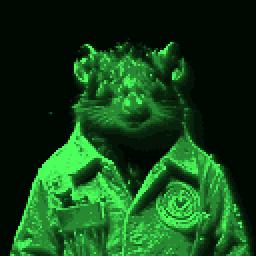
Learorce

An inhabitant of Learorce
Economy
Mainly Industrial
Government
Multi-Government
Tech level
6
Population
2.6 billion
Inhabitants
Large Rodents
Productivity
8736 M CR
Radius
3180 km

Learorce is reasonably notable for its great dense forests but scourged by deadly edible poets.

Learorce is a small world whose land surface is given over largely to dense, unbroken forest, broken only by the scattered clearings where its industry has taken root. The timber and processing works that anchor the economy sit apart from one another, connected by long cuts through the woods rather than any single road network. The forests themselves are the world's chief distinction, though local report holds them to be scourged by a strain of deadly edible poets, a hazard as much discussed as the trees themselves. Settlement is thin, with modest industrial holdings standing isolated amid the timber rather than gathered into any real town.

The large rodents who work Learorce answer to no single authority, the world being divided among competing local governments that each administer their own logging concessions and mills. Life here is a matter of getting by rather than prospering, and the workforce is practical and wary, trained by necessity to treat anything gathered from the forest floor with suspicion before it reaches a plate.

Esusti

An inhabitant of Esusti
Economy
Average Industrial
Government
Communist
Tech level
10
Population
4.2 billion
Inhabitants
Human Colonials
Productivity
24192 M CR
Radius
5253 km

This world is very well known for its inhabitants' ancient loathing of discos and the Esustian spotted cat.

Esusti's industrial belts ring its temperate lowlands, feeding a population housed in dense, state-planned blocks that spread across the sizeable landmass. The world is well known for the Esustian spotted cat, bred and kept across every district, and for an ancient, near-institutional loathing of discos, a prejudice old enough to have shaped the design of its public halls. No licensed dance establishment on the planet plays past a certain hour, and none features a mirrored floor.

Esustians work in state-run manufacturing collectives, disciplined and comfortable under a wealthy communist administration that keeps its cities well supplied and its factories humming. Off duty they keep spotted cats as a matter of civic pride and speak of an old cultural grudge against disco music with more seriousness than most outsiders expect.

Ususor

An inhabitant of Ususor
Economy
Poor Agricultural
Government
Feudal
Tech level
2
Population
1.3 billion
Inhabitants
Human Colonials
Productivity
1560 M CR
Radius
5032 km

This planet is very notable for its inhabitants' weird shyness and the Ususorian edible poet.

Ususor spreads wide and lightly settled, its holdings given over to thin fields worked by hand under the authority of local lords. Farms cluster around fortified manors separated by long stretches of open, unclaimed ground. The world's chief oddity is the Ususorian edible poet, a cultivated organism prized locally and served at feast and tribute alike, its name a source of endless confusion to outsiders who expect verse rather than a dish.

The people keep to themselves, retreating from strangers with a shyness remarked upon across the settled worlds, a habit bred by scattered farmsteads and the closed, hierarchical demands of feudal service. Loyalty runs to the local manor rather than to any distant crown, and conversation with those outside the household comes slowly, if it comes at all.

Maregeis

An inhabitant of Maregeis
Economy
Mainly Industrial
Government
Feudal
Tech level
7
Population
2.9 billion
Inhabitants
Small Black Slimy Lobsters
Productivity
8120 M CR
Radius
5705 km

This world is fabled for its ancient Maregeisian Soenor tulip plantations.

Maregeis pairs heavy manufacturing districts with the ancient Soenor tulip plantations that first gave the world its name off-world, the two economies existing in an uneasy border along the low hill country. Factory towns rise in blocks of grey stone and iron near the equatorial coalfields, their smoke drifting inland to darken the petals of fields that have been tended by the same families for longer than any local record can confirm. Settlement is thin and scattered outside these two centers, with much of the sizeable landmass left to scrub and tidal flat.

The small black slimy lobsters who work the plantations and forges answer to hereditary holders who claim the land by old right rather than purchase, and most labor is owed rather than paid. Life among the tulip rows is regarded as the better inheritance, and families that hold plantation rights guard them jealously against relatives bound instead to the foundries. Wealth here is modest and unevenly held, and most get by on what the soil or the furnace allows rather than what either produces in surplus.

Aate

An inhabitant of Aate
Economy
Mainly Industrial
Government
Corporate State
Tech level
10
Population
4.7 billion
Inhabitants
Human Colonials
Productivity
28952 M CR
Radius
6909 km

The world Aate is scourged by killer mountain lobstoids.

Aate's industry sprawls across highland basins and terraced slopes, its refineries and processing towers cut into the same mountain chains that shelter the killer lobstoids for which the world is infamous. Settlements cluster behind graded perimeters and reinforced approach roads, a defensive geography as much as an industrial one. Wealth here is measured in output tonnage moved down from the highlands to the lowland ports, past ground that is never entirely safe to walk unescorted.

The corporate charters that govern Aate treat the lobstoid ranges as a managed cost of production, rostering hardened crews for highland work and paying accordingly. Colonials born to the industry towns grow up practical and unsentimental about the mountains, aware that the company ledger and the casualty list are kept by the same office.

Sori

An inhabitant of Sori
Economy
Mainly Agricultural
Government
Dictatorship
Tech level
9
Population
4.0 billion
Inhabitants
Fierce Black Lizards
Productivity
13440 M CR
Radius
4859 km

The world Sori is beset by a evil disease.

Sori's farmland spreads across broad river basins under a government that assigns quotas for every field and granary. The world's agricultural wealth has long supported dense settlement, but a persistent and ill-understood disease moves through the population in slow, recurring waves, and entire districts are periodically sealed off by decree while it runs its course. Grain silos and quarantine walls stand side by side in most towns, a permanent feature of the landscape rather than an emergency measure. Even so, the harvests continue, and the markets and granaries remain full behind their checkpoints.

The Fierce Black Lizards native to Sori are disciplined and wary, shaped by generations of curfews, quotas, and quarantine drills imposed from above. Farming families work under close supervision, and a habit of terse, guarded speech has become the norm even among neighbors, born from years of watching for the next outbreak and the next official response to it.

Cemave

An inhabitant of Cemave
Economy
Rich Industrial
Government
Multi-Government
Tech level
11
Population
4.3 billion
Inhabitants
Fierce Black Insects
Productivity
20640 M CR
Radius
4102 km

The world Cemave is beset by dreadful earthquakes.

Cemave's crust is restless, riven by fault lines that shrug the surface into fresh ridges and sinkholes with grim regularity. Its factories and refineries are built low and reinforced, spread across wide plains rather than raised into towers, a concession the world's many competing administrations reached only after repeated collapses. The industrial output remains heavy and constant even as districts are periodically rebuilt, and the world is known across the region chiefly for the dreadful earthquakes that never quite let it rest.

The fierce black insects that hold Cemave answer to no single authority, their nests and hives organized instead under a patchwork of rival governments that divide the industrial plains between them. Generations of tremors have bred a population that treats structural collapse as routine business, quick to swarm toward damage and just as quick to resume production once it is cleared. Comfortable wealth has not softened them; it has simply given every faction more machinery worth defending.

Arusqudi

An inhabitant of Arusqudi
Economy
Average Agricultural
Government
Communist
Tech level
7
Population
3.5 billion
Inhabitants
Small Bug-Eyed Lobsters
Productivity
8960 M CR
Radius
5415 km

This world is very fabled for its unusual oceans.

Arusqudi's oceans dominate the world's reputation, their color and chemistry unlike those of any neighboring system, drawing scholars and curiosity alone rather than trade. Collective farms ring the coastlines, their fields laid out in state-mandated grids that feed the populous settlements further inland. The technology is modest, machinery kept running past its intended years, and the agricultural output is steady rather than remarkable. Most towns cluster near processing stations where the harvest is weighed, recorded and distributed according to quota.

The small bug-eyed lobsters that populate Arusqudi work under a rigid collective system, laboring on assigned plots and drawing rations that leave most getting by without great want or great comfort. Generations of central planning have made them patient, methodical, and unshowy, more inclined to discuss the strange tides than to speak of politics. Those who study the oceans do so as an approved diversion from the otherwise uniform rhythm of farm life.

Eredve

An inhabitant of Eredve
Economy
Poor Industrial
Government
Communist
Tech level
9
Population
3.9 billion
Inhabitants
Insects
Productivity
19968 M CR
Radius
3021 km

This planet is beset by a evil disease.

Eredve is a small world whose foundries and refineries operate at reduced capacity, their output diminished by the chronic epidemic that has settled into the population and refuses to lift. Quarantine walls partition the older manufacturing districts from the newer housing blocks, a division that has hardened into the permanent shape of the settlements. State clinics and isolation wards occupy as much ground as the assembly halls they were built to serve, and the smoke above the stacks carries the smell of disinfectant along with industrial exhaust.

The insectoid population labors under collective directives that treat sickness as a production problem to be managed rather than a private grief, and hive-councils rotate workers between factory floor and sickbay with the same flat efficiency. Despite the toll, the colony holds to a stubborn, communal discipline, its comfortable material provision funding an endless, grinding effort to keep the plague from ever quite winning.

Regeatge

An inhabitant of Regeatge
Economy
Average Agricultural
Government
Multi-Government
Tech level
6
Population
2.9 billion
Inhabitants
Human Colonials
Productivity
5568 M CR
Radius
6559 km

Regeatge is reasonably well known for its great dense forests but scourged by frequent civil war.

Regeatge is a large world whose continents are covered in great dense forests, broken only by cleared belts of farmland around scattered settlements. Its agricultural economy is unremarkable in what it produces, but the timber and cleared ground are worth fighting over, and the world has no single authority to stop that fighting. Competing local governments hold overlapping and disputed territories, and the forests themselves have absorbed generations of skirmish lines and abandoned outposts. Settlement remains moderate, with towns kept small and defensible rather than allowed to spread into the woodland.

The population lives under whichever local government holds their district this season, and loyalty tends to follow the nearest garrison rather than any distant capital. Farmers work the cleared land with one eye on the tree line, aware that militias move through the forest with as much ease as game animals. Poverty and modest technology mean most disputes are settled with old equipment and older grudges, and the colonials who remain are those too rooted to their fields to leave.

Edinso

An inhabitant of Edinso
Economy
Average Industrial
Government
Dictatorship
Tech level
12
Population
4.9 billion
Inhabitants
Black Horned Lizards
Productivity
24696 M CR
Radius
4867 km

This planet is mildly noted for its pink Edinsoian A Ontivediweed plantations but ravaged by vicious mountain monkeys.

Edinso's lowlands are given over to vast terraced plantations of pink Ontivediweed, their rows running to the horizon between processing towns and the industrial belts that refine and ship the crop onward. Beyond the cultivated valleys the terrain rises into forested highlands where mountain monkey troops have grown bold and numerous enough to strip fields, raid stores, and force the abandonment of several outlying plantations. Wealth from weed exports and steady manufacturing has built dense, orderly settlements across the lowlands, their skylines a mix of refineries and tightly packed housing blocks under a single, unyielding authority.

The Black Horned Lizards who work the plantations and factory floors do so under a dictatorship that directs labour and land use with little appeal, and this has bred a population that is disciplined, guarded in speech, and quick to defer to whoever holds local authority. Generations of monkey incursions into the highland farms have also left plantation crews pragmatic and armed for the work, treating the loss of a field as a cost of doing business rather than a crisis.

Ra

An inhabitant of Ra
Economy
Poor Agricultural
Government
Corporate State
Tech level
5
Population
3.1 billion
Inhabitants
Large Black Bony Lobsters
Productivity
8184 M CR
Radius
2828 km

The world Ra is beset by deadly earthquakes.

Ra is a small world whose thin crust never sits still for long, its farming districts laid out in low, quake-braced terraces rather than fixed towns. Fields of hardy grain and root crops are worked with primitive tools between tremors, and much of the architecture is squat, single-storey and built to fall without killing those inside it. The corporate charter that administers Ra keeps its holdings scattered across several fault zones, so that no single collapse can ruin a season's yield outright.

The large black bony lobsters who work Ra's terraces answer to company overseers who set quotas without much regard for the ground's temper, and life here is measured out in aftershocks and harvests rather than seasons. They are a practical, unsentimental people, quick to rebuild and slow to trust anything that stands taller than a single storey.

Aronar

An inhabitant of Aronar
Economy
Poor Industrial
Government
Feudal
Tech level
8
Population
3.2 billion
Inhabitants
Small Furry Insects
Productivity
10240 M CR
Radius
5429 km

Aronar is most famous for the Aronarian deadly goat and its hoopy casinos.

Aronar's industry is old and half-worn, its foundries and refineries scattered across a landscape of grazing highlands and low grey mills under feudal writ. The Aronarian deadly goat, bred wild in the upland scrub, is prized and feared in equal measure across the settled districts, while the casinos of the lowland towns draw those willing to risk what little wealth they hold. Manor holdings ring the industrial belts, each lord answering to custom rather than any distant charter, and the world's fortunes rise and fall with ore prices and the gambling houses' luck.

The small furry insect population lives under strict feudal obligation, laborers and artisans bound to their holdings even as the casinos offer a rare, chaotic escape from that order. Herders who tend the deadly goats are regarded with a wary respect, their trade dangerous and their status oddly elevated for a world otherwise governed by rank and inheritance.

Arraesso

An inhabitant of Arraesso
Economy
Poor Agricultural
Government
Feudal
Tech level
4
Population
2.1 billion
Inhabitants
Human Colonials
Productivity
2520 M CR
Radius
5514 km

This planet is notable for its unusual oceans and its inhabitants' exceptional loathing of food blenders.

Arraesso's oceans run strange colors and heavier tides than charts expect, a consequence of mineral saturation that has never been fully explained by the handful of scholars who bother to visit. Settlements cling to the coastal shelves in scattered clusters, thin farming villages linked by dirt roads and the occasional feudal keep. The soil is poor and the growing season short, so most holdings scrape by on hardy grain and salt-fish rather than anything worth shipping offworld.

Life under the local lords is hard and closely watched, with most labor going straight to tithe and subsistence rather than surplus. The people hold a fierce, almost proverbial hatred of food blenders, a grudge tied to some old story about spoiled ocean harvests that every household still repeats as fact. They are plain-spoken folk, suspicious of machinery in the kitchen and loyal above all to their own patch of shoreline.

Cevege

An inhabitant of Cevege
Economy
Average Industrial
Government
Communist
Tech level
12
Population
5.0 billion
Inhabitants
Fierce Insects
Productivity
28800 M CR
Radius
4103 km

This world is a revolting dump.

Cevege's factory belts ring the equator in an unbroken smear of smoke and effluent, feeding refineries that never fully shut down. Wealth accumulates in state coffers faster than sanitation can keep pace with production, and the heavily populated hive-cities sit under a permanent haze of industrial runoff. Canals meant to carry waste away from the manufacturing districts have long since become open sewers, and the smell is a byword across the trade routes for what advanced technology looks like when nothing is spent on appearances.

The insectile population organizes labor through rigid collective hierarchies, every caste assigned to production quotas set by the central committee. Fierce by temperament and unsentimental about squalor, they regard the filth of their hives as an acceptable cost of output and treat complaints about it as a foreign affectation.

Orteve

An inhabitant of Orteve
Economy
Mainly Industrial
Government
Multi-Government
Tech level
9
Population
3.8 billion
Inhabitants
Black Fat Humanoids
Productivity
12768 M CR
Radius
5183 km

This world is fabled for its fabulous vicious Leaer gargle blasters.

Orteve's continents are given over almost entirely to refineries, distilleries, and the housing blocks that serve them, with the skyline broken by cooling towers rather than any natural feature. The world's fame rests on the Leaer gargle blaster, a drink brewed and bottled in vast quantities across competing municipal districts, each claiming the authentic recipe. Ownership of the planet is split among a patchwork of local administrations, none of which controls the whole trade, so the industrial districts operate under different codes and inspection regimes depending on which sector of the world a plant sits in.

The Black Fat Humanoids who work the distilleries and packing lines are known for a dry humor about their own product, treating its viciousness as a point of civic pride rather than a hazard. Life under the divided administrations has made them practiced negotiators, used to shifting paperwork and permits between jurisdictions that share a planet but little else, and comfortable wealth has left them more concerned with quality of the brew than with strict adherence to any one government's rules.

Geerra

An inhabitant of Geerra
Economy
Average Agricultural
Government
Democracy
Tech level
5
Population
2.9 billion
Inhabitants
Human Colonials
Productivity
9280 M CR
Radius
2924 km

This planet is reasonably noted for its exotic goat soup.

Geerra is a small world of modest farms and pasture, its low hills terraced with fodder crops and dotted with goat herds that give the place its name in trader circles. Settlements are loosely spread across the arable belts, small enough that most business is still conducted face to face. The planet's reputation rests almost entirely on its exotic goat soup, a dish worked into local ceremony and served at gatherings of every kind. Beyond the herding and the soup pots, technology here remains basic, and most tools and buildings show the wear of long, careful use rather than replacement.

The colonials of Geerra vote on most matters that touch the community, from grazing rights to festival dates, and take a plain pride in settling things themselves rather than deferring to any distant authority. Life is unhurried but not easy, and households get by through steady herding, shared labor, and the recipes passed down for the soup that visitors and neighbors alike have come to expect at any table worth sitting at.

Soinuste

An inhabitant of Soinuste
Economy
Poor Industrial
Government
Anarchy
Tech level
6
Population
2.3 billion
Inhabitants
Fierce Harmless Fat Insects
Productivity
5888 M CR
Radius
4852 km

This planet is beset by deadly earthquakes.

Soinuste's crust is restless, riven by fault lines that bring collapse to whatever is built too tall or too permanent. Its industry survives in low, heavily braced sheds scattered far apart, a pattern forced by both the shaking ground and the absence of any authority to plan otherwise. Refineries and foundries are patched rather than rebuilt, their output modest and their machinery older than it should be. What settlements exist sit on the more stable ground between fault lines, thin strings of habitation rather than towns.

The insects that hold this world are large, armored, and given to loud territorial displays that look far more dangerous than they are, since none of their posturing carries any real sting. Without government to coordinate rebuilding or relief, each cluster of workers manages its own sheds and shelters, distrustful of outsiders and quick to bristle but rarely violent in fact. Generations of tremors have taught them to build low, live light, and expect to lose what they make.

Erlage

An inhabitant of Erlage
Economy
Rich Industrial
Government
Confederacy
Tech level
11
Population
4.6 billion
Inhabitants
Human Colonials
Productivity
33120 M CR
Radius
3036 km

This world is reasonably well known for the Erlagian tree ant but cursed by vicious mountain goats.

Erlage is a small world given over almost entirely to industry, its cramped landmass covered in refineries, foundries and the dense residential blocks needed to house a population far larger than its size would suggest. Between the industrial belts, patches of managed forest survive, home to the Erlagian tree ant, cultivated and studied for its role in the world's minor but persistent reputation as something other than a factory floor. The uplands are another matter: steep, unwelcoming, and infested with mountain goats whose aggression toward workers and livestock alike has made the high slopes effectively abandoned to them.

The population lives well by the standards of industrial worlds, its wealth spread widely enough under the Confederacy's power-sharing councils that most colonials hold a stake, however small, in the refineries and manufactories around them. Erlagians are practical, unsentimental people, quick to complain about the goat problem in the abstract while treating the tree ant with something close to civic pride.

Xeaan

An inhabitant of Xeaan
Economy
Mainly Industrial
Government
Confederacy
Tech level
9
Population
4.1 billion
Inhabitants
Human Colonials
Productivity
20664 M CR
Radius
3497 km

This world is ravaged by unpredictable civil war.

Xeaan packs its factories and refineries into a tight ring of cities crowded onto a small landmass, the confederacy's constituent councils each holding a district and a share of production. Civil war moves through the world in fits and starts, flaring over a foundry or a transit line and then subsiding into uneasy truce, so that the same street can be a battle line one season and a market the next. Smoke-blackened quarters sit alongside intact ones, and much of the industrial base keeps running through the fighting simply because no faction can afford to let it stop.

The population is dense and largely working, tied to the mills and assembly lines that keep the confederacy's factions all provisioned regardless of who currently holds a given block. Comfortable wages and steady work have not bought loyalty to any single council, and people tend to keep their politics private and their exits planned. Long exposure to sudden fighting has made most residents unhurried in a crisis and quick to return to the machines once the shooting stops.

Veis

An inhabitant of Veis
Economy
Mainly Industrial
Government
Dictatorship
Tech level
7
Population
3.1 billion
Inhabitants
Frogs
Productivity
12152 M CR
Radius
4492 km

The planet Veis is a boring world.

Veis produces the same modest goods it has produced for generations, its factory towns arranged in the same grid pattern the ruling council laid down long ago and never revised. The land itself offers little variation: flat, grey-skied basins given over to smelters and assembly sheds, with the same low hills repeating along every horizon. Nothing here has burned, flooded, or rebelled in living memory, and the official histories record this fact with evident satisfaction. It is a world that does exactly what is expected of it and nothing else.

The frogs of Veis work their shifts, file their production quotas, and go home, having long since learned that the council rewards steadiness and punishes anything resembling initiative. Comfortable enough to want little and watched closely enough to say less, they have made a quiet virtue of predictability.

Ensoreus

An inhabitant of Ensoreus
Economy
Rich Industrial
Government
Corporate State
Tech level
12
Population
5.2 billion
Inhabitants
Black Fat Felines
Productivity
45760 M CR
Radius
3380 km

This planet is a tedious little planet.

Ensoreus packs its entire industrial output onto a small crust of land and reclaimed shelf, every district given over to refineries, assembly halls, and the corporate towers that own them. The world is small enough that its horizon curves close and its cities run into one another without gaps, forming a single continuous works broken only by transit rail and drainage canals. It is, by common agreement among those who have stopped here more than once, a tedious little planet: the weather is regulated, the shifts are fixed, and nothing on the surface varies from one district to the next.

The Black Fat Felines who staff Ensoreus's plants live under contracts issued by the corporate boards that hold title to the world, drawing steady wages and steady rations in exchange for steady, unremarkable labor. Wealth here is real but evenly administered, and the population has settled into a placid, well-fed routine that leaves little room for anything resembling incident.

Riveis

An inhabitant of Riveis
Economy
Average Agricultural
Government
Democracy
Tech level
5
Population
2.9 billion
Inhabitants
Harmless Rodents
Productivity
9280 M CR
Radius
6568 km

The world Riveis is most well known for its hoopy casinos.

Riveis spreads its farmland across a broad, gently rolling world, its holdings large enough that no single district dominates the others. Technology here remains simple, tools and transport kept plain and functional, yet scattered among the grain towns are the famed casino halls for which the world is known across the region. These houses, built up over generations from local timber and stone, draw gatherings from every settled corner despite the primitive means used to build and run them. Wealth is modest and evenly spread, the world getting by on steady harvests rather than surplus.

The native rodents that populate Riveis are mild-tempered and communal, organizing their scattered farm settlements through open democratic councils rather than any central authority. Long hours in the fields are balanced by evening gatherings at the gaming halls, which function as much as civic meeting places as houses of chance. Harmless by disposition, they prize fair dealing and open debate over ambition or accumulation.

Bivea

An inhabitant of Bivea
Economy
Poor Agricultural
Government
Anarchy
Tech level
3
Population
1.6 billion
Inhabitants
Fierce Frogs
Productivity
1536 M CR
Radius
4562 km

This planet is plagued by frequent solar activity.

Bivea's thin, patchy fields lie under skies prone to sudden flares that wash out radio chatter and scorch exposed crops without warning. Settlements are small and far apart, built low and half-buried where possible to escape the worst of the flare seasons. Farming here is a matter of guesswork and short growing windows, snatched between storms rather than planned around a calendar.

The Fierce Frogs who work this soil answer to no central authority, organizing locally and settling disputes among themselves as need arises. Generations of unpredictable skies have made them wary and self-reliant, quick to abandon a planting or a shelter the moment the light in the sky turns wrong.

Ermaso

An inhabitant of Ermaso
Economy
Poor Agricultural
Government
Anarchy
Tech level
4
Population
2.0 billion
Inhabitants
Human Colonials
Productivity
1920 M CR
Radius
2955 km

This planet is very notable for the Ermasoian edible grub and the Ermasoian tree ant.

Ermaso is a small world of thin soils and scattered clearings, its farmland carved out between stands of native timber rather than replacing it. Without any central authority to organize larger holdings, the scattered farmsteads work independently, trading among themselves for what the land will not give freely. The edible grub and the tree ant, both harvested from the surrounding woodland, form a staple of the diet across the settled clearings and are gathered as readily as anything sown in a field.

Households here answer to no wider law, settling disputes locally and relying on custom more than any written code. Life is hard and tools are simple, and most families divide their labor between meager crops and the steady work of gathering grubs and ants from the treeline. They are self-reliant people, wary of outsiders and unused to anyone claiming authority over their land.

Velete

An inhabitant of Velete
Economy
Poor Agricultural
Government
Democracy
Tech level
7
Population
3.8 billion
Inhabitants
Human Colonials
Productivity
9120 M CR
Radius
4547 km

Velete is a revolting dump.

Velete is given over to grain and root farms that spread across low, waterlogged plains, and the smell of fermenting mash and animal pens clings to every settlement large enough to have a name. Irrigation channels run alongside open drainage ditches, and the two are rarely kept apart, which accounts for much of the world's reputation. Modest processing works cluster near the larger towns, their runoff feeding straight back into the fields they draw from. Little here has been built with an eye to appearances; everything serves the harvest.

The elected councils that run each district spend most of their sessions arguing over water rights and grain quotas rather than sanitation, and little changes as a result. People here work long days in the mud for modest return, proud of their independence even as they complain, endlessly and to anyone who will listen, about the smell.

Engema

An inhabitant of Engema
Economy
Mainly Agricultural
Government
Corporate State
Tech level
8
Population
4.0 billion
Inhabitants
Black Slimy Lizards
Productivity
21120 M CR
Radius
3572 km

The world Engema is beset by a evil disease.

Engema's croplands ring a compact world given over almost entirely to cultivation, its holdings parceled and managed under corporate charter rather than by custom or clan. The soil is rich and the harvests reliable, but the world carries a sickness that moves through its settlements in slow, recurring waves, resisting every treatment the corporate clinics have tried. Quarantine districts stand alongside grain silos and processing plants, and travel between farming sectors is tightly controlled to slow the disease's spread. Even so, the fields are worked without pause, because the contracts that bind the population do not lapse for illness.

The black slimy lizards who work Engema's land answer to shareholders and estate managers rather than any local authority, their labor organized with the same efficiency applied to the harvest schedules and the sickness rosters. Comfortable wages and steady supply have kept discontent low, but the disease has bred a certain fatalism, a habit of working through symptoms rather than reporting them. They are practical, close-knit within their assigned sectors, and largely indifferent to matters outside the boundaries of their contracts.

Atrienxe

An inhabitant of Atrienxe
Economy
Mainly Industrial
Government
Dictatorship
Tech level
9
Population
3.9 billion
Inhabitants
Human Colonials
Productivity
15288 M CR
Radius
3298 km

Atrienxe is an unremarkable dump.

Atrienxe crowds its factories and tenements across a small world with little room to spare, every district given over to smelting, fabrication or the housing needed to keep the workforce fed. The dictatorship that runs the place has never troubled itself with appearances, and the result is a colony of grey blocks, cracked pavement and industrial haze that most who pass through forget within a season. Nothing here was built to be looked at, only used, and it shows in every street.

The population works the mills and assembly lines in shifts set by the state, and steady wages have bought them a comfortable, unglamorous stability. They speak of their world without pride or complaint, the way people speak of a job they intend to keep doing until it is finished.

Beusrior

An inhabitant of Beusrior
Economy
Poor Industrial
Government
Confederacy
Tech level
11
Population
4.8 billion
Inhabitants
Human Colonials
Productivity
27648 M CR
Radius
3650 km

The world Beusrior is a dull world.

Beusrior packs a dense human population onto a small world whose factories run on advanced tooling but yield little worth shipping outward, a mismatch the local councils have long stopped apologizing for. The terrain is low and even, given over almost entirely to grey manufacturing blocks and the workers' quarters that ring them, with no coastline, range or ruin to break the monotony. Its reputation for dullness is not incidental but structural: uniform construction codes across the member-holds of the confederacy left every district looking much like the last.

The population lives well by any material measure, its wealth accumulated through generations of steady industrial output even as that output itself commands little interest beyond the system. Confederacy administration keeps labor and civic life tightly scheduled and evenly distributed, producing a people who are orderly, unhurried, and largely indifferent to novelty.

Ontiat

An inhabitant of Ontiat
Economy
Average Agricultural
Government
Confederacy
Tech level
6
Population
3.2 billion
Inhabitants
Human Colonials
Productivity
9216 M CR
Radius
6713 km

The planet Ontiat is scourged by a evil disease.

Ontiat is a large world of open farmland and modestly built market towns, spread thin across a landmass that has never been fully claimed. Its agricultural economy, ordinary in its crops and methods, is overshadowed by a persistent disease that moves through the population in slow, recurring waves and has shaped how the settlements are arranged, spaced, and quarantined from one another. Fields are worked in rotation with fallow zones left wider than farming alone would require, a precaution against contagion as much as soil exhaustion.

The Confederacy's scattered local councils manage outbreaks town by town, with little central authority to coordinate a unified response, so quarantine and care fall largely to the communities themselves. Colonials here are practical and wary, accustomed to sickness as a recurring cost of life rather than an emergency, and they measure neighbors by how reliably they help when a household is shut in.

Atarza

An inhabitant of Atarza
Economy
Mainly Industrial
Government
Anarchy
Tech level
5
Population
2.0 billion
Inhabitants
Human Colonials
Productivity
4480 M CR
Radius
3240 km

This world is plagued by occasional solar activity.

Atarza is a small world given over to scattered industry, its few foundries and refineries built low and heavily shielded against solar activity that periodically floods the surface with radiation storms. There is no central authority to coordinate the work, so plants operate independently, cannibalizing failed neighbors for parts. The settlements sit far apart, each a self-contained cluster of furnaces and reinforced shelters rather than a proper town, with primitive tools compensating for what organization cannot provide.

Without government, the colonials rely on informal codes worked out between rival plant operators to keep the peace and share warning of incoming flares. Life here rewards those who can read the sky and shut down machinery before a storm hits, and poverty keeps most of the equipment patched together well past its intended use.

Arazaes

An inhabitant of Arazaes
Economy
Mainly Agricultural
Government
Democracy
Tech level
7
Population
3.5 billion
Inhabitants
Human Colonials
Productivity
16800 M CR
Radius
6816 km

This planet is very notable for the Arazaesian tree ant and Arazaesian wolf meat.

Arazaes is a broad, temperate world given over almost entirely to farmland and forest holdings, its low tech level suited to the steady rhythms of planting and harvest rather than industry. Vast tracts of woodland shelter the Arazaesian tree ant, whose mounds are a common sight along field boundaries, while ranchlands further out support the wolf herds bred for meat that has made the planet's name off-world. Settlements are spread thickly across the fertile lowlands, forming a patchwork of market towns rather than any single dominant city.

The population, descended from old colonial stock, governs itself through elected councils that manage land grants, herd quotas and the ant-harvest disputes that periodically flare between neighboring farms. Comfortable but unhurried, most Arazaesians take pride in working land their families have held for generations, and civic life revolves around the agricultural fairs where wolf meat and tree-ant produce are judged and traded.

Xeeranre

An inhabitant of Xeeranre
Economy
Mainly Agricultural
Government
Multi-Government
Tech level
6
Population
2.7 billion
Inhabitants
Large Furry Insects
Productivity
7776 M CR
Radius
3433 km

Xeeranre is cursed by killer mountain Quceoids.

Xeeranre is a small world of modest technology, its farmland broken by ranges where the mountain Quceoids are said to hunt, a curse older than any of the settlements that now avoid the higher slopes. Fields and orchards are worked in the lowland belts, with granaries and threshing yards clustered well clear of the foothills. The world has no single authority; each district answers to its own council or headman, and boundaries tend to follow the safe ground rather than any surveyed line.

The population, large furry insects organized into loose farming communities, keep to modest means and modest ambitions, tending crops enough to get by rather than to prosper. Generations of losses to the Quceoids have made them cautious planners, quick to abandon a good field if the mountain above it turns restless, and slow to trust any government that promises otherwise.

Quzadi

An inhabitant of Quzadi
Economy
Mainly Industrial
Government
Communist
Tech level
9
Population
4.0 billion
Inhabitants
Furry Insects
Productivity
17920 M CR
Radius
5454 km

Quzadi is cursed by dreadful civil war.

Quzadi is a sizeable world given over to industry, its skyline broken by refineries and fabrication yards that continue to operate even as the interior burns. Districts loyal to competing councils sit within sight of one another across ash-grey belts of ruined suburb, and freight lines are rerouted weekly to avoid whichever quarter has fallen this month. The official economy remains oddly comfortable on paper, propped up by state ledgers that have not caught up with the fighting. Development here means functioning power grids and working assembly lines standing next to bombed housing blocks that no one has been assigned to repair.

The furred, chitinous population is organized under committees and production quotas that persist out of habit even where the councils issuing them no longer agree on borders. Workers move between shifts and shelters with the same flat competence, having learned to treat factory discipline as the one constant left to them. Loyalty to the wider state has frayed into loyalty to a foreman, a block, a line supervisor who still shows up.

Isti

An inhabitant of Isti
Economy
Poor Agricultural
Government
Feudal
Tech level
2
Population
1.3 billion
Inhabitants
Human Colonials
Productivity
1560 M CR
Radius
6156 km

The planet Isti is reasonably noted for its inhabitants' eccentric shyness and Zero-G hockey.

Isti is a large world of thin holdings and worn-out soil, its farmsteads spread far apart across long, weather-beaten plains. Manor estates hold what little wealth exists, and grain and root crops are worked by hand under primitive means with no machinery to spare. The world's one recreation of note is a Zero-G hockey league played in the vacuum sheds above the fields, a strange counterpoint to the plodding life below.

The colonials keep to themselves, wary of strangers and slow to speak, a shyness bred by generations of scattered holdings answering to distant lords. What community they have is found in the hockey sheds, where the same quiet families gather to watch or play, briefly loud among people otherwise given to silence.

Digebiti

An inhabitant of Digebiti
Economy
Poor Industrial
Government
Feudal
Tech level
8
Population
3.2 billion
Inhabitants
Harmless Furry Felines
Productivity
10240 M CR
Radius
6261 km

Digebiti is cursed by killer mountain Xeoids.

Digebiti's vast landmass is broken by ranges the locals will not name aloud, where the phenomenon known only as the Xeoids stirs without warning and brings down slopes, rockfalls, and worse on any settlement built too near. Smelting works and ore towns cling instead to the lowland margins, their furnaces old and their output modest, feeding a feudal economy that never quite escapes want. Roads run in wide arcs around the high country, adding distance that the world's poverty can ill afford, and whole districts have been abandoned after a mountain moved.

The furred population lives under a patchwork of hereditary holdings, each lord answerable for the mines and forges within his reach and for keeping folk clear of the peaks. Generations of loss to the Xeoids have made them cautious and superstitious about high ground, quick to defer to any elder who claims to read the mountains' moods, and steady, unglamorous workers in the furnace towns where the real wealth of the world, such as it is, gets made.

Leoned

An inhabitant of Leoned
Economy
Average Agricultural
Government
Corporate State
Tech level
9
Population
4.6 billion
Inhabitants
Large Black Bug-Eyed Lizards
Productivity
16192 M CR
Radius
3223 km

Leoned is reasonably well known for the Leonedian tree snake but scourged by unpredictable earthquakes.

Leoned is a small world under corporate charter, its farmland divided into leased plots that feed a population packed tightly across the stable ground between fault lines. Quakes come without warning and without pattern, and building codes across the settled belts favor low, braced structures over height. The Leonedian tree snake, prized in the terraria and exotic-pet trade of other worlds, breeds in the shelterbelts and orchard margins that separate the fields. Corporate surveyors have mapped the fault systems in detail, though the mapping has done little to make the tremors predictable.

The large black bug-eyed lizards who work Leoned's land do so under contracts issued by the agricultural combines that hold the leases, their days structured around planting quotas and quake drills in roughly equal measure. Comfortable wages and steady development have made them a settled, methodical people, unhurried in manner but quick to move when the ground starts to shift.

Enzaer

An inhabitant of Enzaer
Economy
Rich Industrial
Government
Dictatorship
Tech level
11
Population
4.4 billion
Inhabitants
Human Colonials
Productivity
24640 M CR
Radius
3545 km

Enzaer is a revolting dump.

Enzaer's cramped landmass is given over almost entirely to production, with refineries and assembly complexes packed so close together that their runoff and smoke have fouled the air and the shallow seas alike. What passes for civic planning here is a dense lattice of factory blocks and worker tenements, laid out for output rather than comfort, and the result is widely regarded as squalid despite the wealth it generates. The dictatorship that runs Enzaer has never seen fit to spend its considerable industrial profits on cleaning the place up.

Human Colonials here work long shifts in the advanced production lines that make the world rich, while living amid grime and crowding that the ruling order treats as an acceptable cost of doing business. Loyalty to the state is assumed rather than earned, and most residents have learned to keep complaints about the filth to themselves.

Teraed

An inhabitant of Teraed
Economy
Rich Industrial
Government
Multi-Government
Tech level
12
Population
4.7 billion
Inhabitants
Human Colonials
Productivity
22560 M CR
Radius
6087 km

Teraed is an unremarkable dump.

Teraed's continents are given over almost entirely to refineries, foundries and assembly yards, each cluster answering to a different local administration with its own tariffs and codes. The result is a world without a unifying skyline or plan, just district after district of smoke-stained concrete under a permanent brown haze. Its wealth is real and its factories advanced, but nothing about the place has ever been built to look at, and no one has bothered fixing that.

The population works long shifts in plants owned by whichever authority holds the district that week, and most treat the constant turnover of local rule as background noise rather than politics. Colonials here are practical, unsentimental people, well paid but unimpressed by their own surroundings, and they tend to describe their home in the same flat terms outsiders use for it.

Vetitice

An inhabitant of Vetitice
Economy
Rich Industrial
Government
Communist
Tech level
11
Population
4.5 billion
Inhabitants
Human Colonials
Productivity
28800 M CR
Radius
4457 km

This world is very well known for Vetitician lethal brandy and its great parking meters.

Vetitice's continents are given over almost entirely to refineries, distilleries and the tiered housing blocks that serve them, with little land left to anything but production. State-run stills along the equatorial belt turn out the brandy the world is famous for, a spirit strong enough that its export casks carry warning seals rather than vintage labels. In the capital's central districts stand the towering parking meters, ornate cast-iron relics of an earlier civic order that the planetary council maintains as monuments rather than instruments of use. Beyond these curiosities the world is one continuous industrial works, its skies grey with refinery haze from pole to pole.

Labour is organised through collective works councils, and most residents spend their working lives assigned to a single plant or distillery cooperative with little movement between trades. Wealth here is genuine but administered communally, so private fortune shows itself less in property than in ration allotments of the brandy itself, prized and carefully rationed even among those who make it.

Laenin

An inhabitant of Laenin
Economy
Poor Agricultural
Government
Communist
Tech level
4
Population
2.4 billion
Inhabitants
Human Colonials
Productivity
4608 M CR
Radius
4165 km

The planet Laenin is famous for its inhabitants' ancient loathing of sit coms but cursed by a killer disease.

Laenin's collective farms spread thin across rolling grain country, their fields worked by hand under a government that owns every harvest before it is cut. The disease that moves through its villages in slow waves has left whole hamlets shuttered and its clinics permanently overwhelmed, a burden the planet's primitive medicine cannot lift. Older still than the sickness is the colony's hostility toward broadcast comedy, a grudge folded into local law and enforced with the same seriousness given to grain quotas.

Laenin's people are farmers first, organized into work brigades that answer to distant planners rather than to each other. Generations of loss to the recurring sickness have made them fatalistic and close-mouthed, and their long-standing contempt for televised sit coms is treated less as taste than as a matter of communal honor.

Beraanxe

An inhabitant of Beraanxe
Economy
Mainly Agricultural
Government
Multi-Government
Tech level
5
Population
2.3 billion
Inhabitants
Black Slimy Lobsters
Productivity
6624 M CR
Radius
3796 km

The world Beraanxe is reasonably noted for its inhabitants' exceptional love for tourists and its unusual oceans.

Beraanxe is a small world whose land is broken into scattered holdings, each answering to its own local authority rather than any central rule. Its oceans run strange colours and thicker currents than most worlds, folding and shimmering under low light in ways that draw comment from every visiting captain. Farms cling to the coastal shelves between these tidal bands, working plots of shallow soil with tools that owe nothing to modern industry. Settlements are few and far between, and what wealth exists comes slowly, from the soil and the sea rather than from any factory.

The Black Slimy Lobsters that hold this world divide themselves among many small governments, yet share a rare warmth toward outsiders that outweighs their political differences. Life on modest farms and fisheries keeps most occupied with plain, steady labour, but hospitality toward those from off-world is treated almost as a civic duty. Their fondness for visitors has become as much a mark of the place as the strange waters they fish.'

Atage

An inhabitant of Atage
Economy
Mainly Industrial
Government
Dictatorship
Tech level
9
Population
3.9 billion
Inhabitants
Human Colonials
Productivity
15288 M CR
Radius
3298 km

Atage is an unremarkable planet.

Atage offers little to distinguish it from a hundred other small industrial worlds under central rule. Its factories and processing yards cover much of the habitable crust, feeding a populace packed into tiered residential blocks around each production zone. Nothing in its geography, climate or history has given it a reputation beyond that of a competent, forgettable producer.

The population works to quotas set from above, and the dictatorship's planners favour steady output over any particular specialism, which suits a people who have grown used to comfortable, unremarkable lives. Colonial stock through and through, they take a quiet pride in reliability rather than ambition.

Veisti

An inhabitant of Veisti
Economy
Mainly Industrial
Government
Corporate State
Tech level
12
Population
5.5 billion
Inhabitants
Human Colonials
Productivity
33880 M CR
Radius
4387 km

The planet Veisti is reasonably noted for its inhabitants' eccentric shyness and Zero-G cricket.

Veisti's surface is given over almost entirely to industry, its cities organized in tight concentric rings around processing complexes that never go dark. Between the manufacturing districts, corporate housing towers rise in uniform blocks, broken here and there by the vast domed arenas built for zero-gravity cricket, the planet's chief export of culture rather than goods. The atmosphere above the factory belts carries a permanent haze, scrubbed at intervals by municipal systems paid for out of corporate revenue rather than public funds.

Employment here is arranged almost entirely through the controlling corporations, and life follows their shift patterns and their architecture down to the color of the uniforms. Off the factory floor the population is notably withdrawn, preferring correspondence and scheduled meetings to unstructured company, an eccentric shyness at odds with the roaring crowds who fill the domed arenas whenever a cricket match is called.

Zaerla

An inhabitant of Zaerla
Economy
Poor Agricultural
Government
Feudal
Tech level
5
Population
2.5 billion
Inhabitants
Large Black Fat Birds
Productivity
3000 M CR
Radius
3019 km

The planet Zaerla is mildly well known for its exotic cuisine.

Zaerla is a small, thinly settled world whose economy runs on subsistence farming under the authority of local feudal lords. Its holdings are scattered and self-contained, each managing its own fields and livestock pens with little contact beyond the nearest boundary stone. What reputation the world carries beyond its own sky rests on its exotic cuisine, built almost entirely around the large black fat birds that dominate its farmyards and its tables.

The people are farmers and herders bound to their lord's land, working with primitive tools and old methods passed down through generations. Rearing and preparing the black fat birds is both livelihood and craft, a skill regarded with more pride than the poverty of the manor otherwise allows.

Esredice

An inhabitant of Esredice
Economy
Poor Industrial
Government
Feudal
Tech level
8
Population
3.2 billion
Inhabitants
Human Colonials
Productivity
10240 M CR
Radius
5205 km

The world Esredice is a boring planet.

Esredice is a sizeable world of grey industrial townships strung along low ridgelines, each producing whatever the local lord's manufactories can wring from thin ore seams and tired soil. Nothing marks its history with distinction: no war, no disaster, no invention has given it a name beyond its own. The sky is flat and pale most of the year, and the works below run on the same schedules they always have. Visiting officials of the merchant guilds have described its ledgers as the least remarkable in the sector, and left it at that.

The people work the foundries and workshops their fief-holders assign them and expect little else from the arrangement. Under the local lords, ambition is a quiet, private matter, rarely spoken of and never encouraged; life proceeds at the same even pace it has for generations, and most colonials seem content, or resigned, to let it.

Beor

An inhabitant of Beor
Economy
Rich Agricultural
Government
Communist
Tech level
6
Population
3.0 billion
Inhabitants
Human Colonials
Productivity
9600 M CR
Radius
3013 km

Beor is an unremarkable dump.

Beor is a small world of collective farms and irrigation cooperatives, its low hills terraced into grain plots and orchard rows under a modest technical base. Nothing distinguishes its towns from one another; the same prefabricated grain silos and communal halls repeat across every district. Despite the fertility of its soil, the place has earned a reputation as an unremarkable dump, a world visited for its produce and forgotten as soon as the holds are full.

The colonials work assigned plots under collective directives, their days measured by harvest quotas rather than personal ambition. Life is plain and communal, without much complaint but without much hope of change, and the people carry a resigned, workmanlike pride in soil that yields more than the system around them ever gives back.

Orso

An inhabitant of Orso
Economy
Average Industrial
Government
Multi-Government
Tech level
9
Population
3.6 billion
Inhabitants
Human Colonials
Productivity
15552 M CR
Radius
5357 km

The world Orso is reasonably fabled for its exciting sit coms and its inhabitants' exceptional love for food blenders.

Orso is a sizeable world given over largely to mixed industry, its skyline broken by broadcast towers rather than any single dominant structure. Studio districts sprawl across several administrative zones, each run under its own local charter, producing the sit coms for which the world is reasonably fabled. Manufacturing quarters nearby turn out household goods for domestic markets, chief among them the food blenders that have become something of a civic obsession.

The population lives under a patchwork of overlapping local governments, each jealous of its own studio contracts and factory output, which gives daily life a competitive, parochial flavour despite the shared culture. Comfortable wages and steady industrial work leave people with leisure enough to follow the broadcasts closely and to argue, with real passion, over the merits of one blender model against another.

Usatqura

An inhabitant of Usatqura
Economy
Poor Agricultural
Government
Democracy
Tech level
5
Population
3.0 billion
Inhabitants
Human Colonials
Productivity
7200 M CR
Radius
4961 km

This planet is reasonably famous for its inhabitants' exceptional loathing of sit coms.

Usatqura is a broad world of thin soils and unpredictable rain, given over almost entirely to grain and root farming worked with hand tools and draft animals. Its farmsteads and market towns spread across the lowlands without much central planning, each cluster of holdings tending to its own affairs. The planet has acquired a certain notoriety for the sheer intensity with which its people despise broadcast situation comedies, a subject on which they will hold forth at length and without prompting.

The colonials govern themselves through town meetings and elected councils, a habit that suits a population used to arguing everything out before acting on it. Life is modest and the work is steady rather than rewarding, which leaves little patience for entertainment that treats hardship as a joke, and a great deal of patience for saying so.

Erbiti

An inhabitant of Erbiti
Economy
Poor Industrial
Government
Anarchy
Tech level
6
Population
2.3 billion
Inhabitants
Large Felines
Productivity
5888 M CR
Radius
2964 km

The world Erbiti is most well known for its great dense forests.

Erbiti's landmass is given over almost entirely to great dense forests, broken only by the low sprawl of processing camps and rusting mills that pass for industry here. What manufacturing exists clings to the timber trade, sawmills and pulping sheds strung along cleared river corridors, their output modest and their machinery old. No central authority manages the forests or the settlements within them, and the boundaries between one logging claim and the next are settled by those strong enough to hold them.

The large felines who work these forests are scattered thin across the world, living in small logging camps and mill towns with no government above the camp itself. Poverty and the absence of law have made them self-reliant and wary of outsiders, quick to settle disputes over timber rights and water access without appeal to anyone but themselves.

Reinen

An inhabitant of Reinen
Economy
Average Agricultural
Government
Confederacy
Tech level
8
Population
4.0 billion
Inhabitants
Black Bug-Eyed Lobsters
Productivity
11520 M CR
Radius
6455 km

This planet is a tedious little planet.

Reinen presents itself as a vast plain of grain and root fields, broken at regular intervals by identical processing towns laid out on the same grid pattern from one horizon to the next. The world's size means the fields go on for a very long journey in any direction, and the sameness of the terrain has become the planet's defining feature rather than any hazard or wonder. Confederacy administrators rotate through the agricultural districts on fixed schedules, and little in the way of local event disturbs the routine of planting, harvest and shipment.

The Black Bug-Eyed Lobsters who work the fields and cooperatives favor consensus and procedure, a habit reinforced by decades of confederate committee rule and steady, unspectacular yields. Comfortable but unexcitable, they speak of the work in the same even tone they use for the weather, and visitors are given the same tour every season because there is, by common agreement, nothing else to show.

Ininbi

An inhabitant of Ininbi
Economy
Poor Industrial
Government
Confederacy
Tech level
10
Population
4.4 billion
Inhabitants
Insects
Productivity
25344 M CR
Radius
6061 km

The world Ininbi is reasonably famous for its inhabitants' exceptional loathing of casinos.

Ininbi is a large world of aging factory belts and worked-over terrain, its horizon broken by refineries and processing towers that long ago outpaced the ground's capacity to support them cleanly. The economy remains poor by the standards of its advanced technology, a mismatch that shows in patched infrastructure kept running past its intended span. Settlements sit dense and close along the industrial corridors, built for output rather than comfort. Gambling houses have been tried here more than once and each has failed or been driven out, a fact locals mention with some satisfaction.

The insect population organizes itself through a confederacy of semi-autonomous hive-districts, each managing its own labor and output while deferring to shared councils on larger matters. Generations of industrial toil under that arrangement have produced a temperament that values steady, visible return on effort and holds games of chance in open contempt, seeing them as a mockery of the collective labor that built the world. Wealth here is measured in production and reserves, not in stakes won or lost.

Erlaza

An inhabitant of Erlaza
Economy
Average Agricultural
Government
Dictatorship
Tech level
6
Population
3.0 billion
Inhabitants
Human Colonials
Productivity
6720 M CR
Radius
2846 km

The world Erlaza is mildly noted for its ancient mountains but plagued by a lethal disease.

Erlaza is a small world of worn, ancient mountains that fold down into modest farmland, the ranges themselves scoured smooth by ages of wind rather than any recent violence. Its agricultural holdings, mostly grain and root crops worked from scattered lowland villages, sustain the colony without much surplus. The land carries a lethal disease that surfaces in waves, and quarantine notices posted at the edges of settlements are as common a sight as harvest markers.

The colonials live under a dictatorship that keeps close account of who moves where, largely in the name of containing the sickness that shadows the population. Farmers and quarantine wardens work in uneasy partnership, and a wary, watchful manner has become the ordinary way of greeting strangers and neighbors alike.

Celabile

An inhabitant of Celabile
Economy
Mainly Agricultural
Government
Corporate State
Tech level
11
Population
5.2 billion
Inhabitants
Human Colonials
Productivity
27456 M CR
Radius
4331 km

The planet Celabile is most famous for the Celabilian evil poet and Zero-G hockey.

Celabile's temperate lowlands are given over almost entirely to combine-run plantations, their fields divided by dead-straight service roads and orbital relay towers rather than fences. The corporate estates that own this land have poured wealth into pressurised arenas where zero-gravity hockey is played before packed galleries, a sport bred here and nowhere else. The world's other claim to fame is stranger: a poet, long dead, whose verses are so bleak and cutting that they are still quoted, half in horror and half in admiration, across every canteen and boardroom on the planet.

Most residents work under contract to the agricultural combines that administer the planet, their lives structured by company housing, company schedules, and company loyalty oaths. Off duty they follow hockey league standings with fierce partisanship and recite the poet's grimmer lines with a kind of proud unease, as if the verses explain something about themselves they would rather not say outright.

Ribiso

An inhabitant of Ribiso
Economy
Average Agricultural
Government
Democracy
Tech level
6
Population
3.3 billion
Inhabitants
Human Colonials
Productivity
10560 M CR
Radius
6497 km

This planet is fabled for its exciting vacuum cricket.

Ribiso is a broad, gently curved world given over almost entirely to grain and tuber farms that spread across its lowland basins in long unbroken strips. Its towns are modest and widely spaced, each built around a grain silo and, more often than not, a sealed arena where the local passion is played out. That passion is vacuum cricket, contested inside airless domes raised on the edges of the farmland, where the ball travels true and the players work in suits built for the harvest as much as the pitch. The world's wealth is thin and evenly spread, its people content to work the fields and fill the stands rather than chase anything grander.

Ribiso's colonials are farmers first, voting their own town councils and cooperative boards with the same plain seriousness they bring to tending crops. Modest tools and modest means keep ambitions local, and the vacuum cricket leagues give the scattered farming communities their one great shared excitement, argued over in market halls long after the matches end.

Qudira

An inhabitant of Qudira
Economy
Poor Agricultural
Government
Anarchy
Tech level
1
Population
0.8 billion
Inhabitants
Human Colonials
Productivity
768 M CR
Radius
5612 km

The world Qudira is reasonably fabled for Qudiraian Leveti gargle blasters and the Qudiraian evil talking treeoid.

Qudira is a wide and thinly peopled world, its cleared farmland separated by long stretches of scrub and forest left to itself. Among the trees grow the talking treeoids, gnarled and slow, whose reputation for cursing at passers-by has outlasted any explanation of how it started. What little surplus the farms yield goes into the fermenting vats that produce the Leveti gargle blaster, a drink brewed and argued over in equal measure across the scattered holdings. There is no capital to speak of, only farmsteads and hamlets that answer to no one but themselves.

Without any central authority, the Qudirans organize around family plots and loose local custom, settling disputes among themselves as they arise. Farming with old tools and older methods, they are patient, self-reliant, and unbothered by the treeoids' insults, which most regard as background noise rather than provocation.

Isdibi

An inhabitant of Isdibi
Economy
Average Agricultural
Government
Anarchy
Tech level
5
Population
2.3 billion
Inhabitants
Human Colonials
Productivity
2944 M CR
Radius
6395 km

The world Isdibi is scourged by deadly tree ants.

Isdibi spreads across broad forested lowlands and river floodplains, most of it left to grow wild for want of hands to clear it. What farms exist cling to burned clearings and riverbanks, hedged against the tree canopy that presses in on every side. The colony's grim distinction is the tree ant, a biting swarm-insect whose nests riddle the woodland and whose venom has closed off entire districts of otherwise arable ground.

Without any central authority, the scattered farmsteads answer only to themselves, trading news and warnings of fresh ant swarms along footpaths rather than roads. Life here favors the wary and the self-reliant, and families measure a season's success as much by which fields stayed clear of the ants as by the size of the harvest.

Gequre

An inhabitant of Gequre
Economy
Average Agricultural
Government
Democracy
Tech level
5
Population
2.9 billion
Inhabitants
Human Colonials
Productivity
9280 M CR
Radius
3792 km

This world is reasonably well known for the Gequrian tree ant but ravaged by dreadful civil war.

Gequre is a small agricultural world whose modest patchwork of farms and pasture has been broken and burned in stretches by ongoing civil war. Its settlements sit at a moderate density across the arable land, many now scarred or half-abandoned, and the fields that survive are worked with tools scarcely advanced beyond hand and beast. The world's one point of regional fame is the Gequrian tree ant, studied and traded in small quantities even as the fighting continues around the groves where it lives.

The colonials hold to their democratic institutions more out of habit and stubbornness than confidence, voting in townships that may change hands between factions from one season to the next. Life is hard and getting by is the general condition, with farmers and militia often drawn from the same families, and a wary, practical resilience marks most dealings with strangers and neighbors alike.

Rarere

An inhabitant of Rarere
Economy
Average Agricultural
Government
Corporate State
Tech level
9
Population
4.6 billion
Inhabitants
Human Colonials
Productivity
16192 M CR
Radius
4043 km

The planet Rarere is mildly notable for Rarerian lethal brandy.

Rarere's arable belts wrap the temperate latitudes in orderly grids, each parcel leased from the holding company that administers the world's soil, water rights and distilleries alike. Beyond the brandy for which it is mildly known, the planet turns most of its harvest into feed grain and pressed oils shipped out under corporate seal. Towns cluster at rail junctions between the estates, built to a uniform plan that leaves little room for anything not sanctioned by the company charter.

Most residents work land they do not own, drawing steady wages and company housing in exchange for loyalty to the ledger. Generations of tending the same fields have given them a quiet, practical pride in the brandy that carries the world's name off-planet, even as the profits from it settle mostly in boardrooms above their heads.

Aerater

An inhabitant of Aerater
Economy
Average Agricultural
Government
Dictatorship
Tech level
5
Population
2.6 billion
Inhabitants
Human Colonials
Productivity
5824 M CR
Radius
6865 km

Aerater is a revolting little planet.

Aerater spreads wide and empty, its farms scattered thin across a surface too large for the hands available to work it. Crops grow in a haze of rot and standing water, and the settlements that dot the lowlands smell of the compost heaps and animal pens that surround them. The world has earned its poor reputation honestly: irrigation ditches run foul, waste is left where it falls, and the air itself carries the smell for kilometers before any building comes into view. Little has been done to fix this, since little here is done for any reason but survival.

The colonials work the land under a dictatorship that extracts what it can and reinvests nothing, leaving farms primitive and families spread thin across the wilderness. They are hard, unsentimental people, used to filth and short rations, who measure a season only by whether the harvest was enough to avoid the ruler's punishment for shortfall.

Atbevete

An inhabitant of Atbevete
Economy
Average Industrial
Government
Confederacy
Tech level
10
Population
4.3 billion
Inhabitants
Human Colonials
Productivity
27864 M CR
Radius
3280 km

The planet Atbevete is mildly well known for killer Le gargle blasters.

Atbevete is a small world given over almost entirely to industry, its cities packed close along whatever level ground the terrain allows. Distilleries and blending halls dominate the skyline, and the planet's name is attached, mildly but persistently, to the Le gargle blaster, a drink notorious well beyond its own confederacy. The settlements have grown dense and vertical rather than wide, a consequence of holding a large population on limited land.

The people of Atbevete work in shifts that keep the distilleries running near constantly, and the wealth generated flows back into close, crowded neighbourhoods rather than open estates. Governed as a confederacy of allied districts, they take a certain pride in local production and in the reputation, however dubious, that their signature export has earned them off-world.

Bioris

An inhabitant of Bioris
Economy
Average Agricultural
Government
Confederacy
Tech level
5
Population
2.8 billion
Inhabitants
Human Colonials
Productivity
8064 M CR
Radius
4572 km

Bioris is very fabled for the Biorisian edible poet.

Bioris is a world of rolling farmland and scattered market towns, its economy built on grain, root crops and pasture rather than any single great estate. Fields are worked with simple tools and animal traction, and the settlements remain small and spread thin across the arable belts. The world's renown rests almost entirely on the Biorisian edible poet, a delicacy raised and prepared with methods that have not changed across generations and that no other world has managed to reproduce. Beyond that trade the planet is otherwise unremarkable, a quiet agricultural confederation getting by on modest yields.

The people of Bioris are farmers and smallholders organized into a loose confederacy of townships, each holding its own council and its own claim to a share of the poet harvest. Life here is plain and communal, shaped by shared labor and shared scarcity rather than any central authority, and pride in the local delicacy runs deeper than any political loyalty.

Raale

An inhabitant of Raale
Economy
Poor Agricultural
Government
Anarchy
Tech level
2
Population
1.2 billion
Inhabitants
Human Colonials
Productivity
1152 M CR
Radius
3933 km

This world is very fabled for the Raalian edible poet.

Raale is a thinly populated world of modest size, its fields worked by hand between scattered hamlets that owe no allegiance to any central rule. The land yields little beyond subsistence crops, and what surplus exists is bartered rather than sold through any formal market. Its one renown is the Raalian edible poet, a strange cultivated organism prized off-world for its taste and named, so the story goes, for the way it seems to compose itself into shapes as it grows. Roads are few, and most trade between hamlets moves along footpaths and cart tracks worn over generations.

The colonials of Raale answer to no government beyond custom and the authority of whichever elder a hamlet trusts, and disputes are settled locally rather than referred elsewhere. Life is hard and tools are simple, so most hands are given over to growing food or tending the poet-beds that bring the world its only fame. Strangers are met with the wary courtesy of people who have little to spare and long memories of those who have taken it anyway.

Tionisla

An inhabitant of Tionisla
Economy
Average Industrial
Government
Democracy
Tech level
12
Population
5.2 billion
Inhabitants
Lizards
Productivity
37440 M CR
Radius
4646 km

This world is very notable for its inhabitants' ingrained shyness.

Tionisla's industrial estates spread across its temperate lowlands in orderly blocks, feeding an economy built on steady manufacturing rather than speculative trade. The cities are laid out with wide buffers between residential quarters and public plazas, a planning choice that long predates the current administration but suits it well. Its wealth is evident in the upkeep of infrastructure rather than in display, and the world carries an air of quiet, functioning order.

The lizard population is famed across the region for a deep-set reticence, conducting business through intermediaries and written correspondence where other worlds would default to face-to-face dealing. Public assemblies under the democratic government tend toward long silences and careful, minimal statements rather than open debate. Even so, the industrial output of the world speaks to a workforce that is disciplined and exacting, however little it says for itself.

Encereso

An inhabitant of Encereso
Economy
Rich Agricultural
Government
Multi-Government
Tech level
5
Population
2.4 billion
Inhabitants
Slimy Lizards
Productivity
5760 M CR
Radius
3413 km

Encereso is cursed by dreadful civil war.

Encereso is a small world of rich soil and fractured rule, its fertile valleys divided among rival governments that hold no border for long. Orchards and grain terraces stretch across the lowlands, tended between raids and left to rot when the fighting shifts. Villages are few and far between, scattered rather than clustered, each one loyal to whichever faction last passed through with weapons. The land gives generously; the people who work it rarely keep what it gives.

The lizard clans who work Encereso's fields are farmers first and soldiers by necessity, their tools doubling as arms when a rival warband crosses the treeline. Wealth here is measured in stored grain rather than coin, and what little surplus exists is buried, hidden, or burned rather than surrendered. Generations of civil war have left them wary of strangers and stranger still of their own neighbors.

Anerbe

An inhabitant of Anerbe
Economy
Average Agricultural
Government
Communist
Tech level
7
Population
3.5 billion
Inhabitants
Harmless Bug-Eyed Birds
Productivity
8960 M CR
Radius
5831 km

The world Anerbe is reasonably fabled for its exciting vacuum karate and its great volcanoes.

Anerbe's continents are cut by ranges of active volcanoes, their slopes terraced with grain and root fields worked by cooperative brigades. The land is broad enough that farm collectives spread across whole provinces, each feeding into regional depots under the direction of central planning committees. What draws most outside notice, though, are the domed arenas built near the calderas, where vacuum karate is practiced in sight of the smoking peaks, a pairing of danger and ceremony the world is widely known for.

The population, dominated by placid, feathered bird-like people, organizes its labor around collective quotas and shared harvests, with volcanic ash enriching fields that keep most households modestly fed rather than prosperous. Their tolerance for risk shows less in daily farm work than in their enthusiasm for the karate bouts, which the state stages as public spectacle and civic pride alike.

Gelaed

An inhabitant of Gelaed
Economy
Mainly Industrial
Government
Feudal
Tech level
9
Population
3.7 billion
Inhabitants
Human Colonials
Productivity
10360 M CR
Radius
3679 km

The planet Gelaed is very noted for its pink Gelaedian Edla Beweed plantations but ravaged by unpredictable civil war.

Gelaed is a small world whose fertile lowlands are given over almost entirely to the pink-leaved Edla Beweed, grown in terraced plantations that ring the industrial townships. Refineries and processing works cluster near the fields, drawing on plantation labor to turn the crop into export stock, though the smoke of factory districts often mixes with that of burned holdings. The countryside is scarred in patches by fighting between rival estates, with fences, fields and roads rebuilt and broken again as fortunes shift. Settlements are dense and close-packed, built for defense as much as for trade.

Power on Gelaed rests with landed lords whose private levies fight for control of plantation ground, and most people owe labor or loyalty to one estate or another. Life is organized around the Beweed harvest and the factories that process it, but plans are made with the expectation that war may interrupt them, and most families keep half an eye on the horizon for smoke. Wealth is modest and unevenly held, and the population is used to getting by rather than getting ahead.”

Onusorle

An inhabitant of Onusorle
Economy
Poor Industrial
Government
Feudal
Tech level
8
Population
3.2 billion
Inhabitants
Black Bug-Eyed Birds
Productivity
10240 M CR
Radius
6737 km

This world is mildly well known for Onusorlian vicious brew and Onusorlian wolf cutlet.

Onusorle spreads across a large landmass of thin industrial belts strung between the holdings of local lords, its factories old and its ore veins nearly worked out. What wealth remains comes from small stills and hunting grounds rather than the furnaces, and the world is mildly well known beyond its own sky for its vicious brew and its wolf cutlet, both born of necessity turned to habit. Settlement is thin and scattered, clusters of workshops and smokestacks holding to the edges of each lord's domain.

The Black Bug-Eyed Birds who work the Onusorlian belts owe labor and loyalty upward through a chain of feudal holders, and little of the industrial output ever leaves the estate that claims it. Life is hard but not desperate, and much of what pride remains is invested in the brew-houses and hunting lodges that produce the world's small fame, rather than in the failing mills.

Zaonce

An inhabitant of Zaonce
Economy
Average Industrial
Government
Corporate State
Tech level
12
Population
5.3 billion
Inhabitants
Fierce Harmless Slimy Rodents
Productivity
41976 M CR
Radius
3873 km

This planet is a tedious place.

Zaonce presents flat continents of processing plants and residential blocks arranged with corporate efficiency, the horizon broken by identical rows of manufacturing towers. Its climate is temperate and unremarkable, its cities laid out on grids that repeat from one district to the next without variation. The advanced industrial economy runs smoothly and without incident, producing goods in steady volume, and little else of note ever happens here.

The population, fierce harmless slimy rodents, works long shifts within the corporate structure that owns most of the world outright, moving between shift and quarters in patterns as fixed as the architecture. Wealth here is considerable but evenly administered, and the inhabitants show little inclination toward anything beyond the routines their employer has set for them.

Diquer

An inhabitant of Diquer
Economy
Rich Agricultural
Government
Dictatorship
Tech level
5
Population
2.5 billion
Inhabitants
Human Colonials
Productivity
7000 M CR
Radius
6248 km

The world Diquer is a dull place.

Diquer is a large world given over almost entirely to farmland, its horizon broken only by grain silos and the low ridgelines that separate one holding from the next. Settlements are few and far between, each one a cluster of packed-earth roads and timber storehouses serving the estates around it. Little of note ever happens here; the seasons turn, the crops come in, and the same quiet repeats itself across the plains.

The colonials who work Diquer's fields answer to a single ruling authority that sets quotas and takes its share before anything reaches storage. Life is steady rather than hard, and people speak of their days in terms of planting and harvest rather than ambition. Visitors from elsewhere are rare enough that most families have never had reason to expect one.

Zadies

An inhabitant of Zadies
Economy
Rich Industrial
Government
Multi-Government
Tech level
9
Population
3.5 billion
Inhabitants
Fierce Slimy Rodents
Productivity
16800 M CR
Radius
3960 km

The planet Zadies is famous for its inhabitants' exceptional love for food blenders but scourged by dreadful solar activity.

Zadies turns beneath restless flares that strip its upper atmosphere and bathe its cities in surges of static and radiation warning klaxons. Its industrial belts run underground or beneath radiation-hardened domes, where factory lines press out kitchenware and small appliances for export across neighbouring jurisdictions. No single authority governs the world; overlapping charters and rival administrations divide the industrial zones, each fiercely protective of its own production quotas. Among the countless goods stamped out in its foundries, the food blender holds a curious cultural primacy, appearing in shopfronts, shrines, and civic emblems alike.

The native rodents, wiry and thick-hided against solar glare, work the shielded factory floors with a territorial snarl that outsiders mistake for hostility but locals recognize as ordinary temperament. Comfortable wages and steady industrial demand have made them proud of their craft, and nowhere is that pride sharper than in the endless competing designs of blenders turned out under each district's separate banner. Loyalty runs to district and foundry long before it runs to any planetary idea, and disputes over blender patents are argued with the same ferocity as territorial ones.

Entizadi

An inhabitant of Entizadi
Economy
Average Industrial
Government
Communist
Tech level
12
Population
5.0 billion
Inhabitants
Horned Birds
Productivity
28800 M CR
Radius
3419 km

The planet Entizadi is famous for its inhabitants' exceptional love for food blenders but scourged by dreadful solar activity.

Entizadi turns beneath a star given to violent flares, and its cities are built low and shielded, with radiation-hardened domes clustered along shadowed valleys where the worst of the surges cannot reach. State-run manufacturing lines occupy much of the crust's usable surface, producing goods for a population packed tightly across a small landmass. Among the endless output of the collective foundries, the small kitchen appliance holds a strange, disproportionate status, appearing in shrines, murals, and workers' council emblems alike.

The Horned Birds work their assigned shifts in vast cooperative factories, their lives organized around production quotas and shelter drills timed to solar forecasts. Off duty, they gather in communal kitchens where the shared blending of food into elaborate pastes and foams is treated less as chore than as art form and quiet act of civic pride.

Esanbe

An inhabitant of Esanbe
Economy
Mainly Agricultural
Government
Communist
Tech level
7
Population
3.3 billion
Inhabitants
Human Colonials
Productivity
12672 M CR
Radius
5293 km

Esanbe is famous for its inhabitants' ancient loathing of casinos but plagued by deadly earthquakes.

Esanbe's continents sit astride active fault lines, and the tremors that roll through its farm belts are frequent enough to have shaped how the world builds and plants. Fields are laid out in wide, low terraces rather than tall structures, and grain silos are reinforced against collapse rather than built for height. The world produces most of what it eats and exports the surplus through a handful of collective distribution centers rather than open markets. Public sentiment against games of chance runs deep here, old enough that no settlement, however small, has ever permitted a casino to open.

Esanbe's colonials work state-organized farms and cooperatives, their days shaped as much by seismic drills as by harvest schedules. Wealth is shared modestly but reliably, and the communal temperament that built collective granaries also sustains an unbending, almost puritanical scorn for gambling in any form.

Usralaat

An inhabitant of Usralaat
Economy
Mainly Industrial
Government
Multi-Government
Tech level
6
Population
2.6 billion
Inhabitants
Human Colonials
Productivity
8736 M CR
Radius
5048 km

This planet is plagued by deadly earthquakes.

Usralaat's crust is restless, cut by fault lines that run beneath its scattered industrial districts and shake loose whole rows of prefabricated housing without warning. Foundries and refineries are built low and braced heavy, favoured over height for the simple reason that tall structures do not survive long here. Settlement remains sparse across the sizeable landmass, with communities strung along the more stable ridgelines rather than the fertile but treacherous lowlands.

The various regional authorities that share governance rarely agree on much beyond building codes, which are strict and unevenly enforced. Workers rotate through shift patterns designed around seismic monitoring rather than daylight, and most households keep a bag packed near the door out of long habit rather than instruction. Getting by is the general condition, and the colonials speak of the ground itself the way other worlds speak of weather.

Anlere

An inhabitant of Anlere
Economy
Rich Agricultural
Government
Dictatorship
Tech level
6
Population
2.9 billion
Inhabitants
Human Colonials
Productivity
8120 M CR
Radius
5809 km

Anlere is reasonably well known for the Anlerian spotted shrew but plagued by evil tree leopards.

Anlere is a sizeable world of good soil and steady rain, its lowlands given over almost entirely to grain and orchard holdings that answer to the state. Settlement follows the river valleys and the coastal plains, where the larger estates cluster around processing depots built to modest specification. The world's small spotted shrew is noted in trade circulars and naturalist logs alike, though the woodlands beyond the cultivated belt harbor tree leopards whose raids on livestock and outlying farmsteads are a persistent and unresolved trouble.

Farm labor here is organized under central direction, with quotas set from the capital and little room for independent enterprise. Most colonials work the land or the depots that process it, getting by on wages fixed well below what the harvests are worth, and those posted to the outer farmsteads keep watch for leopards as a matter of routine rather than alarm.

Teveri

An inhabitant of Teveri
Economy
Average Agricultural
Government
Corporate State
Tech level
9
Population
4.6 billion
Inhabitants
Human Colonials
Productivity
16192 M CR
Radius
6123 km

The world Teveri is reasonably fabled for Teverian evil juice and its inhabitants' ingrained shyness.

Teveri is a large world given over almost entirely to agriculture, its plains divided into vast leased holdings that answer to the corporate boards holding title to them. Among its exports the fermented crop drink known locally as evil juice has earned a name for itself well beyond the system, brewed in cooperative distilleries attached to the larger farm combines. Settlement is dense for a world of its kind, with grain towns and processing depots strung close together along the main rail lines rather than scattered.

The population works under contract to the companies that own the land beneath them, comfortable in provision but bound closely to schedules set from the corporate offices in the capital. Teverians have a reputation, well earned, for a reticence bordering on shyness, a quiet that shows in short transactions and long silences at the edges of the grain towns.

Sotiera

An inhabitant of Sotiera
Economy
Average Agricultural
Government
Feudal
Tech level
4
Population
2.0 billion
Inhabitants
Human Colonials
Productivity
3200 M CR
Radius
4689 km

The world Sotiera is mildly fabled for the Sotieraian mountain poet but cursed by unpredictable earthquakes.

Sotiera's farmland spreads across terraced valleys beneath ranges that shift without warning, and the tremors have shaped everything from field boundaries to the low, squat halls of its manors. Villages sit apart from one another along fault lines, rebuilt more than once, their granaries and shrines reinforced against the next collapse. The world's name travels further than its goods ever do, carried by verses attributed to a solitary mountain poet whose lines are recited in halls far from where they were written. Beyond that reputation, Sotiera remains a quiet, hard-worked place of terraced grain and thin harvests.

Bound to their lords by custom rather than law, the farmers of Sotiera work land they do not own and rebuild what the ground periodically takes from them. Generations of loss have made them practical and unsentimental about property, though the poet's verses are kept and repeated as something the earthquakes cannot claim.

Ededleen

An inhabitant of Ededleen
Economy
Poor Industrial
Government
Feudal
Tech level
10
Population
4.0 billion
Inhabitants
Human Colonials
Productivity
12800 M CR
Radius
5071 km

The planet Ededleen is mildly well known for its exotic cuisine.

Ededleen's industrial belts sprawl beneath a haze of manufacturing smoke, their furnaces and foundries feeding a population that has long since outgrown the fields around it. The soil is thin and the mines are older than memory, so the world has turned instead to its kitchens, where spiced river-fish, fermented root mash and roasted insect-meat dishes have become something of a local art. Great feudal households compete as much over table settings and rare ingredients as over land or ore rights, and market districts near the refineries double as open-air kitchens through the dinner hours.

Loyalty runs upward through households and guild-kitchens rather than through any central authority, and status is measured as much in recipes guarded and passed down as in land held. Laborers in the foundries and refineries eat well despite the grime of their trade, and the great houses that hold nominal rule over them compete for renown by hosting feasts that draw talk from beyond the world itself.

Inonri

An inhabitant of Inonri
Economy
Average Industrial
Government
Communist
Tech level
11
Population
4.6 billion
Inhabitants
Human Colonials
Productivity
26496 M CR
Radius
6002 km

This world is very well known for Inonrian wolf meat and its weird volcanoes.

Inonri's continents are broken by volcanic fields whose calderas vent gas in slow, colour-changing plumes rather than the usual smoke and ash, a phenomenon that draws study teams from beyond the system and gives the world its odd renown. Between the fields, collectivised ranches breed the native wolf stock whose meat has become the planet's signature export, processed and packed in state combines near the volcanic belt for the mineral-rich grazing it affords. Industrial districts ring the calmer lowlands, turning out manufactured goods on a scale that keeps the whole large world employed and well provisioned. Housing blocks and factory halls spread across the settled land in dense, planned rows, a pattern repeated from one province to the next.

Labour on Inonri is organised through state ranching and manufacturing collectives, and most residents spend their working lives within one or the other. Generations of steady industrial wages under a planned economy have made the population comfortable and disciplined, proud of the wolf herds and the strange fire-mountains that outsiders travel to see.

Esbeus

An inhabitant of Esbeus
Economy
Average Agricultural
Government
Multi-Government
Tech level
6
Population
2.9 billion
Inhabitants
Human Colonials
Productivity
5568 M CR
Radius
5195 km

The world Esbeus is mildly noted for its ancient mountains but plagued by frequent earthquakes.

Esbeus is a sizeable world of worn, ancient mountain chains that fold across its continents, softened by age but still restless underfoot. Frequent earthquakes shake the settled valleys and terraced farmland below, cracking irrigation channels and toppling the older stone buildings faster than they can be rebuilt. Farming towns are spread thinly along the more stable lowlands, each cluster of holdings answering to its own local charter rather than any single authority over the world. The soil remains fertile despite the tremors, and agriculture continues much as it always has, patched together after every fresh collapse.

The scattered local governments leave each district to manage its own quakes, debts and harvests, and colonials here have grown practical and unsentimental about rebuilding what falls. Modest tools and poor returns keep most families working the same land for generations, mending walls and terraces as often as tending crops.

Lerelace

An inhabitant of Lerelace
Economy
Rich Industrial
Government
Democracy
Tech level
12
Population
5.1 billion
Inhabitants
Human Colonials
Productivity
40800 M CR
Radius
3141 km

This planet is a dull place.

Lerelace is a small world given over almost entirely to manufacturing, its landmass divided into close-packed industrial districts linked by elevated transit ways. The factories run in continuous shifts, producing the refined goods that have made the planet wealthy, and little else about the place invites comment. Housing blocks and processing plants repeat across the horizon in the same grey pattern, and the world's reputation for tedium is well earned by design as much as by accident.

The colonials who work these lines are prosperous under their elected councils, and the democracy they maintain runs with the same steady efficiency as the plants that employ most of the population. Life here rewards competence and punctuality over ambition, and most residents seem content to let the factories define the rhythm of their days.

Eszaraxe

An inhabitant of Eszaraxe
Economy
Poor Agricultural
Government
Anarchy
Tech level
2
Population
1.2 billion
Inhabitants
Human Colonials
Productivity
1152 M CR
Radius
5349 km

The planet Eszaraxe is most famous for the Eszaraxian spotted shrew and the Eszaraxian mountain poet.

Eszaraxe spreads its thin farms and pastures across a wide, mountainous landmass, with settlement thinning out to almost nothing across the high ranges. The soil supports little beyond hardy grain and grazing stock, and the planet's fame rests on two unlikely exports: the spotted shrew that burrows through its upland scree, and the tradition of verse composed by herders and hill-dwellers who have made poetry out of isolation. No central authority manages the land or its people, and settlements exist as scattered, self-governing clusters separated by empty country.

The colonials live thinly across the mountains and lowlands, working small holdings with tools that owe more to necessity than design. Without government to arbitrate disputes or organise labour, most matters are settled within family and clan, and the same silence that shapes their poetry shapes their dealings with strangers.

Anbeen

An inhabitant of Anbeen
Economy
Mainly Agricultural
Government
Confederacy
Tech level
9
Population
4.2 billion
Inhabitants
Black Frogs
Productivity
18144 M CR
Radius
5762 km

Anbeen is reasonably notable for its great tropical forests but cursed by dreadful solar activity.

Anbeen's landmass is dominated by great tropical forests, their canopies broken only by river deltas and the terraced clearings of agricultural settlement. The world's fortune is undercut by dreadful solar activity, storms of radiation that scour the upper atmosphere and play havoc with orbital and surface instruments alike. Farming communities have adapted by building beneath the forest canopy itself, using the dense growth as a natural shield against the worst of the flares. Despite this, the forests remain the world's defining wealth, yielding produce enough to support a sizeable and comfortable population.

The Black Frogs of Anbeen govern themselves as a confederacy of forest-district councils, each responsible for its own stretch of canopy and cropland, coordinating only when solar activity threatens shared infrastructure. Generations of living with the flares have made them methodical and unhurried, more concerned with resilience than speed, and their developed technology is applied chiefly to shielding, storage and the steady business of growing food under difficult skies.'

Biorle

An inhabitant of Biorle
Economy
Poor Industrial
Government
Confederacy
Tech level
10
Population
4.4 billion
Inhabitants
Human Colonials
Productivity
25344 M CR
Radius
4449 km

The world Biorle is a dull world.

Biorle's surface is given over almost entirely to manufacturing districts, laid out in the same grey grid pattern from one horizon to the other, broken only by connecting rail and the low ridgelines the builders did not bother to level. The world's industry has long since passed its productive peak, leaving factory stacks that still run but produce little worth noting, and the atmosphere carries a permanent haze of exhaust that dulls the light at all hours. Nothing here is scenic, dangerous, or unusual, a fact the local almanacs record with the same flatness they would use for anything else. Biorle is, by common agreement among those who have seen it and those who have not, simply dull.

The population lives in dense residential blocks attached directly to the factories that employ them, under a confederate administration more concerned with balancing member interests than improving the view. Wealth here sits oddly against the tired industrial base, most of it held in finance and service concerns that have grown up alongside the aging plants rather than from them. People are civil, unhurried, and largely indifferent to the world's reputation, having long since stopped expecting Biorle to be anything other than what it is.

Anisor

An inhabitant of Anisor
Economy
Average Industrial
Government
Dictatorship
Tech level
9
Population
3.7 billion
Inhabitants
Human Colonials
Productivity
18648 M CR
Radius
5792 km

This planet is very well known for its inhabitants' ancient mating traditions and its inhabitants' ancient loathing of casinos.

Anisor's continents are given over to mixed industrial zones, their factory districts arranged in concentric rings around older municipal cores that predate the current order. Gambling houses are banned outright across the planet, a policy that traces back to customs older than the dictatorship itself and enforced with more consistency than most of its other laws. Courtship on Anisor follows rites that have outlasted several changes of government, observed in public squares and factory towns alike, and the planet's reputation rests as much on these as on anything it manufactures.

The population works largely in industry, organized under a firm central authority that leaves little room for dissent but keeps most households comfortable. Off the factory floor, life still runs on inherited custom: elaborate courtship rituals are treated as public business rather than private matter, and any mention of casinos or wagering draws open, unembarrassed contempt.

Usrarema

An inhabitant of Usrarema
Economy
Average Industrial
Government
Corporate State
Tech level
12
Population
5.3 billion
Inhabitants
Small Black Slimy Rodents
Productivity
41976 M CR
Radius
4945 km

This world is very notable for the Usraremaian edible poet.

Usrarema's industrial belts wrap the temperate lowlands in refinery smoke and cultivation domes, feeding an advanced manufacturing base that dominates the local economy. The world is heavily populated, its cities built dense and vertical around corporate headquarters that manage both production and land. It owes its reputation less to any machine than to the Usraremaian edible poet, a cultivated organism raised in shaded terrace farms and prized across the settled worlds as both delicacy and curiosity.

The small black slimy rodents native to Usrarema hold every level of the corporate hierarchy, from terrace cultivators tending the edible poet crops to executives overseeing the industrial concerns that own the planet outright. Wealth here is concentrated but widely felt, and the rodents carry themselves with the brisk, contractual manner of a people for whom employment and citizenship are the same document.

Diso

An inhabitant of Diso
Economy
Average Agricultural
Government
Democracy
Tech level
8
Population
4.1 billion
Inhabitants
Black Furry Felines
Productivity
13120 M CR
Radius
6155 km

This planet is mildly noted for its ancient Ti corn plantations but beset by frequent solar activity.

Diso is a large world given over to broad agricultural belts, its most storied feature being the Ti corn plantations that have worked the same soils for generations. These fields, laid out in long terraces to catch the light, remain the world's quiet claim to fame beyond its own borders. Frequent solar activity disrupts communications and casts long static-laced afternoons over the growing regions, a hazard the planet has learned to schedule around rather than solve.

The Black Furry Feline population lives well by the standards of an agricultural world, its democratic institutions favoring cooperative management of the plantations and steady reinvestment in local infrastructure. Generations of dealing with solar interference have made them practical about timing and communication, favoring redundancy over urgency in most of their affairs.

Riraes

An inhabitant of Riraes
Economy
Poor Industrial
Government
Anarchy
Tech level
8
Population
3.1 billion
Inhabitants
Rodents
Productivity
7936 M CR
Radius
6582 km

The world Riraes is fabled for its weird rock formations and its pink oceans.

Riraes turns a wide face of pink ocean toward space, the colour said to come from mineral salts and microbial blooms that never quite settle. Along its shorelines and inland basins, wind and old volcanic action have carved rock into leaning spires and hollowed arches that draw comparison from every crew that overflies them. The industry here is old and undercapitalised, scattered foundries and refineries working the mineral wealth of the stone country without much coordination or investment. Settlements sit apart from one another, strung along the coasts where the water is workable and the ground is stable.

The rodent population governs itself through no single authority, and local works crews, foundry gangs and coastal communities strike their own bargains and settle their own disputes. Money is short and machinery older than most of the people running it, so life leans on improvisation, barter, and a hard-won knack for keeping worn equipment functional. Independence is prized more than comfort, and outsiders find little patience for anyone claiming to speak for the whole world.

Orrira

An inhabitant of Orrira
Economy
Mainly Industrial
Government
Anarchy
Tech level
5
Population
2.0 billion
Inhabitants
Furry Felines
Productivity
4480 M CR
Radius
5212 km

The planet Orrira is cursed by killer edible talking treeoids.

Orrira is a sizeable world of scattered forges and smoke-blackened valleys, its industry crude and hand-built rather than mechanized in any organized sense. Great stands of treeoids cover much of the lowland terrain, plants that speak in low murmurs to any who pass near and are said to kill before they can be eaten, though the locals eat them regardless. No central authority coordinates the smelting camps or the logging of the treeoid groves, and settlements remain few, spread wide across the wilderness between one furnace town and the next.

The furred, feline population lives in loose clan holdings built around ore pits and charcoal kilns, each answerable to no one beyond its own foremen and elders. Poverty and the absence of law have made them practical and wary, quick to abandon a claim when the treeoids nearby turn restless, and quicker still to defend a working furnace with tooth and blade.

Xeer

An inhabitant of Xeer
Economy
Mainly Agricultural
Government
Democracy
Tech level
8
Population
3.9 billion
Inhabitants
Human Colonials
Productivity
18720 M CR
Radius
2957 km

This world is very well known for Xeerian wolf meat and its fabulous cuisine.

Xeer is a small world whose farmland has been given over almost entirely to livestock ranging, with paddocks and feed lots ringing every settlement of note. The wolf herds that give the world its name graze the upland pasture beyond the towns, and the meat trade built around them has shaped the layout of the markets, smokehouses and dining halls that anchor the larger settlements. Restaurants and communal kitchens crowd the town centres, and much of the built environment seems arranged around the serving of food rather than its production.

The population lives well by the standards of a farming world, and the comfortable wealth spread through its democratic institutions shows in the care taken over cooking, plating and the running of kitchens as skilled trades in their own right. Ranchers, butchers and chefs hold comparable standing here, and civic argument runs as often to recipes and grazing rights as to policy.

Ceesxe

An inhabitant of Ceesxe
Economy
Rich Industrial
Government
Corporate State
Tech level
15
Population
6.4 billion
Inhabitants
Fierce Bony Birds
Productivity
56320 M CR
Radius
4243 km

The world Ceesxe is most well known for its vast rain forests.

Ceesxe's continents are given over almost entirely to rain forest, a green cover so extensive that its refineries and processing plants are threaded through the canopy rather than cut against it. Corporate holdings claim entire watersheds, running pipelines and transit cables between forest-floor extraction sites and the tower complexes that rise above the treeline. The world's wealth is built on what the forest yields, and little of the original ground cover remains untouched by some concession or another.

Fierce Bony Birds dominate the corporate hierarchies here, their sharp tempers well suited to boardrooms run like territorial disputes. Labor and management alike answer to the holding companies that carved up the forest generations back, and status is measured in the size of one's concession rather than any older mark of rank.

Isatre

An inhabitant of Isatre
Economy
Poor Industrial
Government
Dictatorship
Tech level
9
Population
3.8 billion
Inhabitants
Bony Birds
Productivity
17024 M CR
Radius
6257 km

The world Isatre is a boring planet.

Isatre spreads across flat, gray plains given over almost entirely to smelting works and fabrication yards, the horizon broken only by chimney stacks and the identical rooflines of worker housing blocks. Little distinguishes one district from the next, and the world's few visitors and its own citizens alike describe it, without much argument, as thoroughly dull. The industry here is old and steady rather than prosperous, turning out finished metal goods in volume but with none of the ceremony or spectacle found on richer worlds. Weather, geography and architecture all seem to have settled into the same flat sameness that gives the place its reputation.

The Bony Birds who crowd Isatre's factory towns are thin-framed and quick-moving, bred by generations of shift work into a population that values punctuality over conversation. The dictatorship keeps assignments fixed and movement between districts limited, so most live out their working lives within sight of the plant that employs them. Comfortable wages and steady rations have made them dependable rather than restless, content to let the world's dullness go unremarked.

Aona

An inhabitant of Aona
Economy
Rich Industrial
Government
Confederacy
Tech level
13
Population
5.4 billion
Inhabitants
Large Harmless Felines
Productivity
38880 M CR
Radius
2894 km

This world is very well known for Aonaian lethal brandy and its great volcanoes.

Aona's small landmass is dominated by a chain of great volcanoes, their slopes terraced with distilleries that draw on mineral-rich runoff to produce the lethal brandy that carries the world's name across the trade lanes. Heavy industry clusters in the lowland basins between the peaks, where refineries and manufactories run alongside the vineyards and stillhouses. Settlement is dense and vertical, cities built up rather than out to spare the fertile volcanic soil for cultivation.

The population, large harmless felines, organizes itself through the loose consultative bodies typical of a confederacy, with guilds of distillers and industrialists holding considerable local sway. Wealth here runs deep and shows in the polish of the cities and the confidence of a people whose work has made their world's name synonymous with a particular, potent luxury.

Isinor

An inhabitant of Isinor
Economy
Poor Agricultural
Government
Confederacy
Tech level
7
Population
3.7 billion
Inhabitants
Harmless Slimy Frogs
Productivity
7992 M CR
Radius
6191 km

This world is very fabled for its unusual oceans.

Isinor's oceans have earned a reputation that travels far beyond the system, their waters carrying colors and currents unlike those found on any comparable world. The seas dominate a large world of modest means, leaving the scattered farming communities to work thin, salt-crusted coastal soil between fishing seasons. Settlements spread widely along the shorelines rather than clustering inland, following the fabled waters rather than the poor land behind them. Confederacy administrators oversee a population that remains agricultural in habit though the ocean, not the field, is what visitors ask after.

The frogs that share the shoreline are slow-moving and utterly harmless, tolerated as neighbors rather than pests by the human farmers and fishers. People here get by on modest means, their days shaped by tides and planting rather than industry, and the loose Confederacy rule leaves local custom, not distant law, to settle most matters.

Uszaa

An inhabitant of Uszaa
Economy
Mainly Industrial
Government
Anarchy
Tech level
8
Population
3.2 billion
Inhabitants
Human Colonials
Productivity
7168 M CR
Radius
4867 km

The planet Uszaa is reasonably noted for its inhabitants' eccentric love for tourists and the Uszaaian tree grub.

Uszaa's industrial belts spread across a sizeable landmass in loose, unplanned clusters, the legacy of factories raised and abandoned as local fortunes shifted without any central authority to coordinate them. Refineries and smelters sit close to the forests that host the Uszaaian tree grub, a pale burrowing larva harvested from bark hives and prized locally as both food and curiosity. The world has no unifying government to speak of, so settlements negotiate their own terms with passing traders, and a peculiar, almost ceremonial hospitality toward outsiders has taken hold as one of the few things every faction agrees on.

Uszaaians work hard, unglamorous industrial jobs under no fixed authority, forming loose compacts and local militias to keep the factories running and the peace more or less intact. Despite the grinding routine of their economy, they are famous for turning almost giddy in the presence of visitors, plying them with tree grub delicacies and unsolicited tours of works and warrens alike.

Aanbiat

An inhabitant of Aanbiat
Economy
Poor Agricultural
Government
Democracy
Tech level
7
Population
3.8 billion
Inhabitants
Human Colonials
Productivity
9120 M CR
Radius
6747 km

This planet is fabled for its ancient Aanbiatian Mained banana plantations.

Aanbiat is a large world given over almost entirely to agriculture, its lowlands quilted with the long-established rows of the Aanbiatian Mained banana plantations that have made the planet's name across the region. The soil is thin and the climate unkind in patches, so yields are modest and the plantations are worked with old, careful methods rather than heavy machinery. Settlements sit strung along the fertile belts in loose lines rather than dense clusters, following the plantations rather than any planned grid.

The population is large for a world this poor, and most households have some stake in the banana harvest, whether as growers, packers or haulers. Elected councils at the district level manage water rights and harvest schedules, and the colonials take a plain pride in the plantations' age, treating the crop as an inheritance to be maintained rather than a business to be grown.

Bemaera

An inhabitant of Bemaera
Economy
Average Agricultural
Government
Multi-Government
Tech level
4
Population
2.1 billion
Inhabitants
Lizards
Productivity
4032 M CR
Radius
3633 km

Bemaera is most noted for the Bemaeraian deadly Rebeoid and its inhabitants' unusual silliness.

Bemaera is a small world of thin farmland scattered between rock and scrub, worked in patches rather than in any organized expanse. Its holdings answer to no single authority, each hamlet and croft falling under its own petty arrangement, which suits a population too dispersed for anything grander. It is known chiefly for the Rebeoid, a native growth or creature of genuine lethality that the locals treat with a carelessness bordering on the absurd. Little else distinguishes the place beyond its poverty and its primitive tools, both plainly visible in how its settlements are built and maintained.

The lizards of Bemaera live in small, self-governing clusters with little contact beyond their own fields, and centuries of fragmented rule have left them indifferent to any wider order. They are widely regarded, even by their own neighbors, as an unusually silly people, prone to games and jokes in the presence of the very dangers that kill them. Poverty and primitive means have not made them grim; if anything, they meet both with a shrug and a laugh.

Inines

An inhabitant of Inines
Economy
Rich Industrial
Government
Communist
Tech level
13
Population
5.3 billion
Inhabitants
Insects
Productivity
33920 M CR
Radius
6127 km

This world is a tedious place.

Inines is a large world given over almost entirely to industry, its landscape dominated by fabrication complexes and processing works that stretch across continents once occupied by open ground. Settlement follows a rigid administrative pattern, with dense housing blocks arranged around the factories they serve. Despite its advanced infrastructure and considerable wealth, the world has a reputation among traders and travellers as a tedious place, its output steady and its routines unchanging year after year.

The insect population labours under a collectivized industrial order, each hive-descended commune assigned its output quotas and its place in the production chain. Life follows the rhythm of the factories rather than any season or custom, and the wealth generated flows back into the system rather than into any visible leisure or spectacle. Conversation among the inhabitants tends toward production figures and schedules, a habit outsiders find as wearing as the world itself.

Edzaon

An inhabitant of Edzaon
Economy
Mainly Industrial
Government
Feudal
Tech level
8
Population
3.3 billion
Inhabitants
Human Colonials
Productivity
9240 M CR
Radius
5026 km

This world is most notable for Edzaonian lethal water but plagued by occasional solar activity.

Edzaon's oceans and river systems carry a mineral toxicity that has earned the water its lethal reputation, forcing every settlement to be built around sealed reservoirs and imported or heavily filtered supply. The world's industry, mostly smelting and heavy fabrication, clusters near these guarded water sources rather than near ore fields, giving the settled regions a scattered, fortified look. Periodic solar activity disrupts power grids and communications across the sizeable landmass, and older facilities are built low and shielded against the worst of it.

Local lords hold the water rights and the foundries alike, binding laborers to particular works much as land was once bound to a manor, and advancement depends more on a lord's favor than on skill alone. Life is hard but steady, and the workers who tend the reservoirs and furnaces take a grim pride in surviving conditions that would kill a careless outsider.

Leritean

An inhabitant of Leritean
Economy
Poor Agricultural
Government
Feudal
Tech level
3
Population
1.7 billion
Inhabitants
Human Colonials
Productivity
2040 M CR
Radius
3293 km

The planet Leritean is mildly well known for its exotic cuisine.

Leritean is a small world of thin soils and scattered holdings, worked by hand under the eye of local lords rather than machines. The land yields little of ordinary value, but a handful of dishes made from its stranger native plants and grubs have earned the world a modest name off-world, spoken of in the same breath as its poverty. Villages are few and far between, each bound to a manor or keep that takes its tithe in grain, meat, or labor.

The colonials live under oath to local lords, their lives measured out in seasons of planting and levy. Cooking here is not luxury but necessity, turning what the ground grudgingly gives into something worth eating, and it is this skill, honed by want rather than plenty, that has made its way into the wider galaxy's talk.

Veale

An inhabitant of Veale
Economy
Mainly Agricultural
Government
Corporate State
Tech level
11
Population
5.2 billion
Inhabitants
Frogs
Productivity
27456 M CR
Radius
4507 km

The world Veale is most well known for its vast dense forests.

Veale's landmass is given over almost entirely to close-canopied forest, broken only where corporate holdings have cut clean geometric plantations into the green. Beneath the trees run the plantation towns, laid out along irrigation channels and processing rail lines that feed the agricultural combines controlling most of the surface. The forests themselves are managed rather than wild, cropped in rotation for timber, fibre and the shade-grown produce that has made the world's holding companies rich.

The frogs of Veale live and work within a strict corporate hierarchy, most of them employed from birth by whichever combine holds title to their district of forest. Advanced technology and steady wealth have made daily life comfortable, but ownership of land, water and canopy rights remains entirely in company hands, and the population's ambitions run largely along the career ladders those companies provide.

Edle

An inhabitant of Edle
Economy
Average Industrial
Government
Dictatorship
Tech level
12
Population
4.9 billion
Inhabitants
Human Colonials
Productivity
24696 M CR
Radius
5031 km

Edle is famous for its inhabitants' exceptional love for food blenders but scourged by frequent civil war.

Edle's industrial belts ring its temperate lowlands, feeding factories that keep working even as districts change hands in the recurring civil disturbances that mark its history. The world's kitchens are legendary for their devotion to the food blender, an appliance produced here in every conceivable variation and refined to an obsessive standard. Its cities are dense, walled in sections, and rebuilt often, bearing the scars of successive uprisings against whichever faction currently holds the capital.

The population lives well by most measures, provided with advanced goods and comfortable housing, yet under a dictatorship that shifts hands violently and without warning. Edle's colonials are practical and resilient, keeping their workshops running and their tables set with elaborate blended dishes regardless of who claims to govern them that season.

Anlama

An inhabitant of Anlama
Economy
Rich Industrial
Government
Multi-Government
Tech level
10
Population
3.9 billion
Inhabitants
Harmless Bug-Eyed Birds
Productivity
18720 M CR
Radius
5657 km

This world is a tedious little planet.

Anlama's continents are given over almost entirely to refineries, foundries and the grid of housing blocks that serve them, a pattern repeated with such regularity across its sizeable landmass that little else distinguishes one district from the next. Governance is split among competing local authorities, each administering its own strip of factories and each keeping to procedures that rarely vary from one administration to another. The world has a settled, comfortable prosperity and every mark of advanced technology, yet visitors and residents alike describe it as a tedious little planet, its wealth generated with mechanical regularity and little else to show for it.

The population is made up of harmless, bug-eyed avians who staff the refineries and civic offices with unhurried patience, having long since adapted to lives governed by shift schedules and jurisdictional paperwork rather than ambition. Under so many small governments layered atop one another, they have become expert compilers of forms and keepers of routine, mild-tempered and rarely given to complaint.

Ribilebi

An inhabitant of Ribilebi
Economy
Mainly Industrial
Government
Communist
Tech level
7
Population
3.2 billion
Inhabitants
Human Colonials
Productivity
14336 M CR
Radius
6652 km

The planet Ribilebi is most famous for its vast oceans and its fabulous goat soup.

Ribilebi is a large world whose surface is given over almost entirely to ocean, its landmasses reduced to a scatter of continental shelves and volcanic chains. Industrial complexes cluster along the coastlines, drawing on deep-water processing and mineral dredging to keep the state's foundries running. Despite the scale of its shipyards and refineries, the planet's fame rests less on output than on the goat soup simmered in coastal communes, a dish tied so closely to local identity that recipes are guarded between districts. Settlement remains thin, with most habitation strung along the shore in state-planned towns built around the ports and processing plants.

Labor is organized through collective enterprises, with quotas set for the coastal foundries and the goat herds kept on the scattered islands that supply the soup trade. Life follows the rhythm of shift work and communal kitchens, and pride in the local cuisine runs alongside pride in the output of the yards. Wealth is shared modestly but steadily, and most families measure standing by their place within the collective rather than by private means.

Relaes

An inhabitant of Relaes
Economy
Average Industrial
Government
Communist
Tech level
11
Population
4.6 billion
Inhabitants
Frogs
Productivity
26496 M CR
Radius
6406 km

This world is a tedious place.

Relaes is a large world given over almost entirely to standardized manufacture, its continents divided into production zones that repeat the same grey pattern of foundries, dormitory blocks and canals from one horizon to the next. The climate is temperate and unremarkable, kept that way by decades of engineered atmospheric management, and the state has long since optimized away anything resembling variation in the daily routine. It is, by every account, a tedious place: the work is steady, the output is consistent, and nothing much happens.

The frog population lives under a planned economy that assigns labor and housing with the same flat efficiency applied to its factories, and most residents have accepted the predictability of it as the price of comfort. Wealth here is real but evenly spread and rarely spent on anything that would break the monotony, and conversation tends toward production quotas rather than ambition.

Dizaoner

An inhabitant of Dizaoner
Economy
Average Industrial
Government
Multi-Government
Tech level
9
Population
3.6 billion
Inhabitants
Fat Humanoids
Productivity
15552 M CR
Radius
6221 km

Dizaoner is ravaged by unpredictable solar activity.

Dizaoner's broad continents host industrial districts strung along magnetic-shadow valleys, where cliffs and ridges offer some shelter from the solar storms that scour the open plains. Power grids are duplicated and buried wherever possible, since flares strong enough to blind orbital instruments arrive with little warning and can strip exposed relay towers bare. The world's many separate administrations each hold their own fortified industrial zones, and travel between them is timed around forecasts of ionospheric disturbance rather than distance. Factories here run in shifts dictated less by demand than by whichever hours are judged safest to keep workers above ground.

The heavy-framed, fat-bodied population favours thick-walled housing and short commutes between shielded worksites, a habit born of generations spent watching the sky for the next storm. Each local government manages its own warning systems and relief funds, and the comfortable wealth spread through the industrial economy owes much to the redundancy built into every factory and home. People here speak of the sun the way other worlds speak of weather, with resigned familiarity rather than fear.

Razaar

An inhabitant of Razaar
Economy
Poor Agricultural
Government
Dictatorship
Tech level
3
Population
1.9 billion
Inhabitants
Human Colonials
Productivity
3192 M CR
Radius
3952 km

The world Razaar is a dull place.

Razaar's fields spread across low, unbroken plains under a sky that rarely varies from a flat, colorless grey. Farmsteads sit far apart along dirt roads, each one raising the same grain and the same tired livestock as the last, and nothing about the routine has changed for as long as anyone can remember. Travelers who pass through find little to remark on beyond the sameness of it, which is precisely the reputation the world has earned itself. Its few towns are little more than grain depots with a name attached.

The colonials who work Razaar's land answer to a ruling authority that concerns itself chiefly with grain quotas and little else, leaving daily life to unfold without interference or improvement. Generations of primitive tools and thin returns have made them patient, unhurried people who expect nothing dramatic from a day and are rarely disappointed. They speak plainly, when they speak at all, and measure a good year simply by the absence of a bad one.

Enonla

An inhabitant of Enonla
Economy
Poor Industrial
Government
Corporate State
Tech level
13
Population
5.8 billion
Inhabitants
Harmless Bug-Eyed Lobsters
Productivity
40832 M CR
Radius
3427 km

Enonla is ravaged by dreadful civil war.

Enonla's compact landmass is carved into fortified sectors, each held by a rival division of the same parent corporation, and the fighting between them has gutted much of the world's industrial base. Refineries and foundries stand half-operational, their output diverted to the factions rather than to trade, which leaves the world's considerable wealth locked in vaults and shipping contracts rather than in working plant. Advanced fabrication lines still run in the sectors under firm control, producing goods of real sophistication even as neighbouring districts burn. Dense housing blocks, built to hold the world's crowded population, now double as barracks and checkpoints.

The bug-eyed lobsters of Enonla are a mild, unaggressive species, holding no grievance of their own in the war fought over their world by competing boards and shareholder militias. Under corporate charter law they are bound as labour to whichever division controls their district, and most simply keep to their assigned work, tending machinery that changes ownership with the front lines. Their patience under repeated occupation is remarked upon even by the officers who requisition their labour.

Isanlequ

An inhabitant of Isanlequ
Economy
Poor Agricultural
Government
Feudal
Tech level
2
Population
1.3 billion
Inhabitants
Furry Felines
Productivity
1560 M CR
Radius
6344 km

This planet is beset by a evil disease.

Isanlequ is a large world of thin farmsteads scattered across vast tracts of empty land, its holdings barely scratching the surface of the terrain available to them. The soil yields modest grain and root harvests, most of it consumed by the manors that claim it under the old feudal obligations. A wasting sickness moves through the villages in slow, recurring waves, leaving whole hamlets thinned or abandoned, and no lord has yet found a cure or even a name for it. What little wealth exists is spent on wards and remedies that do not work.

The furred, feline folk of Isanlequ live under a strict hierarchy of manor lords and bound tenants, with primitive tools and long custom governing nearly everything they do. The disease has made them wary of strangers and of each other, and many villages keep to themselves, burying their sick quietly and saying little about it.

Tibecea

An inhabitant of Tibecea
Economy
Mainly Industrial
Government
Feudal
Tech level
8
Population
3.3 billion
Inhabitants
Human Colonials
Productivity
9240 M CR
Radius
4858 km

Tibecea is very fabled for the Tibeceaian edible poet.

Tibecea's industry is parceled out among hereditary holdings, each lord's works turning out machined goods under charters older than the current tenants. Smokestacks rise from walled manufactories set between terraced fields and grazing land, the two economies sharing the same average-sized world without much overlap. The Tibeceaian edible poet, a delicacy cultivated in the shadow of these works, has carried the world's name further than any of its exports of metal or cloth. Settlements remain moderate in size, clustered around the manors that still hold the deeds to the land beneath them.

Colonial families work the forges and the fields alike, bound to their lord's charter more by custom than by law, and take a plain pride in a livelihood that leaves little room for excess. Wages keep pace with need but rarely much beyond it, and the cultivation of the poet, tended with the same care as any craft passed down through a guild, is spoken of with more warmth than the factories that pay the bills.

Sotera

An inhabitant of Sotera
Economy
Rich Agricultural
Government
Communist
Tech level
8
Population
3.8 billion
Inhabitants
Human Colonials
Productivity
12160 M CR
Radius
4623 km

Sotera is mildly notable for Soteraian lethal brandy.

Sotera's arable belts ring temperate lowlands given over almost entirely to collective grain and orchard estates, their harvests feeding both the population and the distilleries that produce the world's brandy. Settlement follows the old planning logic of the collectives: grid towns set at regular intervals along irrigation canals, each with its own granary, clinic and distillery hall. The brandy, cask-aged in state warehouses before release, carries a reputation for potency that the local co-operatives neither confirm nor deny.

Labor on Sotera is organized through agricultural collectives that assign fields, orchards and distillery shifts on rotating schedules, leaving little room for private enterprise but ensuring steady comfort for most households. The people are practical and unhurried, proud of their harvests and quietly amused by outsiders' reactions to the brandy's strength.

Esveor

An inhabitant of Esveor
Economy
Mainly Agricultural
Government
Multi-Government
Tech level
5
Population
2.3 billion
Inhabitants
Small Harmless Fat Humanoids
Productivity
6624 M CR
Radius
5208 km

Esveor is mildly famous for its pink oceans and Zero-G hockey.

Esveor's continents sit scattered across broad pink oceans, the colour born of mineral salts and micro-organisms that stain the water from shore to horizon. Farmsteads and hamlets are spread thinly across the land, each answering to its own local authority rather than any single planetary rule. Beyond the coastal towns, the world is best known for the improvised zero-gravity hockey leagues that draw crowds from settlements otherwise isolated from one another by distance and custom.

The small, rounded, placid humanoids who work Esveor's fields and shallows favour cooperation over ambition, trading produce between rival districts with little regard for the patchwork of governments that claim them. Their primitive tools and modest means keep most households simply getting by, and their tempers, like their bodies, run soft and unhurried.

Esteonbi

An inhabitant of Esteonbi
Economy
Average Industrial
Government
Democracy
Tech level
11
Population
4.8 billion
Inhabitants
Small Black Slimy Frogs
Productivity
34560 M CR
Radius
5145 km

This planet is mildly fabled for its inhabitants' ingrained shyness but cursed by unpredictable solar activity.

Esteonbi's industrial belts run beneath ridged domes and radiation-hardened towers, a defense against the solar flares that lash the upper atmosphere without warning. Power grids are triple-shielded and staggered across regions so that a flare taking down one district leaves the rest running. Its cities spread wide and low rather than tall, favouring buried transit and shielded courtyards over open plazas.

The small black slimy frogs native to the world are famously withdrawn, conducting civic business through written proxies and remote assemblies rather than face-to-face council. Their democracy functions largely through distributed, low-visibility committees, well suited to a population that prefers not to be seen conducting its affairs. Wealth here is channelled quietly into shielding and redundancy rather than display, in keeping with a people who avoid attention even in their prosperity.

Xeesenri

An inhabitant of Xeesenri
Economy
Poor Agricultural
Government
Anarchy
Tech level
3
Population
1.6 billion
Inhabitants
Human Colonials
Productivity
1536 M CR
Radius
3558 km

Xeesenri is mildly notable for its inhabitants' weird shyness.

Xeesenri is a small world of thin soils and scattered clearings, worked by hand and draft animal rather than machine. Its farms lie far apart, each holding walled off from its neighbours by hedgerow or fence, and no central authority marks roads, borders, or towns. What little is grown barely feeds the colony itself, and the surplus that does exist rarely leaves a farmer's own gate.

Without government or law beyond the household, the colonials of Xeesenri have settled into a wary, withdrawn manner, keeping to their own plots and avoiding strangers and each other alike. Visitors who linger near a farmstead report doors shut, voices lowered, and a general reluctance to be seen at all, a shyness so pronounced it has become the one thing outsiders remember about the place.

Oresle

An inhabitant of Oresle
Economy
Poor Industrial
Government
Confederacy
Tech level
11
Population
4.8 billion
Inhabitants
Human Colonials
Productivity
27648 M CR
Radius
5310 km

This world is reasonably notable for its great volcanoes but ravaged by a vicious disease.

Oresle's continents are dominated by a chain of great volcanoes whose slopes feed the smelters and foundries clustered along the ash-rich lowlands. Industry here has never matched the wealth flowing through its ports, and much of the manufacturing base shows the wear of decades without proper reinvestment. A persistent and virulent disease has moved through the heavily populated lowland cities in repeated waves, straining the world's advanced medical infrastructure even as it fails to touch the isolated highland settlements. Quarantine walls and rebuilt districts stand as a permanent feature of the urban skyline.

The confederated council governments spend more on containment and relief than on the aging factories that employ most of the population, leaving a workforce skilled but under-resourced. Colonials here are known for a certain grim practicality, having lived for generations alongside both the volcanic hazard and the recurring outbreaks, and civic life still bears the discipline of quarantine-era rationing.

Ervein

An inhabitant of Ervein
Economy
Average Industrial
Government
Confederacy
Tech level
10
Population
4.3 billion
Inhabitants
Human Colonials
Productivity
27864 M CR
Radius
3012 km

Ervein is a revolting little planet.

Ervein packs its industrial works and residential blocks onto a landmass barely large enough to hold them, so refineries stand shoulder to shoulder with tenement rows and rooftop markets. Effluent channels cut through every district, carrying the runoff of foundries and processing plants toward reclamation ponds that never quite keep pace with demand. The confederated councils that govern the world have grown rich on the output of these works, even as the world itself has become a byword for grime and stench among neighboring systems.

Erveiners work in shifts that never fully end, rotating through factories and reclamation crews under contracts negotiated by their district councils. Prosperity has made them proud rather than apologetic, and they speak of their world's foulness with the same blunt satisfaction they bring to its ledgers.

Larais

An inhabitant of Larais
Economy
Mainly Agricultural
Government
Dictatorship
Tech level
9
Population
4.0 billion
Inhabitants
Rodents
Productivity
13440 M CR
Radius
4115 km

This world is a revolting dump.

Larais holds vast tracts of grain and root farmland under a permanent haze of processing smoke, its soil rich but its cities notorious for accumulated refuse that the state has never bothered to clear. Settlements sprawl in dense, low tiers around the collection depots, with open channels of waste running between them that the developed sanitation systems were meant to handle and no longer do. The world exports steadily and eats well by its own measure, even as its ports and markets remain some of the foulest-smelling in the region.

The rodent population works the fields and depots under a dictatorship that rewards output and ignores upkeep, so households live in real comfort while the streets around them decay. Generations of this arrangement have bred a population that is diligent, orderly, and largely indifferent to filth it no longer notices.

Anxebiza

An inhabitant of Anxebiza
Economy
Rich Agricultural
Government
Corporate State
Tech level
7
Population
3.7 billion
Inhabitants
Furry Rodents
Productivity
16280 M CR
Radius
5736 km

The planet Anxebiza is an unremarkable dump.

Anxebiza spreads its farmland across a sizeable landmass, an unremarkable dump whose reputation rests on tired soil, dull weather and the flat sameness of its grain belts rather than anything that draws notice. Corporate holdings quarter the plains into estates, each stamped with a company crest and worked to modest, functional methods rather than any finer craft. The towns that serve these estates are plain and repetitive, built to house labor and store yield rather than to be looked at.

The furry rodent population lives well enough by the standards of their contracts, comfortable but tied closely to the corporate estates that employ them from birth. Life follows the harvest calendar and the company ledger in equal measure, and pride in the work has long since worn down to simple routine.

Diedar

An inhabitant of Diedar
Economy
Average Agricultural
Government
Democracy
Tech level
5
Population
2.9 billion
Inhabitants
Human Colonials
Productivity
9280 M CR
Radius
6308 km

This world is ravaged by dreadful civil war.

Diedar spreads across wide plains and river basins given over to grain and livestock, its farms worked without the aid of heavy machinery. Villages and market towns sit apart from one another, connected by dirt roads that column of refugees and militia alike have worn deeper than any cart. Fields near the old provincial borders lie burned or abandoned, and granaries that once fed the whole world now serve only whichever faction holds them this season.

The colonials maintain their elected councils in the towns still standing, though loyalty to any single government has fractured along old regional lines. Farmers keep working the land between skirmishes, wary and quick to abandon a field at the sound of gunfire, and most families count someone lost or missing to the fighting.

Eninre

An inhabitant of Eninre
Economy
Poor Industrial
Government
Anarchy
Tech level
9
Population
3.5 billion
Inhabitants
Human Colonials
Productivity
8960 M CR
Radius
3375 km

The planet Eninre is cursed by deadly civil war.

Eninre's cramped landmasses hold factory towns that once fed a wider trade network but now run at a fraction of their old output, their furnaces kept alight by whichever faction controls the ore lines that week. Settlements are dense and walled, built close around the smelters and refineries that remain the only reliable source of work, with the spaces between them given over to burned fields and checkpoints that change hands often. The civil war that defines the world has no capital and no front line, only a shifting patchwork of holdings fought over street by street and factory by factory.

Without any central authority to answer to, the population survives through local militias, factory bosses and neighbourhood councils that trade loyalty for protection and rations. Skilled labour is common thanks to the world's developed industry, but little of that skill translates into comfort, and most colonials measure success simply in staying fed, housed and out of the fighting.

Bibe

An inhabitant of Bibe
Economy
Average Agricultural
Government
Anarchy
Tech level
2
Population
1.1 billion
Inhabitants
Human Colonials
Productivity
1408 M CR
Radius
4524 km

This world is most fabled for Bibian lethal brandy but beset by a evil disease.

Bibe is a middling world of scattered farmsteads and fallow ground, its fields kept more by habit than by any coordinating authority. What order exists is local and temporary, worked out village by village with no government above it. The place is known across the trade lanes for a brandy distilled fierce enough to kill the careless drinker, and less happily for a sickness that moves through its settlements without pattern or cure.

Colonials here farm and distill in equal measure, keeping to small kin-groups since no wider law binds them together. Poverty and primitive means leave little margin against the disease that recurs through their settlements, and the brandy they are famous for is brewed as much out of grim necessity as tradition.

Diquxe

An inhabitant of Diquxe
Economy
Mainly Industrial
Government
Democracy
Tech level
9
Population
4.2 billion
Inhabitants
Harmless Horned Lobsters
Productivity
23520 M CR
Radius
6393 km

This planet is mildly noted for its ancient mountains but plagued by frequent earthquakes.

Diquxe presents a landscape dominated by ancient mountain ranges, worn to jagged, weathered peaks by ages of erosion, yet the world remains geologically restless. Frequent earthquakes shake the industrial belts strung along the valley floors, cracking foundations and forcing constant rebuilding. Its factories and refineries operate behind reinforced walls and quake-braced towers, a grim accommodation to ground that never quite settles. Wealth from heavy manufacturing has built dense, orderly cities that spread across the lowlands between the peaks.

The horned lobsters of Diquxe govern themselves through elected councils that debate building codes and disaster funding as often as trade policy, a reflection of lives spent rebuilding what the tremors take. Long exposure to instability has bred a calm, practical temperament, more concerned with structural reinforcement than with spectacle. Industrial labor and civic administration occupy most of the population, and pride in engineering solutions runs deep among them.

Sorace

An inhabitant of Sorace
Economy
Poor Industrial
Government
Corporate State
Tech level
12
Population
5.4 billion
Inhabitants
Fierce Slimy Lobsters
Productivity
38016 M CR
Radius
4682 km

Sorace is cursed by deadly civil war.

Sorace carries the weight of a corporate charter that never quite reconciled its factions, and the resulting war has scarred the industrial districts that ring its cities. Refineries and assembly yards operate behind barricades, their output diverted as often to militia as to market, while advanced fabrication plants sit half-idle for want of secure supply lines. The wealth generated by controlling shareholders sits uneasily alongside crumbling worker housing, a contradiction the fighting has only sharpened.

The Fierce Slimy Lobsters that crowd Sorace's hab-tiers are shaped by generations under competing boardroom banners, quick to defend territory and quicker to distrust rival directorates. Labor here is disciplined and technically skilled, but loyalty runs to faction before firm, and firm before world, a habit the corporate charter has never managed to break.

Anxeonis

An inhabitant of Anxeonis
Economy
Rich Agricultural
Government
Dictatorship
Tech level
6
Population
2.9 billion
Inhabitants
Black Fat Insects
Productivity
8120 M CR
Radius
5825 km

The planet Anxeonis is most famous for its vast rain forests.

Rain forest covers most of Anxeonis, broken only by cleared basins where the agricultural estates cut their fields from the canopy. The soil beneath the trees is rich enough to feed the estates without much fertilizer, and the climate holds warm and wet through most of the year with little variation. Settlements sit along the cleared river edges, small and spread thin against the scale of the forest around them, connected by roads that flood in the heavier seasons.

The Black Fat Insects that work the estates labor under a single ruling authority that sets quotas for the forest clearances and the harvests alike, and little of the wealth those harvests generate seems to reach the settlements themselves. Life here is organized around the growing season and the directives that come down from the capital, with modest tools and modest comforts to show for the effort.

Riantiat

An inhabitant of Riantiat
Economy
Poor Agricultural
Government
Confederacy
Tech level
5
Population
2.9 billion
Inhabitants
Horned Birds
Productivity
6264 M CR
Radius
6589 km

This planet is notable for the Riantiatian edible grub and the Riantiatian spotted wolf.

Riantiat spreads wide beneath thin agricultural cover, its farmland broken by scrub and rangeland where the spotted wolf still hunts unchecked. The edible grub is cultivated and gathered across the lowlands, a staple crop that has never developed beyond subsistence scale. Villages and market towns sit far apart across the great size of the world, linked by dirt roads and river crossings rather than any central authority. Tools and techniques remain primitive, and the land is worked much as it has been for generations.

The Horned Birds live under a loose confederacy of local councils, with no strong central government to direct or tax the scattered farming communities. Poverty is common and expected, and most households divide their labor between grub cultivation and warding off the spotted wolf from herds and stores. Self-reliance and suspicion of outside authority mark the temperament of the farming clans, who settle most disputes among themselves.

Zarece

An inhabitant of Zarece
Economy
Poor Agricultural
Government
Confederacy
Tech level
5
Population
2.9 billion
Inhabitants
Fierce Black Felines
Productivity
6264 M CR
Radius
3889 km

This planet is a tedious place.

Zarece turns slowly under a flat, unremarkable sky, its cleared fields and scattered pastures spread across low hills that repeat for great distances without variation. Farming is done here largely as it has always been done, with hand tools and draft animals working plots that yield modest grain and root crops. The scattered farmsteads and market towns that make up its settlements are functional and identical to a fault, and little of note has ever happened here to change that.

The population, fierce black felines organized loosely under a confederacy of local councils, spend their days on the unglamorous work of subsistence farming and small trade between neighboring holdings. Poverty and primitive tools leave little room for ambition beyond the next harvest, and the councils exist mainly to settle boundary disputes and divide what little surplus there is. Even their tempers, sharp as they are, rarely find cause to flare in a place where so little changes from one season to the next.

Maesin

An inhabitant of Maesin
Economy
Poor Agricultural
Government
Anarchy
Tech level
1
Population
0.8 billion
Inhabitants
Small Harmless Furry Rodents
Productivity
768 M CR
Radius
5784 km

The planet Maesin is an unremarkable dump.

Maesin spreads across a wide expanse of scrubland and cracked flats, its holdings thin and far apart under a sky the color of old paper. What farming exists clings to shallow river cuts and depends on rains that arrive late as often as not. No authority governs the place beyond whatever arrangement neighbors strike among themselves, and little effort has gone into making it more than it is. Traders who file reports on Maesin tend to use the same word twice: unremarkable.

The world's small furry rodent population lives in loose burrow-colonies scattered near the water cuts, foraging the scrub and storing what little the soil yields against the dry months. With no government to organize labor or defend a claim, each colony manages its own patch of ground and mostly leaves its neighbors alone.

Tibionis

An inhabitant of Tibionis
Economy
Mainly Agricultural
Government
Democracy
Tech level
8
Population
3.9 billion
Inhabitants
Furry Rodents
Productivity
18720 M CR
Radius
4673 km

Tibionis is most noted for the Tibionisian deadly goat and its vast rain forests.

Rain forest covers most of the land surface of Tibionis, broken only where clearings have been cut for farmsteads and market towns. The canopy sustains a agricultural economy built around herding, though the Tibionisian deadly goat, bred and grazed in fenced enclosures cut from the forest edge, gives the world its name in trade circles far beyond its own skies. Settlements follow river valleys and forest roads rather than any planned grid, giving the populated regions a scattered, organic look from above.

The people, furry rodents by descent, govern themselves through elected assemblies that argue endlessly over forest clearance rights and grazing quotas. Comfortable rather than rich, they take evident pride in husbandry skill, and goat handlers who work the deadly breed without injury are locally regarded with a respect usually reserved for pilots or engineers.

Gelegeus

An inhabitant of Gelegeus
Economy
Poor Agricultural
Government
Multi-Government
Tech level
3
Population
1.8 billion
Inhabitants
Human Colonials
Productivity
2592 M CR
Radius
3837 km

Gelegeus is mildly notable for Gelegeusian Enorinbi brandy.

Gelegeus is a small, thin-soiled world where scattered holdings work terraces and dry valleys against a climate that gives little back. Its farms cluster loosely around a handful of stills where the local enorinbi fruit is fermented into brandy, the one product that carries the world's name beyond its own sky. There is no central authority; the settlements answer to their own councils and headmen, and roads between them are little more than cart tracks.

The colonials are farmers first, distillers second, and their loyalties run no further than the valley or terrace they were born to. Primitive tools and poor soil make for hard, unhurried lives, and what pride the world affords its people is bound up in the brandy each community claims to make better than its neighbors.

Diora

An inhabitant of Diora
Economy
Mainly Industrial
Government
Communist
Tech level
7
Population
3.2 billion
Inhabitants
Human Colonials
Productivity
14336 M CR
Radius
6344 km

The planet Diora is an unremarkable planet.

Diora spreads across a wide radius of factory belts and dormitory towns, its horizon flattened by refinery stacks rather than any notable geography. State planning has organized production into regional collectives, each turning out machined goods without any particular specialty or flourish. Nothing in its climate, terrain or output distinguishes it from a hundred other industrial worlds under similar management; the planners themselves describe it as adequate and leave it at that.

The population works fixed shifts in collectively run plants, housed in uniform blocks assigned by the regional bureau rather than chosen. Modest technology and comfortable but unremarkable wealth have produced a steady, unambitious workforce, more concerned with meeting quotas than with distinction.

Rigeti

An inhabitant of Rigeti
Economy
Poor Agricultural
Government
Feudal
Tech level
3
Population
1.7 billion
Inhabitants
Human Colonials
Productivity
2040 M CR
Radius
6613 km

Rigeti is a revolting dump.

Rigeti's broad plains and marshlands yield only meager grain and root crops, hampered by poor soil and erratic rains under feudal lords who claim the surplus. Villages cluster around fortified manor holds, their middens and open drainage ditches left to fester in the damp heat. The world has earned its low reputation honestly: refuse accumulates at the edge of every hamlet and the lowland air carries a settled taint of rot. Isolated homesteads dot the vast, largely empty interior, linked by little more than mud tracks.

The peasantry owes labor and tithe to local lords who hold sole claim to what little machinery exists, so fieldwork is done mostly by hand and beast. Generations of subsistence farming under feudal obligation have bred a stoic, insular population with little expectation of comfort. Few venture beyond their own holding, and fewer still imagine that life elsewhere is any better.

Begeabi

An inhabitant of Begeabi
Economy
Poor Agricultural
Government
Feudal
Tech level
2
Population
1.3 billion
Inhabitants
Lizards
Productivity
1560 M CR
Radius
3608 km

Begeabi is very notable for its inhabitants' weird silliness.

Begeabi is a small, dry world of cracked plains and shallow river valleys, its soil thin and reluctant to yield much beyond hardy grain and root crops. Settlements are few and far between, each clustered around a fortified keep that holds the surrounding fields under a local lord's claim. Poverty is the common condition here, and little beyond subsistence farming and small tithes of produce moves between the scattered holdings.

The lizard population lives under a patchwork of feudal lords whose authority rests more on ceremony and old grudge than on any real force, and much of daily life is given over to elaborate, pointless ritual that outsiders would call nonsense but the lizards treat with total seriousness. Farming and fealty structure their days, but games, riddles and absurd formal disputes fill the rest, passed down through generations as though they were law.

Orrere

An inhabitant of Orrere
Economy
Poor Agricultural
Government
Corporate State
Tech level
7
Population
3.9 billion
Inhabitants
Human Colonials
Productivity
10296 M CR
Radius
5126 km

Orrere is mildly well known for Orrerian vicious brew.

Orrere is a sizeable world of thin, exhausted soils and long dry seasons, given over to grain and tuber plots that yield little beyond subsistence. What surplus exists is fermented into the Orrerian vicious brew, a harsh spirit distilled in cooperative sheds across the lowland districts and shipped out under the corporate label that owns most of the arable land. Settlements are strung along irrigation channels in dense, low rows of housing, built cheaply and added to as the population has grown past what the land can properly feed.

Most people work land or stills leased from the governing corporation, paid in scrip and produce rather than wealth of any real kind. Life is plain and closely managed, and the brewing of the vicious spirit is treated less as tradition than as one more quota to be met each season.

Beti

An inhabitant of Beti
Economy
Average Agricultural
Government
Dictatorship
Tech level
6
Population
3.0 billion
Inhabitants
Human Colonials
Productivity
6720 M CR
Radius
3734 km

This planet is fabled for its weird volcanoes and the Betian mountain lobstoid.

Beti is a small world dominated by a scattering of active and dormant volcanic cones, their vents releasing gases in patterns that shift unpredictably from season to season. Between the lava fields and ash slopes, farmers work terraced plots of mineral-rich soil, coaxing a modest but steady harvest from ground still warm underfoot. The planet's mountain lobstoid, a hardy crustacean adapted to the heated streams and sulfurous pools, has become the subject of considerable scientific and culinary curiosity offworld. Settlements cluster along the cooler valley floors, well back from the more temperamental peaks.

Life under the dictatorship is orderly but constrained, with land allotments and lobstoid harvesting rights controlled by local administrators loyal to the ruling authority. Most colonials are farmers or trappers, weathered by proximity to the volcanic terrain and accustomed to sudden changes in ground temperature and air quality. They speak of the mountains with a mix of resentment and pride, aware that the same forces that threaten their fields also draw curiosity and modest income from beyond the world.

Gerete

An inhabitant of Gerete
Economy
Rich Industrial
Government
Multi-Government
Tech level
12
Population
4.7 billion
Inhabitants
Human Colonials
Productivity
22560 M CR
Radius
3755 km

This world is most fabled for Zero-G cricket but cursed by unpredictable solar activity.

Gerete's cramped landmass forced its industry upward and inward long ago, and the small world now carries dense manufacturing districts stacked beneath domed skylines. Its position leaves it exposed to unpredictable solar activity, which periodically disrupts orbital traffic and surface power grids alike, a hazard the planners never fully engineered around. Despite this, or perhaps because of it, Gerete is fabled across the region for its Zero-G cricket leagues, played in shielded stadiums built to withstand the same flares that plague the rest of the world. No single authority governs the whole surface; instead overlapping jurisdictions parcel out the industrial zones and orbital works among themselves.

The population lives well by regional standards, its wealth built on layered industry and the constant negotiation between competing local governments. Gerete's people are practical about the solar hazard, treating flare warnings as routine business rather than emergency, and reserve their real passion for the cricket leagues that give the world its fame beyond its own skies.

Qucerere

An inhabitant of Qucerere
Economy
Mainly Agricultural
Government
Communist
Tech level
8
Population
3.7 billion
Inhabitants
Human Colonials
Productivity
14208 M CR
Radius
5454 km

This planet is a tedious place.

Qucerere is a sizeable world given over almost entirely to grain and root crops, its landmass divided into collective holdings that stretch to the horizon in even, regulated strips. Settlements sit at fixed intervals along the main irrigation lines, each built to the same state plan and each much like the last. Little distinguishes one district from another beyond the crop rotation posted on the local board, and the planet's reputation as a tedious place is earned honestly, day after identical day.

The population works assigned plots under quota, comfortable enough in food and housing but with few surprises in either. Colonial by origin and communal by law, they take a certain grim pride in output figures and little else, and conversation tends toward the weather, the harvest, and not much more.

Xeoner

An inhabitant of Xeoner
Economy
Average Agricultural
Government
Communist
Tech level
6
Population
3.1 billion
Inhabitants
Human Colonials
Productivity
7936 M CR
Radius
3406 km

The world Xeoner is a dull world.

Xeoner is a small agricultural world of collective farms and grain stores set beneath grey, unremarkable skies. The land is given over almost entirely to cultivation, its low hills terraced and its plains divided into uniform plots that yield a steady but unspectacular harvest. Settlements are laid out in the same blocky, functional pattern from one district to the next, a repetition that has made the world proverbial for its sameness. Nothing about Xeoner invites a second look, and its own inhabitants would be the first to admit it.

The people work the fields and grain depots under collective assignment, their days ordered by quota rather than season. Getting by is the general condition, and most seem resigned to it, taking a certain flat pride in doing steady, unglamorous work without complaint.

Xezaor

An inhabitant of Xezaor
Economy
Rich Industrial
Government
Multi-Government
Tech level
11
Population
4.3 billion
Inhabitants
Large Horned Birds
Productivity
20640 M CR
Radius
3474 km

The world Xezaor is most well known for its hoopy casinos.

Xezaor packs refineries, fabrication yards and casino towers into a landmass barely large enough to hold them, so that smoke from one district drifts directly into the neon of the next. Its fame rests on the casino strips that ring the equatorial cities, walled compounds of tiered gaming floors run under charters that change hands with each shift in local rule. Beneath the glare, the industrial works that actually pay for the lighting run day and night, their output shipped out through crowded ports wedged between the gambling districts. The world is carved into overlapping jurisdictions, each with its own tariffs, courts and casino licenses, so that a street can change law twice in a short walk.

The large horned birds that crowd Xezaor's cities move between shift work in the foundries and long hours dealing cards or tending the gaming floors, and most hold some stake in both economies. Comfortable wealth and constant competition among the local governments have made them shrewd about contracts and unbothered by the sight of fortunes won or lost nearby. They speak of their home city's charter the way others speak of nationality, and guard it accordingly.

Ritila

An inhabitant of Ritila
Economy
Average Industrial
Government
Dictatorship
Tech level
9
Population
3.7 billion
Inhabitants
Human Colonials
Productivity
18648 M CR
Radius
6432 km

The world Ritila is very famous for its hoopy casinos but beset by a evil disease.

Ritila's casino districts spread across the equatorial belt, their neon-strip facades and pressurised gaming halls run in parallel with the world's foundries and refineries. The same crowded transit tunnels that carry shift workers between factory and gaming floor also carry the wasting sickness that has settled into the population and refuses to lift, despite the dictatorship's periodic quarantines and purges of suspected carriers. Away from the casino strips, the industrial districts run grey and functional, their smokestacks visible even through the haze that hangs over the gaming quarter's lights.

Most residents work double lives, tending assembly lines by day and dealing cards or minding tables by night, their earnings watched closely by a state that taxes both wages and winnings. A visible portion of the populace bears the marks of the lingering illness, kept from the wealthier casino patrons by screened corridors and separate entrances, and there is a quiet, practiced resignation in how people speak of it, as something to be managed rather than cured.

Edorte

An inhabitant of Edorte
Economy
Rich Agricultural
Government
Corporate State
Tech level
10
Population
4.9 billion
Inhabitants
Harmless Felines
Productivity
21560 M CR
Radius
5003 km

The planet Edorte is an unremarkable dump.

Edorte spreads its farmland across a sizeable landmass under skies dulled by irrigation haze and processing exhaust, and for all its harvests it remains, by common reckoning, an unremarkable dump. The land is given over almost entirely to corporate estates, vast grids of grain and fibre crop run by agricultural holding companies whose logos mark every silo and water tower. Towns exist mainly as service points for the estates, functional and repetitive, built to a standard plan and showing little variation from one to the next.

The Harmless Felines who work Edorte's fields and processing lines do so under contracts issued by the same handful of holding companies that own the land itself, their lives organized around planting and harvest schedules rather than any civic calendar. Comfortable wages and steady advanced-tech conveniences temper the monotony, producing a population that is well-fed, orderly, and largely indifferent to the world's dull reputation beyond its borders.'}
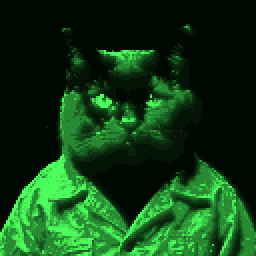
Zaalela

An inhabitant of Zaalela
Economy
Average Agricultural
Government
Feudal
Tech level
5
Population
2.4 billion
Inhabitants
Fierce Harmless Horned Lizards
Productivity
3840 M CR
Radius
3886 km

This world is noted for its fabulous goat soup.

Zaalela is a world of open range and scattered holdings, its farmland divided among manors that owe allegiance to local lords. Herds of goats move across the dry pasture under the watch of herders on foot, and the animals form the backbone of both diet and trade within the world's own borders. The soup made from them, thickened with local roots and spiced with wild herbs, is spoken of with more pride than anything else the world produces. Settlements are small and far apart, built around wells and threshing yards rather than any central town.

The Fierce Harmless Horned Lizards who hold Zaalela live under a strict hierarchy of landed lords and bound tenants, their labor spent almost entirely on herding, planting and the slow work of the soil. Fierce in temperament but without malice, they settle disputes through ritual displays rather than violence, and reserve their warmth for kin, herd and the shared pot of soup simmering over a communal fire.

Biisorte

An inhabitant of Biisorte
Economy
Mainly Industrial
Government
Feudal
Tech level
7
Population
2.9 billion
Inhabitants
Human Colonials
Productivity
8120 M CR
Radius
4565 km

This world is most notable for its fabulous Biisortian lethal water but beset by a lethal disease.

Biisorte's factories cluster along river deltas where the fabled Biisortian lethal water is drawn, distilled, and shipped out under heavy seal despite the toxicity that gives it its name. The same water table has bred a persistent contagion that moves through the lowland works and has never been fully checked, so entire districts stand fenced and unentered. Refineries and smelters dominate the skyline of the larger towns, their smoke mixing with quarantine flags strung along the approach roads. Modest tooling and feudal land grants keep production steady but never expanding, since no lord risks his holding to push further into the tainted ground.

Labour here is bound to hereditary estates, with workers owing service to the lord who holds the refinery lease and little say in where they are posted. Generations spent near the poisoned water have made the colonials fatalistic about illness, treating quarantine and loss as ordinary costs of the trade rather than crises. Wealth is thin and shared unevenly, and most measure a good year by how few names are added to the sick-lists.

Beesor

An inhabitant of Beesor
Economy
Average Industrial
Government
Communist
Tech level
9
Population
3.8 billion
Inhabitants
Human Colonials
Productivity
21888 M CR
Radius
3740 km

This world is plagued by deadly earthquakes.

Beesor's crust is unstable across most of its small landmass, and tremors severe enough to level unreinforced structures strike with grim regularity. The state has answered this by building low, heavily braced factory blocks and habitation blocks, all raised on shock-dampened foundations, ringing the industrial districts that keep the world's furnaces and assembly lines running. Its wealth comes from disciplined output rather than any accident of geography, extracted from workers and machinery alike despite the ground beneath them refusing to stay still.

The population lives under a planning bureau that treats quake preparedness as a form of civic duty, with labor brigades trained equally for the assembly floor and for emergency shoring work. Long exposure to sudden loss has bred a population that is stoic about property and fiercely attached to the collective, since rebuilding after a bad tremor is understood as everyone's task, not the state's alone.

Oresqu

An inhabitant of Oresqu
Economy
Average Industrial
Government
Multi-Government
Tech level
10
Population
4.0 billion
Inhabitants
Rodents
Productivity
17280 M CR
Radius
5142 km

Oresqu is mildly notable for its inhabitants' unusual mating traditions.

Oresqu is a sizeable industrial world of mixed factory belts and residential blocks, its skyline broken by the offices of the many jurisdictions that share administration of the surface. No single authority governs the whole; instead a patchwork of local governments trade regulations and tariffs across shifting borders that rarely disrupt the steady output of goods. The world is mildly noted beyond its own system for the elaborate courtship customs observed among its population, rituals that draw academic curiosity more than tourism.

The rodents of Oresqu are industrious and clannish, organizing themselves into extended family enterprises that double as the basic unit of local politics. Comfortable wealth and advanced technology have given them time to formalize their mating traditions into structured, almost ceremonial affairs, distinct from one district to the next depending on which government holds sway there.

Xeququti

An inhabitant of Xeququti
Economy
Poor Industrial
Government
Democracy
Tech level
10
Population
4.5 billion
Inhabitants
Large Frogs
Productivity
28800 M CR
Radius
3549 km

This planet is beset by dreadful earthquakes.

Xeququti's crust is riven by fault lines that shrug and rattle in constant, unpredictable spasms, so that its factories and tenements are built low, braced, and rebuilt often. The industrial base, cramped onto a small landmass, produces goods of little refinement despite the advanced tools behind them, the plants themselves half in ruin from the last serious tremor. Settlements cluster tightly around the more stable bedrock, forming dense, layered districts that seem to lean on one another for support.

The large frogs of Xeququti govern themselves through crowded assemblies where every district sends its voice, a habit of consultation born of having to rebuild together after each disaster. Wealth here sits oddly alongside worn machinery and cracked foundations, and the population has grown practical and unsentimental about property, since any structure may be rubble within a season.

Maises

An inhabitant of Maises
Economy
Poor Industrial
Government
Anarchy
Tech level
9
Population
3.5 billion
Inhabitants
Human Colonials
Productivity
8960 M CR
Radius
5783 km

Maises is reasonably notable for its fabulous Maisesian lethal water but beset by a lethal disease.

Maises is a sizeable world of aging refineries and cracked processing yards, its industry outlasting the authority that once ran it. The famed Maisesian lethal water is distilled here in small, guarded batches, prized off-world even as the settlements around its extraction sites struggle under a disease with no cure and no quarantine to slow it. Without a government to coordinate relief or repair, plants run when their crews decide to run them, and whole districts sit dark and untended between one shift and the next. Housing sprawls close to the old factory belts, a legacy of a denser, better-ordered past the colony no longer has the means to maintain.

The population gets by through barter, favor, and improvised arrangements between rival work-crews who have effectively replaced the vanished administration. Sickness has hardened them to loss without dulling their pride in the toxic vintage that still carries the world's name outward, and most treat both the water and the disease as simply the price of living there.

Bierle

An inhabitant of Bierle
Economy
Rich Industrial
Government
Confederacy
Tech level
12
Population
5.0 billion
Inhabitants
Human Colonials
Productivity
36000 M CR
Radius
4585 km

The planet Bierle is most famous for the Bierlian deadly Edoid and its inhabitants' ingrained silliness.

Bierle's continents are given over almost entirely to refineries, foundries and the dense residential blocks that serve them, with little land left to wilderness save the fenced exclusion zones where the Edoid still breeds. The creature, venomous and disinclined to avoid populated areas, is treated as a standing hazard of daily life rather than a curiosity, and its image turns up on warning signs across every district. Wealth generated by the planet's manufacturing sector has built orderly, well-serviced cities, though much of the profit visibly returns into further plant construction rather than public leisure.

Confederacy administration keeps labour, safety codes and production quotas tightly coordinated across the industrial zones, and the workforce is generally well paid and well housed as a result. Off the factory floor, however, Bierlians are famous throughout neighbouring space for an irreverence that borders on the absurd, treating serious occasions with jokes and formal ones with pranks, as if the discipline demanded of them by day must be spent somewhere by night.

Arzaso

An inhabitant of Arzaso
Economy
Average Industrial
Government
Confederacy
Tech level
10
Population
4.3 billion
Inhabitants
Human Colonials
Productivity
27864 M CR
Radius
5592 km

Arzaso is an unremarkable planet.

Arzaso presents little to distinguish it from a hundred other confederated industrial worlds: temperate belts given over to standardized factory towns, moderate seas, and a road and rail grid laid out with bureaucratic efficiency rather than any local character. Its manufacturing output is steady and diversified, feeding regional demand without dominating it. The planet's cities sprawl outward from administrative centers in near-identical concentric plans, a pattern repeated across its inhabited zones.

The population lives comfortably under confederate rule, well-off and well-supplied, with the settled ease of people whose world requires little defending or explaining. Generations of stable governance and steady industry have produced a citizenry more concerned with efficient administration than ambition, content to keep the factories running and the councils in session.

Teen

An inhabitant of Teen
Economy
Poor Agricultural
Government
Dictatorship
Tech level
4
Population
2.3 billion
Inhabitants
Large Harmless Horned Lizards
Productivity
3864 M CR
Radius
2933 km

Teen is cursed by deadly civil war.

Teen is a small, dry world of scattered farmsteads and thin, terraced fields, worked by hand under a primitive order that has never mastered irrigation on any scale. Its settlements sit apart from one another across cracked lowlands, and the roads between them are unsafe and often unused, cut off by the civil war that has burned through the countryside for as long as anyone can recall. What little the soil yields is fought over as much as it is farmed, and whole districts have been left to the horned lizards that bask undisturbed on the ruined field walls.

The dictatorship holds its capital and little else, and its writ frays quickly beyond sight of the garrison towns, leaving most families to fend for themselves between raids. People here work the land in short, wary bursts, keep grain hidden rather than stored, and measure any stranger first by which faction they might belong to. Poverty and primitive tools make the harvest hard even without the fighting, and the fighting rarely stops.

Riredi

An inhabitant of Riredi
Economy
Poor Industrial
Government
Corporate State
Tech level
13
Population
5.8 billion
Inhabitants
Harmless Furry Insects
Productivity
40832 M CR
Radius
6447 km

This world is very fabled for the Riredian mountain slug.

Riredi's continents are given over almost entirely to smelting works, refineries, and the terraced slag-heaps that mark generations of extraction. Beneath the industrial haze the high ranges remain wild, and it is there that the Riredian mountain slug is farmed and hunted, prized off-world as a delicacy and studied for the mucus trade that has become the planet's other great export. The corporate charter that governs the world extracts most of what the factories produce, leaving the vast population dense in habitation but thin in personal means despite the fortunes recorded on the company ledgers.

The native furry insects that crowd Riredi's hab-blocks and slug-terraces work in shifts dictated by corporate schedule, tending both foundries and mountain slug pens with the same patient diligence. Harmless by temperament and long accustomed to distant ownership, they take evident pride in the slug harvest, the one product of their labor that carries the world's name with any fondness beyond its borders.

Teorge

An inhabitant of Teorge
Economy
Average Agricultural
Government
Democracy
Tech level
6
Population
3.3 billion
Inhabitants
Black Bony Lobsters
Productivity
10560 M CR
Radius
5933 km

This planet is a tedious little planet.

Teorge spreads its farmland across a large landmass under a flat, unremarkable sky, with little to break the monotony of furrowed fields and irrigation channels. Settlements sit at wide intervals, connected by dirt roads that see the same slow traffic of grain carts every season. The planet has earned a reputation, fairly or not, as a tedious little world, and nothing in its low hills or grey weather does much to argue against it. Farming towns repeat the same layout of granary, meeting hall, and market square with little variation from one district to the next.

The native Black Bony Lobsters work the fields and cooperatives with the patient, unhurried temperament of a people who vote on everything and rush at nothing. Living modestly and getting by rather than prospering, they take a quiet, stubborn pride in a world that offers little to boast about and ask for little more than its steady, predictable yield.

Vebege

An inhabitant of Vebege
Economy
Mainly Industrial
Government
Anarchy
Tech level
6
Population
2.4 billion
Inhabitants
Human Colonials
Productivity
5376 M CR
Radius
4441 km

The world Vebege is mildly fabled for the Vebegian mountain lobstoid but beset by deadly solar activity.

Vebege turns beneath a sun given to violent flares, and its scattered settlements are built low and shielded, cut into slopes and canyon walls where rock offers some cover from the surges. Its industry is modest and improvised, workshops and smelters strung between habitats rather than gathered into any real district, kept running by whatever machinery has survived import and repair. The mountain ranges that shelter its settlements are also home to the Vebegian mountain lobstoid, a hardy creature mildly fabled beyond the system despite the world's general poverty and isolation.

With no central authority to organize relief or defense, the colonials of Vebege rely on kin and neighboring holds when the solar weather turns bad, and grudges over shared shielding or scavenged parts run long. Work is hard and often dangerous, and most people measure a household's standing by how well its walls have held rather than by any coin it keeps.

Xeenle

An inhabitant of Xeenle
Economy
Mainly Industrial
Government
Anarchy
Tech level
5
Population
2.0 billion
Inhabitants
Large Frogs
Productivity
4480 M CR
Radius
3564 km

This planet is mildly noted for its ancient mountains but plagued by a lethal disease.

Worn ranges of ancient rock cross the small world of Xeenle, their slopes stripped and scarred by furnaces and smelters that answer to no central authority. The industry here is crude and improvised, workshops bolted together from salvage rather than built to plan, scattered thin across the foothills where the ground is stable enough to hold them. A wasting sickness moves through the population in slow waves, and no settlement has found a way to stop it or even fully explain it.

The large frogs of Xeenle organize themselves into loose work-bands rather than towns, trading labor and ore between furnace sites with no ruling council to arbitrate disputes. Life expectancy is shortened by the disease that moves among them, and most measure wealth in tools and fuel rather than coin, since there is little coin to be had. Suspicion of outsiders and of each other runs deep, a habit born of scarcity and the absence of any law but local strength.

Arxeza

An inhabitant of Arxeza
Economy
Average Industrial
Government
Democracy
Tech level
12
Population
5.2 billion
Inhabitants
Human Colonials
Productivity
37440 M CR
Radius
5398 km

The world Arxeza is beset by dreadful earthquakes.

Arxeza's crust is restless, riven by fault lines that shudder through its industrial belts with little warning. Its cities are built low and reinforced, spread across wide plains rather than raised into towers, a concession learned through generations of collapsed districts. Factories and refineries here are designed to shut down and brace within moments, an engineering discipline that has become the world's quiet specialty. Even its wealth is measured partly in what has been rebuilt rather than simply accumulated.

Arxezan colonials live with a practical wariness bred of shifting ground, favouring sturdy construction and civic preparedness over ornament. The democracy governing them channels considerable industrial wealth into monitoring networks and rebuilding funds, and its citizens vote on such matters with unusual seriousness. Advanced technology and a dense, orderly population give the world an air of disciplined resilience rather than complacency.imeout

Edreor

An inhabitant of Edreor
Economy
Mainly Agricultural
Government
Corporate State
Tech level
9
Population
4.4 billion
Inhabitants
Human Colonials
Productivity
23232 M CR
Radius
5105 km

The world Edreor is reasonably fabled for its fabulous killer Xexe juice and its ancient Edreorian Ra plant plantations.

Edreor's land is given over almost entirely to cultivation, its plains divided into holdings that stretch toward a flat horizon under corporate survey markers. The Ra plant plantations are the oldest working land on the world, their rootstock said to predate the first corporate charters, and they remain the backbone of an economy built on export crops. Processing towns cluster around the pressing houses where Xexe fruit is rendered into the juice that has made the world's name, their layouts dictated by the old transport lines rather than any civic plan.

Most people work under contract to one agricultural concern or another, their lives structured by planting and pressing seasons rather than any calendar of their own choosing. The corporate state administers law, wages and housing alike, and the population has grown wealthy on the strength of it, though ownership of the land itself remains firmly with the companies rather than those who work it.

Esgerean

An inhabitant of Esgerean
Economy
Average Industrial
Government
Dictatorship
Tech level
10
Population
4.1 billion
Inhabitants
Human Colonials
Productivity
20664 M CR
Radius
5313 km

This planet is plagued by occasional solar activity.

Esgerean's industrial belts and shielded settlements sit beneath skies that turn hostile without warning, as the system's star throws off flares capable of scrambling unshielded electronics and blacking out surface communications for hours at a time. Factories and habitation blocks alike are built low and armored, with hardened conduits running between them rather than open power lines. The disruptions have shaped the world's architecture more than its geography ever did, and entire districts are laid out around bunkered relay stations rather than around any natural feature.

Life under the dictatorship runs on schedules dictated as much by solar forecasts as by any decree, and the population has grown practiced at shutting down sensitive works at the first alert. Industrial routine and state control together produce a populace that is orderly, watchful, and comfortable enough materially to tolerate the arrangement without complaint.

Ditiza

An inhabitant of Ditiza
Economy
Average Agricultural
Government
Confederacy
Tech level
8
Population
4.0 billion
Inhabitants
Human Colonials
Productivity
11520 M CR
Radius
6171 km

The planet Ditiza is reasonably fabled for Ditizaian evil juice and its inhabitants' ingrained silliness.

Ditiza spreads across wide fertile plains and river basins given over almost entirely to cultivation, its farmland broken by the occasional processing town and grain depot. The world is reasonably fabled for a fermented concoction known locally as evil juice, brewed in vats behind half the farmhouses on the continent and shipped out in barrels stamped with cheerful, garish labels. Settlements are laid out in loose grids around communal silos and market squares, built more for function than for show, with little sign of the strain a large population might otherwise put on the land.

The Confederacy's loose hold over so many farming communities has bred a population accustomed to arguing at length before agreeing on anything, and comfortable wealth spread evenly enough that few see reason to hurry. Their ingrained silliness shows less in foolishness than in a fondness for elaborate jokes, harvest pageants, and drinking songs about the very juice that keeps their economy solvent.

Anle

An inhabitant of Anle
Economy
Rich Industrial
Government
Confederacy
Tech level
11
Population
4.6 billion
Inhabitants
Black Fat Insects
Productivity
33120 M CR
Radius
5860 km

The world Anle is notable for its great tropical forests and Anlian evil brandy.

Vast tropical forests girdle Anle's equator, their canopies broken by refinery towers and the smoke-stained sprawl of processing works that feed the confederacy's markets. Distilleries hidden beneath the forest canopy produce the Anlian evil brandy for which the world is infamous, a liquor fermented from forest sap and industrial byproduct alike. Away from the green belts, the land gives way to dense manufacturing districts stacked tight against one another, the inevitable result of a large world pressed to hold so many souls and so much machinery.

The Black Fat Insects who fill Anle's factories and forest plantations work under a confederate system that rewards output and cooperation over individual ambition, producing a population that is orderly, collective-minded, and comfortable with its wealth. Generations of industrial labour have left them practical and unsentimental, though the local brandy is spoken of with something close to reverence.

Onisqu

An inhabitant of Onisqu
Economy
Mainly Industrial
Government
Anarchy
Tech level
6
Population
2.4 billion
Inhabitants
Black Fat Insects
Productivity
5376 M CR
Radius
6685 km

This planet is a dull place.

Onisqu is a large world of modest industry scattered thin across its surface, its factories run without central authority and without much ambition beyond keeping themselves fed with ore and fuel. The land is unremarkable, the sky unremarkable, and nothing in its geography or weather gives visitors reason to linger longer than trade requires. Settlements are few and widely spaced, each one a self-contained works surrounded by empty ground, and none of them has produced anything the rest of the galaxy finds worth remembering.

The Black Fat Insects that work these factories answer to no government beyond whatever arrangement keeps a given plant running, and poverty has made them practical rather than proud. They labour without complaint and without flourish, and the dullness of the place seems to suit a people who value a machine that works over a story worth telling.

Aleusqu

An inhabitant of Aleusqu
Economy
Poor Industrial
Government
Democracy
Tech level
12
Population
5.3 billion
Inhabitants
Human Colonials
Productivity
33920 M CR
Radius
6871 km

This world is reasonably notable for its great volcanoes but ravaged by vicious vicious shrews.

Volcanic ranges run along much of the northern continent, their ash fields feeding soil that the world's founders once meant to farm rather than mine. The industrial base that grew up in their shadow has long since fallen behind more efficient worlds, leaving smokestack districts and refineries operating well under their old capacity. Beyond the cities, the shrews are the more immediate trouble: swarming, aggressive, and blamed for stripping fields and burrowing through the foundations of outlying settlements. Municipal authorities have given up eradication in favour of containment, and much of the land beyond the volcano belt is fenced against them.

The population, wealthy despite the faltering industry that once justified the colony, sustains itself through diversified holdings and off-world investment rather than the factories themselves. Elected councils argue publicly and often over shrew control budgets, a subject that dominates local politics more than any industrial policy. Long exposure to the vermin and the volcanoes has bred a population that is practical, wary of complacency, and unsentimental about the land it lives on.

Zasoceat

An inhabitant of Zasoceat
Economy
Rich Industrial
Government
Multi-Government
Tech level
11
Population
4.3 billion
Inhabitants
Human Colonials
Productivity
20640 M CR
Radius
4026 km

Zasoceat is a revolting dump.

Zasoceat's factories run under a patchwork of competing jurisdictions, each administration claiming a district and none claiming the waste that drifts between them. The result is an average-sized world thick with smoke, slag heaps, and canals of industrial runoff that no single authority will pay to clear. Its refineries and foundries turn a steady profit, but the money goes into shipping berths and boardrooms rather than the streets beneath them. The world's reputation for filth is not an exaggeration so much as an understatement worn smooth by repetition.

The population lives well by any material measure, drawing comfortable wages from the industrial output, but housing blocks sit hard against tailings ponds and open sewage channels that no jurisdiction wants to own. Colonials here have grown practical and thick-skinned about their surroundings, treating the grime as simply the cost of the work that pays them. Loyalties run to employer and district rather than to any planetary government, since none of the several administrations has ever managed to act as one.

Rilace

An inhabitant of Rilace
Economy
Rich Agricultural
Government
Communist
Tech level
6
Population
3.0 billion
Inhabitants
Human Colonials
Productivity
9600 M CR
Radius
6481 km

The world Rilace is a dull world.

Rilace spreads across gentle plains and low hills under a climate given to long, unchanging seasons, and little about its geography rewards a second look. Collective farms cover most of the arable land in grids that repeat from one horizon to the next, given over to grain and root crops rather than anything more colorful. The world's flatness and its steady, repetitive produce have earned it a reputation as a dull place, and little in its towns or its weather does anything to argue the point.

The colonials who work the collectives live under state quotas that reward steady output over ambition, and their days follow the same rotation of planting, harvest and inventory that their parents kept. Wealth here is modest and shared thinly, and the people are known less for complaint than for a flat, practical patience with the sameness of it all.

Beenri

An inhabitant of Beenri
Economy
Poor Agricultural
Government
Feudal
Tech level
3
Population
1.7 billion
Inhabitants
Harmless Fat Insects
Productivity
2040 M CR
Radius
3833 km

This planet is mildly noted for the Beenrian mountain Laxeedanoid but scourged by frequent civil war.

Beenri is a small, thinly peopled world whose farmland struggles against thin soil and neglect. The mountain Laxeedanoid dominates the horizon of its central plain, a peak of some local renown that draws pilgrims between fighting seasons. Beyond that modest fame, the world is chiefly known for the civil wars that pass through its scattered holdings like weather, burning fields as often as they are sown. Villages huddle low and close to their lords' halls, rebuilt again and again on the same ash.

The native population, soft-bodied and harmless insectile creatures, till their small plots under the rule of feuding lords who claim descent from older, grander houses now mostly forgotten. Loyalty here shifts with the season's fighting, and most families keep half an eye on the road and half on the crop, ready to abandon either at short notice.

Laeden

An inhabitant of Laeden
Economy
Average Agricultural
Government
Feudal
Tech level
3
Population
1.6 billion
Inhabitants
Human Colonials
Productivity
2560 M CR
Radius
4100 km

The planet Laeden is reasonably fabled for its exciting sit coms and its inhabitants' exceptional love for food blenders.

Laeden's holdings are worked estates strung along river valleys, each bound to a manor lord who claims the harvest and the labour that produces it. Fields of grain and root crops dominate the lowlands, tended by hand and draft animal under a feudal order that has changed little in generations. The world's oddest export is cultural rather than material: recordings of its home-grown sit coms circulate well beyond its own sky, broadcast from manor halls with more ambition than budget.

Colonists here live under the authority of hereditary lords, farming rents owed in kind rather than coin, and the poverty of the arrangement shows in patched tools and mended roofs. Yet nearly every household keeps a food blender, however battered, treasured out of proportion to its use and passed down like a family heirloom. Evenings are given over to the manor's broadcast sit coms, which the tenantry follows with a devotion the fields rarely inspire.

Mariar

An inhabitant of Mariar
Economy
Poor Industrial
Government
Corporate State
Tech level
10
Population
4.6 billion
Inhabitants
Human Colonials
Productivity
32384 M CR
Radius
5728 km

This world is fabled for its unusual tropical forests.

Mariar's continents lie under a belt of tropical forest unlike any grown elsewhere, canopy strains engineered generations ago that outgrew their original purpose and now dominate the lowlands entirely. Beneath and around the forest, refineries and processing yards sprawl in irregular clearings, their output modest against the scale of the workforce housing that surrounds them. The corporation that administers the world has never managed to convert the forest's fame into matching industrial fortune, leaving the two faces of Mariar, verdant and grey, sitting uneasily side by side.

Dense city-blocks press close against the treeline, home to workers bound by contract to the company that owns most of the land beneath them. Wealth concentrates in administrative towers rather than in wages, and most residents speak of the forests less with wonder than with the resignation of people who live in its shadow rather than its glow.

Riiser

An inhabitant of Riiser
Economy
Poor Industrial
Government
Dictatorship
Tech level
8
Population
3.4 billion
Inhabitants
Rodents
Productivity
15232 M CR
Radius
6452 km

Riiser is cursed by dreadful civil war.

Riiser is a large world whose industrial belts, built to feed a single centralized economy, now sit divided between factions that answer to no shared authority. Refineries and foundries that once ran as one network are strung across contested territory, their output seized and re-seized as fronts shift. Settlement remains moderate, most of it clustered around fortified works far from the ash-grey no-man's-land that scars the equatorial plants, and what wealth exists is guarded rather than shared. The civil war here is old enough that ruined districts are simply mapped around, not rebuilt.

The rodent population lives under a dictatorship that claims the whole world but controls only pieces of it, and most communities have learned to keep working regardless of which flag flies over the nearest checkpoint. Comfortable wealth persists in pockets loyal to whichever authority currently holds the industrial core, while those caught between factions get by on stockpiled goods and old machinery kept running past its intended service.

Qutiri

An inhabitant of Qutiri
Economy
Rich Industrial
Government
Multi-Government
Tech level
9
Population
3.5 billion
Inhabitants
Human Colonials
Productivity
16800 M CR
Radius
5420 km

The world Qutiri is mildly noted for its ancient mountains but plagued by deadly earthquakes.

Qutiri's ancient mountain ranges, worn smooth by age, ring settlements built low and reinforced against the ground's frequent violence. Its industrial base, refineries, foundries, and processing yards, sprawls across the flatter basins where tremors do less damage to heavy plant, though the risk is never absent. Building codes here are strict and visible, with bracing and dampers worked into even modest structures, a response to the deadly earthquakes that periodically strike without much warning.

The competing local authorities that govern Qutiri rarely agree on much, but seismic building standards remain one of the few matters on which all factions cooperate without dispute. Colonials here tend toward practical, unsentimental attitudes, shaped by industrial routine and by a landscape that can, on short notice, take away what has been built.'

Biramabi

An inhabitant of Biramabi
Economy
Average Agricultural
Government
Communist
Tech level
4
Population
2.3 billion
Inhabitants
Human Colonials
Productivity
5888 M CR
Radius
4432 km

The world Biramabi is a dull world.

Biramabi presents flat, unremarkable farmland broken only by irrigation ditches and the low sheds where grain is stored before collection. Fields are worked in rotation under a collective schedule, with tools kept simple and machinery scarce. Settlements are few and spread thin across the plain, each little more than a cluster of dwellings around a granary and a meeting hall. Travelers and residents alike describe the place, without much argument, as dull.

The colonists work the land in assigned shifts under local commissars who see to quotas rather than comfort, and little is left over once the harvest is divided. Life follows the planting calendar closely, and conversation tends toward the weather and the yield rather than anything else. They are plain, steady people, unused to visitors and in no hurry to impress them.

Soorbi

An inhabitant of Soorbi
Economy
Mainly Industrial
Government
Communist
Tech level
9
Population
4.0 billion
Inhabitants
Fierce Furry Rodents
Productivity
17920 M CR
Radius
4742 km

The planet Soorbi is an unremarkable dump.

Soorbi's continents are given over almost entirely to foundries, refineries and the tenement blocks that house their workers, laid out in the same grey grid pattern that state planners favoured across the settled districts generations ago. Smoke haze sits permanently over the lowlands, and rivers running past the smelting complexes carry a persistent metallic tint. Off-world references to the place are uniformly unflattering, and little on the surface argues against the reputation; it is a functional, thoroughly used-up world rather than a scenic one.

The population, fierce furry rodents organised under strict collective ownership of the mills and mines, take a grim pride in output quotas rather than surroundings. Wages and rations are steady enough to keep discontent low, and most regard complaints about the smog or the architecture as beside the point of the work itself.

Solageon

An inhabitant of Solageon
Economy
Average Agricultural
Government
Multi-Government
Tech level
6
Population
2.9 billion
Inhabitants
Human Colonials
Productivity
5568 M CR
Radius
4743 km

This world is very well known for Solageonian lethal water and the Solageonian tree wolf.

Solageon's rivers and aquifers carry a toxin that has never been fully explained, so every farm and township depends on cisterns fed by filtration towers rather than the surface water that laces the lowlands. Its agricultural belts are worked in bands well back from the contaminated floodplains, where irrigation is drawn from treated reserves rather than the land's own supply. The forests beyond the farms shelter the tree wolf, a pack hunter whose reputation has spread well past this system and which keeps most clearing and logging confined to daylight hours. Administration is split among a patchwork of separate local governments, each holding its own stretch of cleared land and its own water-treatment charter.

Solageonian colonials are farmers first, raised from childhood to read the color of a stream before touching it and to keep dogs and fences between their herds and the tree line. Poverty and modest tooling make every filtration tower and irrigation channel a shared civic project, maintained through endless small negotiations between neighboring jurisdictions that answer to no common authority. It has made them practical, guarded people, more comfortable trusting a treaty with the next township than trusting the ground beneath their own fields.

Tiquat

An inhabitant of Tiquat
Economy
Mainly Industrial
Government
Dictatorship
Tech level
10
Population
4.3 billion
Inhabitants
Human Colonials
Productivity
16856 M CR
Radius
4799 km

This world is reasonably well known for its great parking meters but cursed by unpredictable earthquakes.

Tiquat's cities rise in tight rings of foundries and refineries, their streets lined with the great parking meters for which the world is known, oversized iron sentinels that have become as much a symbol of the place as its industry. The ground beneath them is unreliable, and unpredictable earthquakes periodically level whole districts, forcing constant rebuilding in steel and reinforced ceramics. Advanced engineering keeps the factories running despite the tremors, with structures braced and re-braced against a landscape that never quite settles.

The population lives under a dictatorship that directs labour toward the factories with the same discipline it applies to quake recovery, and comfort here is earned through steady industrial output rather than leisure. Tiquat's colonials are practical, unsentimental people, accustomed to rebuilding what the ground takes from them and quick to return to work once the shaking stops.

Rexebe

An inhabitant of Rexebe
Economy
Average Industrial
Government
Corporate State
Tech level
13
Population
5.7 billion
Inhabitants
Black Bony Humanoids
Productivity
45144 M CR
Radius
6498 km

This world is mildly famous for its hoopy night life and its exotic cuisine.

Rexebe presents a continuous surface of manufacturing districts and residential towers, its skyline broken by corporate insignia rather than any natural feature. Beneath the industrial output, the world has cultivated a reputation far removed from its factories: its night districts run through every hour of the local clock, and its kitchens draw on ingredients shipped in from far-flung holdings to produce dishes found nowhere else. Advanced infrastructure keeps the crowded arcologies fed, lit and entertained without evident strain.

The Black Bony Humanoids who fill Rexebe's towers work under corporate charter, their labour, leisure and diet all managed by the same holding structures that own the land beneath them. Wealth here buys refinement rather than leisure alone, and locals speak of their chefs and club proprietors with the same pride others reserve for engineers.

Qubeen

An inhabitant of Qubeen
Economy
Mainly Industrial
Government
Feudal
Tech level
6
Population
2.5 billion
Inhabitants
Human Colonials
Productivity
7000 M CR
Radius
5508 km

This world is ravaged by unpredictable civil war.

Qubeen's foundries and refineries sit behind earthworks and stockade walls, testimony to a civil war that flares and subsides without pattern across the sizeable landmass. Great tracts of the world lie empty between the holdings of rival lords, whose smokestacks mark the only settlements worth the name. Machinery here is patched and repatched rather than replaced, the ironworks running on whatever coal and ore the current front allows through. Roads exist mostly as memory; supply moves under guard or not at all.

The colonials owe labor and loyalty to whichever lord holds their district this season, and switch allegiance as the fighting shifts the map beneath them. Life is measured in shifts at the furnace and turns at the wall, and few expect either arrangement to outlast the year.

Cetiisqu

An inhabitant of Cetiisqu
Economy
Poor Industrial
Government
Feudal
Tech level
7
Population
2.8 billion
Inhabitants
Human Colonials
Productivity
8960 M CR
Radius
4192 km

This planet is reasonably famous for the Cetiisquian evil Bioid.

Cetiisqu carries its industry in scattered foundries and refineries that answer to local lords rather than any central authority, their smoke drifting over fields worked in the old manner. The world is best known off-planet for the Cetiisquian evil Bioid, a construct whose reputation has long overtaken the modest workshops that first built its kind. Settlements sit apart from one another, each clustered around a keep or manor that owns the works nearby, and the roads between them are poorly kept.

People here answer first to their liege and only distantly to any wider notion of a government, and their labor in the foundries is bound up with old obligations of land and service. Life is plain and the work is hard, and most speak of the Bioid the way one speaks of a bad harvest that keeps returning.

Rebia

An inhabitant of Rebia
Economy
Rich Agricultural
Government
Communist
Tech level
7
Population
3.4 billion
Inhabitants
Frogs
Productivity
10880 M CR
Radius
6426 km

Rebia is very notable for its inhabitants' weird shyness.

Rebia's continents are given over almost entirely to collective farmland, wide floodplains and irrigated terraces that ring shallow, warm seas under a permanently damp sky. The world's size allows for vast, low-yield-per-hectare but enormous-in-aggregate grain and marsh-crop cooperatives, administered from clusters of concrete silos and dormitory blocks rather than true cities. Rebia is known throughout the region less for its harvests than for the peculiar reticence of its people, who are said to vanish from open ground the moment a stranger's shadow falls across the paddies.

The population is composed of frogs organized into work brigades under a rigidly egalitarian, state-planned system that prizes quiet diligence over ambition. Generations of collective labor have not made them gregarious; visitors to any given commune more often hear the workers than see them, since the moment attention turns their way they retreat into the reeds and canals. Even among themselves they are said to prefer written directives and shared silence to conversation, conducting the business of the harvest with a minimum of fuss and an almost total avoidance of eye contact.

Ordima

An inhabitant of Ordima
Economy
Poor Agricultural
Government
Multi-Government
Tech level
2
Population
1.4 billion
Inhabitants
Human Colonials
Productivity
2016 M CR
Radius
5252 km

This planet is reasonably noted for its exotic goat soup.

Ordima is a wide, thinly peopled world of small holdings scattered across a poor and unforgiving countryside, where farming remains a matter of hand tools and stubborn animals rather than machinery. Villages sit far apart under overlapping and often contradictory local authorities, each with its own petty rules and tariffs. The one thing that unites them is a shared kitchen tradition: a goat soup, thick with root vegetables and unfamiliar spice, cooked differently in every district but claimed proudly by all.

The colonials here are goat-herders and root farmers first, subjects of whichever council or headman holds the nearest town second, and their loyalties rarely extend past the boundary of their own district. Generations of primitive tools and poor soil have made them patient, thrifty, and unhurried by outside notions of progress. Cooking, particularly of the soup that carries the world's name to other systems, is treated as a serious and competitive craft.

Aruszati

An inhabitant of Aruszati
Economy
Mainly Industrial
Government
Democracy
Tech level
10
Population
4.6 billion
Inhabitants
Human Colonials
Productivity
25760 M CR
Radius
5522 km

This planet is noted for Zero-G cricket.

Aruszati's industrial belts ring its equator in continuous bands of foundries, refineries and orbital shipyards, feeding the arenas that have made the world synonymous with Zero-G cricket. The sport is played in vast rotating stadiums slung in high orbit, connected to the surface by tether lines that double as freight elevators for the factories below. Cities on the ground are laid out around these tether termini, dense and vertical, built to move workers and spectators alike with equal efficiency.

The population works long shifts in advanced industry and treats the orbital game as both civic pastime and export commodity, with league schedules debated as fiercely as parliamentary votes. Elected councils, answerable to a wealthy and heavily populated electorate, keep close ties between corporate output and public spectacle, so that factory shift patterns and match calendars are drawn up together.

Zaleriza

An inhabitant of Zaleriza
Economy
Average Agricultural
Government
Anarchy
Tech level
5
Population
2.3 billion
Inhabitants
Fierce Bony Lobsters
Productivity
2944 M CR
Radius
4087 km

This world is a tedious place.

Zaleriza turns slowly through unremarkable seasons, its farmland spread thin across scattered valleys with nothing to distinguish one field from the next. No central authority organizes the harvests or the roads, so cultivation follows old habit rather than plan, and settlements exist as loose clusters separated by long stretches of empty ground. Little of note has ever happened here, and the world's reputation for dullness is, if anything, earned by its unbroken sameness.

The Fierce Bony Lobsters that work this soil answer to no government beyond their own hard-shelled tempers, settling disputes over land and water without appeal to higher law. Poverty and primitive tools keep their days given over to plain labor, and what little excitement exists among them tends to come from each other rather than from the world around them.

Zasoer

An inhabitant of Zasoer
Economy
Average Agricultural
Government
Confederacy
Tech level
5
Population
2.8 billion
Inhabitants
Human Colonials
Productivity
8064 M CR
Radius
3844 km

Zasoer is mildly well known for its exotic night life.

Zasoer is a compact agricultural world whose farms lie scattered across a handful of fertile basins, worked with tools and methods that have changed little across generations. The short daylight hours are given to the fields, but once the sun goes down the townships along the basin edges light lanterns and open their squares, and it is this after-dark custom, part market and part festival, that travelers from farther worlds have come to remark upon. The settlements themselves remain small and loosely joined, each answering to its own local council under the wider confederate arrangement that binds the world together.

The colonials of Zasoer divide their lives cleanly between the labor of the day and the looser, freer hours after dusk, when farmers, traders and neighboring hamlets mix in ways the daylight economy does not allow. Governed by consensus rather than command, the confederacy's loose hold over daily affairs leaves each township to keep its own customs, and the nights have grown into something distinctly local and, by all report, worth staying up for.

Raleen

An inhabitant of Raleen
Economy
Rich Industrial
Government
Confederacy
Tech level
11
Population
4.6 billion
Inhabitants
Human Colonials
Productivity
33120 M CR
Radius
3996 km

This planet is notable for the Raleenian tree grub and its inhabitants' unusual silliness.

Raleen's continents are given over almost entirely to manufacturing districts, refineries and the dense residential blocks needed to house the workforce that runs them. Between the industrial zones, plantations of native hardwood are cultivated less for timber than for the tree grub that burrows in its bark, a delicacy exported across the region and celebrated in festivals throughout the year. The confederated council districts that govern the planet are wealthy enough to keep the air scrubbed and the transit lines running, giving the world a curiously tidy look despite the scale of its industry.

Generations of steady prosperity under confederate rule have left the population secure enough to indulge a reputation for absurdity, and Raleenians treat eccentric humour, elaborate practical jokes and grub-eating contests as civic pastimes rather than embarrassments. Workers in the industrial districts take pride in their output during the day and their foolishness after hours, and visitors are often surprised how seriously the planet takes not being serious.

Qurave

An inhabitant of Qurave
Economy
Poor Industrial
Government
Dictatorship
Tech level
11
Population
4.6 billion
Inhabitants
Human Colonials
Productivity
20608 M CR
Radius
5575 km

The planet Qurave is mildly notable for Quravian Ervesori brandy.

Qurave's industrial belts ring the equator in continuous grey districts, their advanced fabrication plants running on ore and feedstock that never quite matches demand. The poor yield of the world's own resources keeps the economy lean despite the sophistication of its machinery, and much of the population is packed into dense residential blocks built hard against the factory walls. Amid the smoke and structure, the terraced vineyards of the southern lowlands persist, producing the Quravian Ervesori brandy that carries the world's name beyond its own sky.

Life under the dictatorship is ordered and closely managed, with labour assignments and housing allotments handled by the same authority that oversees the factories. Comfortable wages soften the discipline, and workers speak of the vineyard shifts as a favoured posting, a season of cleaner air and better company away from the industrial districts.

Atrebibi

An inhabitant of Atrebibi
Economy
Average Agricultural
Government
Corporate State
Tech level
8
Population
4.2 billion
Inhabitants
Slimy Frogs
Productivity
14784 M CR
Radius
3238 km

The world Atrebibi is most famous for the Atrebibian deadly monkey.

Atrebibi is a small world of terraced farmland and irrigation canals, its close horizon giving the fields a folded, compressed look from any elevation. The land is given over almost entirely to agricultural leases held by the governing corporate boards, with grain silos and processing sheds marking the boundaries between company parcels. It is best known offworld for the Atrebibian deadly monkey, a native predator that farm cooperatives tolerate as pest control despite the periodic mauling reported in the outlying holdings. Settlements cluster tightly around the processing centers, laid out to company specification rather than any older civic plan.

The Slimy Frogs who work the terraces do so under contract to the boards that own the land beneath them, and their lives follow the harvest schedules set from the corporate offices. Comfortable wages and steady work have made them a settled, unhurried people, though most keep a healthy distance from the tall grass where the monkeys are known to hunt.

Teesdi

An inhabitant of Teesdi
Economy
Average Agricultural
Government
Democracy
Tech level
7
Population
3.7 billion
Inhabitants
Human Colonials
Productivity
11840 M CR
Radius
6054 km

Teesdi is famous for Teesdian shrew cutlet but ravaged by occasional solar activity.

Broad continents of cultivated lowland give Teesdi its living, with grain belts and pasture running out toward horizons flattened by the world's size. Solar flare activity strikes the upper atmosphere on an irregular cycle, scorching crops and disrupting communications across whole farming districts before subsiding. Kitchens and smallholdings across the settled belt turn out the shrew cutlet the world is named for elsewhere in the charts, a dish tied closely to the rhythms of the harvest calendar. Towns are strung along the fertile river valleys, each with its own grain silos and market halls built to withstand the periodic disruption from above.

The population lives spread across farm cooperatives and market towns, governed by elected councils that answer directly to a populace used to voting on local matters. Comfortable but not idle, the colonials keep close watch on weather and sky alike, and treat the solar disruptions as an accepted cost of settling so large and open a world.

Ararus

An inhabitant of Ararus
Economy
Poor Agricultural
Government
Anarchy
Tech level
4
Population
2.0 billion
Inhabitants
Small Rodents
Productivity
1920 M CR
Radius
5427 km

Ararus is most famous for its pink Lasoteza tulip plantations and its weird exuberant forests.

Ararus spreads wide beneath scattered clearings of pink Lasoteza tulips, their plantations cut into the edges of forests that grow with a tangled, almost feverish exuberance. No central authority has ever organized the world's use, so plots are worked and abandoned according to whoever holds them at the time, and the tulip fields blur into wild growth without clear boundary. Settlements are few and far between, thin clusters of dwellings set against a landscape that otherwise belongs to the forest.

The small rodents who work this soil answer to no government beyond custom and immediate need, tending tulip plots in loose, shifting arrangements that dissolve and reform with the seasons. Poverty and primitive tools keep ambitions modest, and life follows the rhythm of planting and forest foraging rather than any larger design.

Ara

An inhabitant of Ara
Economy
Poor Industrial
Government
Anarchy
Tech level
6
Population
2.3 billion
Inhabitants
Human Colonials
Productivity
5888 M CR
Radius
6684 km

The world Ara is scourged by a evil disease.

Ara spreads across a broad landmass whose industry has long outstripped the will or means to maintain it, leaving smokestack towns half-abandoned between stretches of open, empty country. The disease that has taken hold here moves through the water and the wind alike, and entire districts are simply left to it, boarded up and unclaimed. What manufacturing continues does so in isolated pockets, run by whoever still has the strength and the machinery, with no central authority to say otherwise.

Without government, the colonials organize themselves in small, wary clusters, trading news of the sickness as carefully as they trade goods. Life here is shaped around avoidance and endurance, and those who have survived long tend to be self-reliant, close-mouthed, and slow to trust anyone claiming a cure.

Tianve

An inhabitant of Tianve
Economy
Rich Industrial
Government
Democracy
Tech level
14
Population
5.9 billion
Inhabitants
Human Colonials
Productivity
47200 M CR
Radius
4835 km

The planet Tianve is reasonably noted for its inhabitants' exceptional loathing of food blenders and Zero-G cricket.

Tianve's landmass is given over almost entirely to refining complexes, orbital component works, and the dense residential blocks built to house the workforce that runs them. Rivers here run through cooling channels before they run through anything natural, and the skyline is dominated by stack towers and gantry cranes rather than any older architecture. The world's fortunes rest on heavy manufacture sold across the trade lanes, and its cities have grown up around the factories rather than the other way round. Tianve is reasonably noted, if for anything beyond its output, for its people's peculiar and near-universal contempt for food blenders and for Zero-G cricket.

The population is dense, well paid, and organised into the unions and civic assemblies that keep an advanced industrial democracy running smoothly. Elections here are fought as fiercely over factory shift rules and housing allocation as over planetary policy, and most citizens hold strong, loudly aired opinions on matters both large and, apparently, kitchen-appliance-sized. Sport of the zero-gravity variety finds little affection among a people more inclined to argue about production quotas than fielding averages.

Quorte

An inhabitant of Quorte
Economy
Average Agricultural
Government
Corporate State
Tech level
6
Population
3.4 billion
Inhabitants
Black Rodents
Productivity
11968 M CR
Radius
5512 km

Quorte is well known for the Quortian tree wolf but scourged by dreadful solar activity.

Quorte's farmland spreads across broad lowland basins beneath a sky that turns unpredictable during periods of heightened solar activity, when flare storms disrupt communications and scorch exposed crops. The corporate holdings that own most of the arable land have learned to time planting and harvest around these episodes, though losses are never fully avoidable. The Quortian tree wolf, native to the forested highlands beyond the farm belt, draws naturalists and hunters alike and remains the world's most recognized export in reputation if not in volume. Settlements cluster along river valleys where soil is richest and flare damage least severe.

The Black Rodents who work Quorte's fields and processing stations do so under contracts issued by the agricultural combines that govern the world, their days shaped as much by planting schedules as by solar forecasts. Generations of dealing with both corporate oversight and unpredictable skies have made them practical and unsentimental, quick to adapt plans and slow to complain about conditions beyond anyone's control.

Soladies

An inhabitant of Soladies
Economy
Mainly Agricultural
Government
Dictatorship
Tech level
6
Population
2.8 billion
Inhabitants
Human Colonials
Productivity
9408 M CR
Radius
4720 km

This planet is fabled for its exciting Soladiesian evil brandy.

Soladies turns broad river valleys and terraced hillsides into orchard and vineyard country, its modest holdings strung along the water in a pattern easy to see from the air. The distilleries that produce the fabled Soladiesian evil brandy sit close to the fields that feed them, walled compounds of copper stills and aging cellars cut into the hillside rock. Beyond the cultivated belts the land turns to scrub and stone, largely empty but for the roads that carry the harvest inward toward the capital.

Farming families and distillery hands make up most of the population, working land and stills under quotas set from the capital and enforced with little patience for argument. Life is steady rather than easy, and what pride the colonials take is reserved almost entirely for the brandy that carries the world's name beyond its own sky.

Maxeedso

An inhabitant of Maxeedso
Economy
Rich Agricultural
Government
Confederacy
Tech level
7
Population
3.5 billion
Inhabitants
Small Black Fat Insects
Productivity
12600 M CR
Radius
5737 km

This world is mildly famous for its vast rain forests and the Maxeedsoian tree wolf.

Maxeedso is a sizeable world given over almost entirely to rain forest, its canopy broken only by the terraced clearings where the confederated farm-holds grow their export crops. The climate is warm and wet through every season, feeding root and fruit yields that support settlements strung along river valleys rather than any single capital. The world is mildly known beyond its own region for the depth of these forests and for the tree wolf, a canopy predator whose range spans the wetter provinces. Modest workshops process timber and produce at the edges of the holds, but the forest itself is left largely uncut by agreement among the member-states.

The small black fat insects that farm and govern Maxeedso organize themselves into loose confederated holds, each self-sufficient in food and jealous of its say in shared decisions. Comfortable but unhurried, they measure standing in granaries filled and forest left standing rather than in goods sold outward, and they speak of the tree wolf with the wary respect due a neighbor rather than a curiosity.

Xexedi

An inhabitant of Xexedi
Economy
Rich Industrial
Government
Confederacy
Tech level
14
Population
5.8 billion
Inhabitants
Human Colonials
Productivity
41760 M CR
Radius
3399 km

The planet Xexedi is scourged by a deadly disease.

Xexedi is a small world whose industrial capacity far outstrips its modest surface area, its foundries and refineries stacked into vertical districts to spare land for housing. Advanced sanitation systems ring every settlement, a costly necessity rather than a civic luxury, for the planet remains scourged by a disease that resists all attempts at eradication. Wealth here is measured against constant medical expenditure, and the skyline is dominated as much by quarantine towers as by manufacturing spires.

The population lives under a confederacy of member-districts that pool their considerable industrial wealth to fund research and containment rather than expansion. Colonial by descent and pragmatic by necessity, the people work in sealed factories and filtered streets, treating rigorous health discipline as simply the price of staying rich and staying alive.

Xexeti

An inhabitant of Xexeti
Economy
Poor Agricultural
Government
Anarchy
Tech level
3
Population
1.6 billion
Inhabitants
Human Colonials
Productivity
1536 M CR
Radius
3474 km

This planet is notable for the Xexetian edible arts graduate and its great volcanoes.

Xexeti is a small volcanic world where thin bands of ash-fed soil support the terraced plots scattered between fields of cooled lava. The great cones that dominate the horizon vent steadily, and settlement clusters low and cautious on their older, quieter slopes. Farming here is a matter of watching the sky for smoke rather than rain, and the fields are worked with tools that owe nothing to any factory. The planet's edible arts graduates, trained in small kitchens rather than institutions, are locally celebrated for turning the poor harvests into something worth talking about.

Without any central authority to organize them, the colonials rely on kinship and old habit to divide land, water and volcanic warning duties among themselves. Life is hard and the margins thin, but a stubborn pride attaches to the cooking of a poor harvest well, and the title of edible arts graduate is earned rather than granted.

Tiinlebi

An inhabitant of Tiinlebi
Economy
Poor Agricultural
Government
Democracy
Tech level
5
Population
3.0 billion
Inhabitants
Human Colonials
Productivity
7200 M CR
Radius
4637 km

The planet Tiinlebi is most noted for the Tiinlebian mountain slug and its inhabitants' exceptional loathing of food blenders.

Tiinlebi's arable land clings to terraced valleys between long ranges of weathered stone, where thin soil and short growing seasons keep the farms modest and the harvests uneven. The Tiinlebian mountain slug, gathered from damp slopes above the terraces, is the one export that carries the world's name beyond its own sky. Villages are built low and close along the valley floors, connected by cart roads rather than anything faster, in keeping with a colony that never industrialized its kitchens or much else.

Farmers here vote on grain quotas and water rights with the same seriousness they bring to slug harvests, the democracy running mostly through town meetings and shared ledgers rather than any distant capital. Meals are prepared by hand, chopped and pounded rather than machined, and the settlers speak of food blenders with a stubborn, almost inherited contempt that outsiders rarely understand and locals rarely bother explaining.

Rateedar

An inhabitant of Rateedar
Economy
Average Industrial
Government
Multi-Government
Tech level
10
Population
4.0 billion
Inhabitants
Harmless Insects
Productivity
17280 M CR
Radius
3942 km

Rateedar is cursed by dreadful civil war.

Rateedar's industrial belts run in broken lines across its temperate lowlands, each stretch of foundries and refineries claimed by a different local authority. No single government controls the world, and the resulting patchwork of rival administrations has hardened into open civil war, with factory towns changing hands and production lines switching allegiance as often as territory does. Advanced fabrication plants keep running through the fighting, their output diverted according to whichever faction holds the surrounding district in a given season.

The population is a comfortable, populous mass of harmless insectoid natives, organized into competing regional governments rather than any unified state. Each faction maintains its own workers, administrators and militias, and loyalty tends to follow hive-district and factory rather than any broader notion of nationhood.

Onlema

An inhabitant of Onlema
Economy
Rich Industrial
Government
Communist
Tech level
12
Population
4.9 billion
Inhabitants
Human Colonials
Productivity
31360 M CR
Radius
6794 km

This world is plagued by frequent solar activity.

Solar flares scour Onlema's upper atmosphere on a near-constant cycle, bathing the industrial belts in shifting auroral light and forcing power grids to run on redundant, radiation-hardened relays. The world's factories and refineries sprawl across shielded lowland basins, their domed roofs and buried conduits built specifically to survive the storms overhead. Wealth here comes from heavy manufacturing rather than agriculture, with entire districts given over to smelting, alloy work, and the assembly of components too delicate to build under an open, unstable sky.

The population lives and works under centrally planned quotas, with labor collectives assigned to shifts timed around solar forecasts rather than any natural day. Generations of coping with the flares have made the workforce methodical and unsentimental, valuing reliable shielding and steady output over any comfort the surface might otherwise offer.

Orerve

An inhabitant of Orerve
Economy
Mainly Industrial
Government
Feudal
Tech level
6
Population
2.5 billion
Inhabitants
Harmless Rodents
Productivity
7000 M CR
Radius
5132 km

This planet is a dull place.

Orerve turns industrial output at a modest pace, its scattered works strung across a wide, thinly settled land rather than gathered into anything resembling a city. There is little to mark one district from the next: the same grey sheds, the same slow rhythm of shifts, the same flat horizon repeated across a sizeable world. Nothing here has ever drawn much notice, and the planet seems content to stay that way.

Local lords hold their scattered works under old feudal claim, and most people spend their working lives within sight of the estate that employs them. Wealth is modest and evenly thin, and the mood among the workforce is one of quiet, unremarkable endurance rather than complaint. Even the native rodents, harmless and unbothered, seem suited to a world that asks little and offers less.